 Angel Doris

Lower Saxony – Germany's political landscape has been significantly shaken after the Christian Democratic Union (CDU) and the Social Democratic Party (SPD) recorded their worst results in 70 years in municipal elections in the state of Lower Saxony. While these two mainstream parties suffered significant losses, the Alternative for Germany (AfD) gained considerable ground, indicating a worrying shift in voter preferences for the ruling coalition. These surprising results emerged from mayoral and district administrator elections recently concluded across various regions of Lower Saxony in 2026, raising major questions about the future leadership of Chancellor Olaf Scholz and the direction of national politics amidst increasing extremist pressures.
Preliminary data indicates that the CDU and SPD failed to retain their traditional voter bases, with drastically reduced vote shares across various districts. This decline is not merely marginal; it represents a historic slump that breaks previous negative records. This situation reflects public dissatisfaction with the policies and performance of both parties, which have long dominated parliament and government.
Conversely, the AfD successfully leveraged anti-establishment sentiment and issues such as immigration and the energy crisis to garner massive support. The AfD's gain in votes is particularly striking, especially in rural areas and small towns that were previously strongholds for the CDU and SPD. This phenomenon is no longer an anomaly; it is an increasingly strong trend on the German political stage.
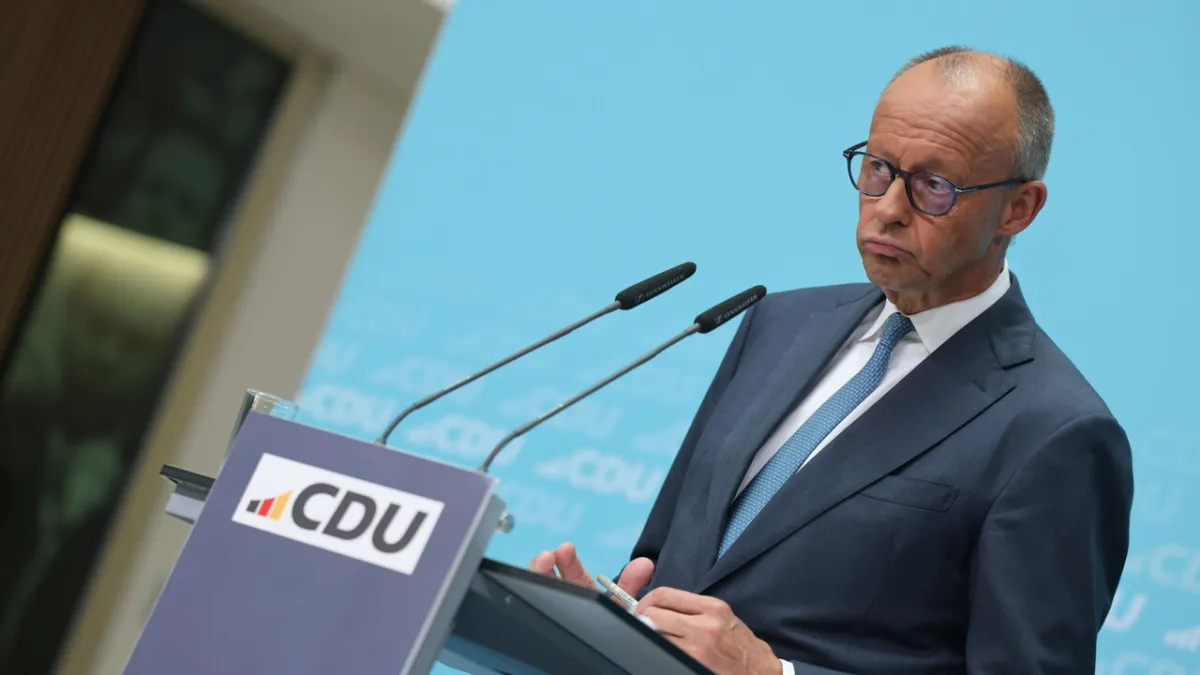
For CDU leader Friedrich Merz, these results represent a severe blow. Merz faces significant challenges in revitalizing his party, which is now at risk of losing its historical dominance. Failures at the local level often serve as early indicators for upcoming federal election results, leading to serious questions about Merz's leadership and his party's strategy. Previous analyses have highlighted historic threats to the CDU in other state parliaments, and now this trend is becoming even more pronounced.
Similarly for the SPD, Chancellor Olaf Scholz's party, this decline in support is a warning sign. Although municipal election results do not directly alter the composition of the federal government, they can weaken the political legitimacy and bargaining power of the incumbent coalition. The federal government's policies, perceived as slow in addressing inflation and economic challenges, have also contributed to negative voter sentiment.
This upward trend for the AfD is not confined to Lower Saxony. Various recent local and regional elections show a similar pattern across Germany, cementing this far-right party as a political force that cannot be ignored. The increasingly strong presence of the AfD demands new strategies from other democratic parties to stem this populist wave.
A political analyst from the University of Berlin, Professor Klaus Richter, noted that these results indicate the failure of traditional parties to respond to public concerns. Voters seek alternatives when they feel unrepresented. The AfD has successfully filled that void with simple, albeit often controversial, narratives, Richter stated.
Internally, the CDU is reportedly beginning to press for drastic political changes in Berlin. Calls for a comprehensive evaluation of campaign strategies and policy platforms are growing stronger. Questions surrounding Merz's leadership are likely to be a key agenda item in internal party meetings.
The increasing strength of the AfD also raises serious concerns about the erosion of liberal democratic values. Some circles fear that growing support for a party with extremist ideologies could lead to deeper political polarization and threaten social stability in Germany. The controversial issue of banning the AfD has also sparked fierce debate among legal and political experts.
These municipal election results in Lower Saxony clearly serve as a crucial marker for German politics. This is not merely a loss of votes but a reflection of deep dissatisfaction that could fundamentally alter the national political landscape in the long term. Mainstream parties must urgently formulate concrete strategies to win back voters' trust and confront the growing challenge posed by the AfD.
Editorial Insight: The decline of the CDU and SPD, coupled with the rise of the AfD, marks a pivotal period for German democracy. This historic defeat is not just about numbers; it reflects public distrust towards the establishment. Traditional parties are compelled to undertake profound introspection and responsive policy adaptation. Otherwise, the AfD's dominance could become permanent, drastically changing the face of German politics towards sharper polarization.