 Debby Wijaya
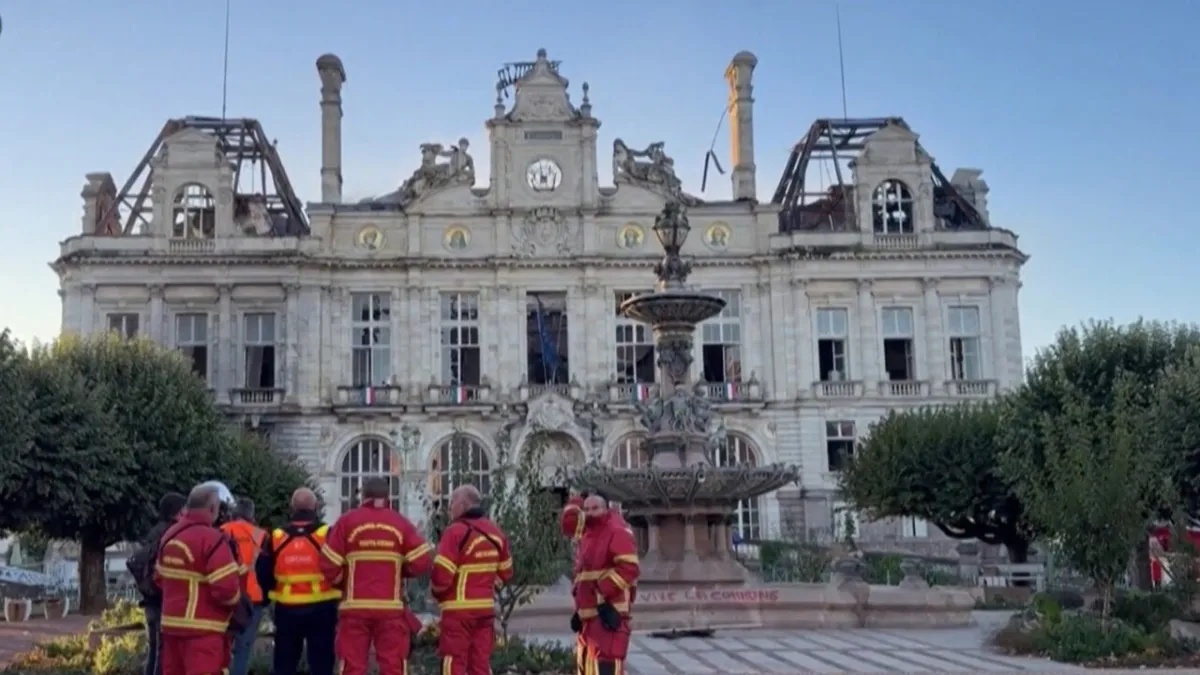
LIMOGES – France is once again rocked by a wave of violent protests triggering severe damage in several major cities. The historic city hall in Limoges was engulfed in flames, while major streets in Lyon lay devastated by massive vandalism following demonstrations. These incidents occurred amidst widespread social discontent, causing substantial material losses and threatening national stability towards the end of 2026.
In Limoges, a city renowned for its ancient architecture and historical heritage, the landscape now resembles ruins. The City Hall, a symbol of local government and administrative center, suffered irreparable damage after being targeted by angry mobs. The fires that consumed the building structure produced thick plumes of smoke visible from afar, blanketing the city sky with a gray pall.
In Lyon, a vibrant metropolitan city, the situation is no less concerning. Normally bustling streets are now littered with debris, graffiti, and burnt-out vehicles. Sporadic looting of shops was reported, exacerbating the security situation and causing losses for small to medium-sized businesses.
These protests, which escalated into violence, are believed to be triggered by an accumulation of public frustration over government policies and prolonged economic issues. While the specific demands of the demonstrators are still under investigation, similar patterns of unrest have occurred previously in France, indicating deeper underlying social problems.
The French government, through its spokesperson, strongly condemned these anarchic acts. Security forces have been deployed extensively to restore order and identify the perpetrators. Official statements emphasized the government's commitment to upholding the law and ensuring accountability for every individual involved in the acts of destruction.
The damage to public infrastructure and private property is predicted to have significant economic repercussions. The reconstruction process will be time-consuming and costly, burdening a national budget already strained by volatile European economic conditions. Investor confidence and social stability are also jeopardized by this wave of unrest.
Residents in both cities, particularly in Limoges and Lyon, expressed deep concern. Many are traumatized witnessing their cities transform into battlegrounds. Daily life has been disrupted, with public facilities closed and access restricted in several areas. A palpable atmosphere of apprehension lingers, worsening existing uncertainties.
This incident recalls previous waves of unrest that have swept across France. Political analysts suggest that the rapid escalation of protests into violence indicates serious challenges for the government in addressing social tensions. Some even link it to early warnings of a French student crisis that were previously ignored, as highlighted by a number of experts.
The government is reviewing preventive measures to avoid a recurrence of similar incidents. Discussions regarding social reforms and enhanced dialogue between the government and civil society are crucial agenda items. Significant challenges await President Emmanuel Macron in calming the situation and rebuilding public trust, considering similar unrest in Paris that once recorded mass arrests.
Editorial Insight: The unrest in France is not merely a transient outburst but a manifestation of accumulated discontent. The level of destruction points to a failure in managing public aspirations that culminated in anarchism. A swift and measured response from the government is crucial to prevent further escalation, while simultaneously identifying more systemic root causes. Without comprehensive handling, France's stability will remain at stake, with potential broader impacts on the European region.