 Chandra Wijayanto
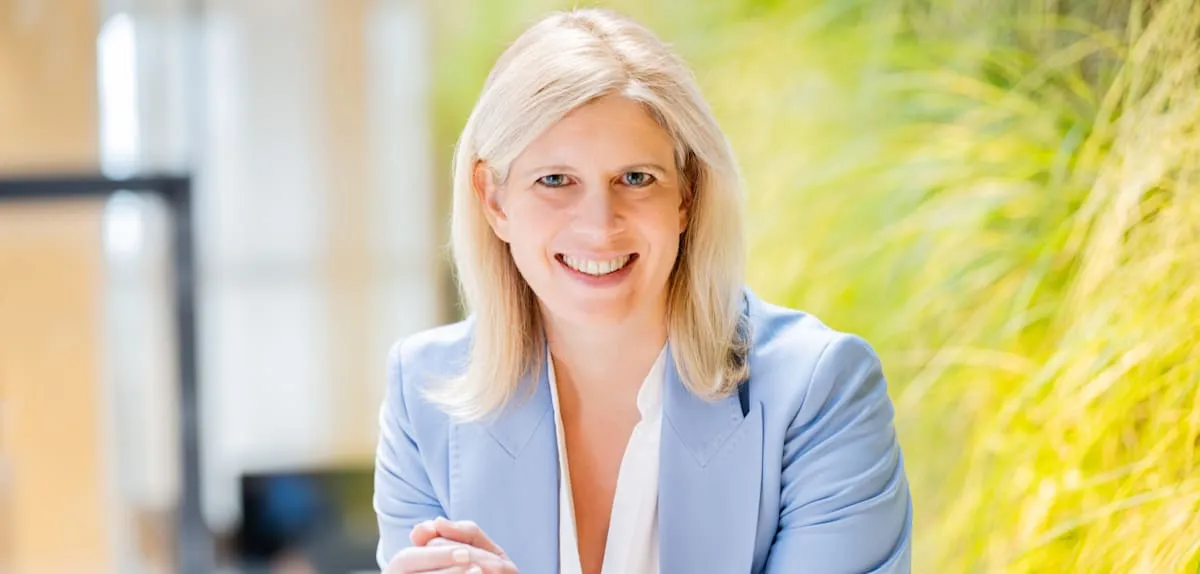
Germany – Christina Ellringmann, the esteemed leader of global consulting firm Bain, challenges widespread assumptions regarding the impact of the Artificial Intelligence (AI) revolution on the future of professional work. She asserts that while AI has undeniably reshaped operational landscapes, the core essence of consulting services—encompassing strategic thought, empathy, and adaptability—remains an exclusive human domain. Amidst the pervasive trend of automation, Ellringmann notably continues to recruit a significant number of young consultants, simultaneously advocating for a progressive yet controversial leadership philosophy concerning gender equality in promotions.
Ellringmann's statements emerge amidst intense debate about the extent to which AI will displace human roles across various industries. Many experts foresee a substantial wave of layoffs due to the adoption of autonomous technologies; however, Ellringmann views AI as an augmenting tool, not a replacement, for consultative expertise. Her focus lies not on elimination, but on how technology can free consultants to concentrate on high-value tasks that demand emotional intelligence and creativity.
Bain's recruitment strategy under Ellringmanns leadership demonstrates this conviction. Rather than reducing the intake of new employees, the prestigious consulting firm maintains wide-open doors for young talent. They believe that the new generation brings fresh perspectives and technological adaptability crucial for effectively integrating AI into consulting services. This stands in stark contrast to widespread concerns regarding future job prospects for recent graduates.
Furthermore, Ellringmann has captured public attention with her unconventional views on female leadership. Despite being one of the few women in a top position within a male-dominated industry, she explicitly rejects the notion of 'special promotion' or 'quotas' for specific genders. According to her, meritocracy must be the paramount principle. I do not believe in policies that prioritize gender in hiring or promotions, she stated.
This philosophy, though sparking debate, is rooted in the belief that individuals should be evaluated based on their competence, performance, and potential, regardless of gender. She emphasizes the importance of creating an equitable work environment for all, not merely through direct interventions to boost representation, but by fostering an inclusive culture where every individual can naturally thrive.
Ellringmann's vision for Bain mirrors a broader paradigm shift in the global business world. She perceives the company as an entity that must continuously evolve, leveraging every technological innovation while preserving the core values that distinguish human service. This includes a commitment to talent development, for both men and women, through intensive training and continuous learning opportunities.
The application of AI at Bain is now more oriented towards massive data analysis, trend prediction, and the automation of time-consuming routine tasks. This enables consultants to allocate more time to direct client interaction, developing creative solutions, and navigating business complexities that cannot be resolved by algorithms alone.
In the context of the 2026 global economy, where issues like AI Threat Shakes Alphabet: Google Parent Company Stock Plummets are under scrutiny, Ellringmann's approach offers a distinct perspective. She demonstrates that adapting to AI does not necessarily mean sacrificing human resources, but rather redefining roles and enhancing capabilities.
The challenge ahead for Bain, and the consulting industry as a whole, is how to balance the efficiency offered by AI with the need for a personal human touch and ethical nuances in every decision. Ellringmanns model seeks to find an optimal middle ground, ensuring innovation does not erode the foundations of professionalism and human values.
This bold approach not only shapes Bain's strategic direction but also offers a potential blueprint for other companies grappling with the transformative implications of artificial intelligence.
Editorial Insight: Christina Ellringmann's approach at Bain highlights a crucial debate on human-AI synergy in the modern era. By maintaining the recruitment of young talent and rejecting gender-based promotions, she posits that future competitive advantage lies in optimizing unique human capabilities augmented by AI, rather than total substitution. This policy, while potentially sparking intense discussions about equality, asserts that substantial value in consulting stems from collective intelligence and individual maturity, which AI has not yet fully replicated. It provides a powerful narrative for many other sectors facing similar dilemmas.