 Chandra Wijayanto
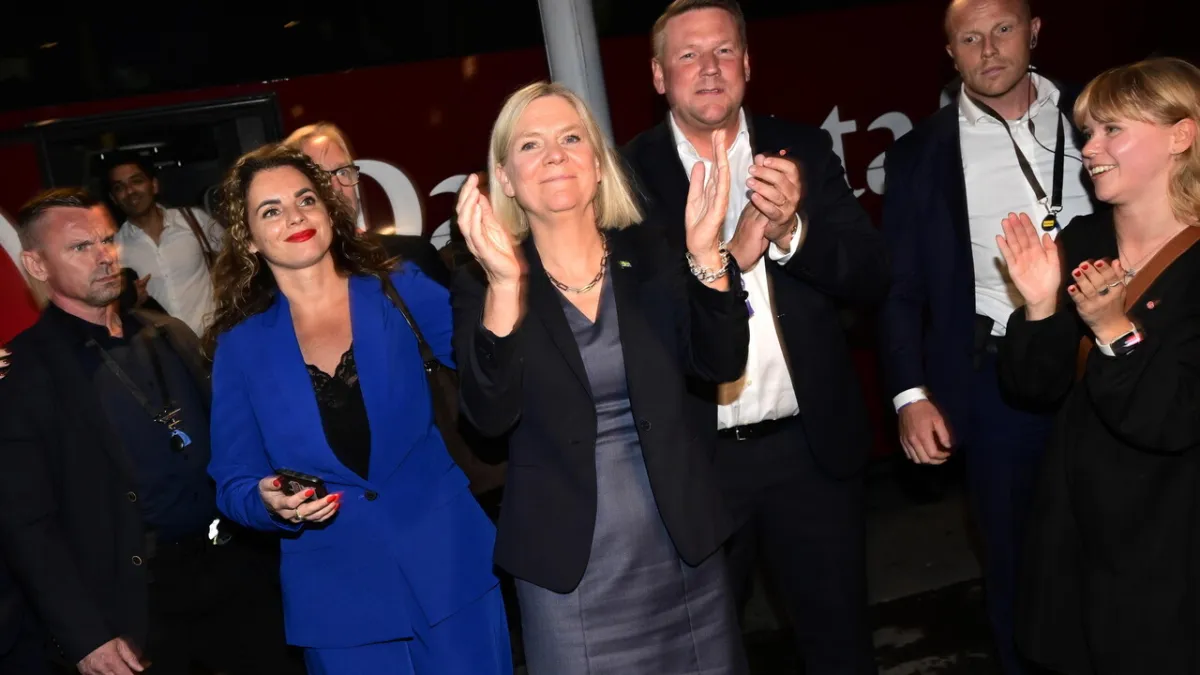
STOCKHOLM – The political landscape in Sweden has undergone a significant shift after preliminary results from the 2026 general election indicated a dominant victory for the center-left bloc, led by the Social Democratic Party under Prime Minister Magdalena Andersson. This outcome also marks a sharp retreat for the ultranationalist wing led by Jimmie Akesson and signals the end of the incumbent Prime Minister Ulf Kristerssons government era.
The Social Democrats' victory positions Magdalena Andersson as the potential architect of a new government, reaffirming the traditional strength of the center-left in the Nordic country. This represents a significant blow to Kristersson's Moderate Party, which had been trying to build coalition stability.
Initial data shows the Social Democratic Party secured the largest share of votes, strengthening its position as the largest party. This trend reflects the public's desire for stability and more inclusive policies after a period of coalition government often marked by challenging political dynamics.
Conversely, Jimmie Akesson's Sweden Democrats (SD) party, known for its anti-immigrant and ultranationalist rhetoric, failed to meet expectations for greater gains. While still a relevant political force, its vote share was not enough to significantly challenge the dominance of the center-left bloc.
The governing period of Ulf Kristersson, who had led a moderate and right-wing coalition since the previous election, is now on the verge of ending. Kristersson faced various challenges, from domestic economic issues to geopolitical pressures, which may have influenced voter perception of his performance.
This shift in support can also be analyzed as a response to social and economic policies. The Social Democratic Party offered a program focused on social welfare, income equality, and public investment, which appears to have resonated with the majority of Swedish voters.
Andersson's success in building a strong narrative of national unity and comprehensive solutions to various socio-economic problems was a key factor. She successfully positioned herself as a leader capable of guiding Sweden towards stability and progress amidst global uncertainties.
Political observers believe that Akesson's ultranationalist retreat is due to several factors, including attempts by established parties to isolate their agenda, as well as a rise in public awareness of tolerance and multiculturalism values in Sweden.
However, the formation of a new government by Andersson will not be without challenges. She will face the complex task of building a stable coalition, given Sweden's increasingly fragmented political landscape. Coalition negotiations are likely to be tough and require compromise from various parties. For further analysis on coalition dynamics, see Sweden in Turmoil: Social Democrats Lead, Coalition Formation Remains Fragile.
Andersson's victory also strengthens a trend in Europe showing resistance to the wave of right-wing populism. This sends an important signal to other countries grappling with political polarization.
Comparatively, this situation is similar to the results reported in Andersson's Victory: Center-Left Bloc Dominates Sweden, Far-Right Recedes, which provides an early overview of the changing political landscape in Sweden after the election.
With this shift in power, Sweden is expected to refocus on progressive agendas, including climate change, strengthening the welfare system, and social integration, which are key pillars of the Social Democratic platform.
Editorial Insight: The victory of the center-left bloc in Sweden, with Magdalena Andersson at the helm, indicates a significant shift in public sentiment from the previous government. This is not just a party victory but also a potential rejection of the right-wing populist narrative that had gained strength. Andersson's primary challenge now is to forge a solid coalition capable of tackling crucial issues such as inflation, security, and integration, while upholding the inclusive values that underpin her platform. Sweden's political journey ahead will largely depend on the new leadership's capacity to unite various political factions and overcome domestic and international challenges.