GENEVA – World leaders, activists, and delegates from various nations confront a bitter reality after the United Nations (UN) Climate Summit 2026 concluded without firm commitments to preserve the crucial 1.5 degree Celsius target. The failure to reach an ambitious agreement leaves profound concerns about the acceleration of the global climate crisis, with potential catastrophic impacts for planet Earth and its inhabitants. The two-week meeting in Switzerland concluded with a sense of despair among environmental experts.
The 1.5 degree Celsius target, established in the Paris Agreement, represents the threshold for global temperature rise to avoid the worst effects of climate change. With continuous increases in greenhouse gas emissions, scientists have repeatedly warned that every fraction of a degree increase in temperature will exacerbate extreme heatwaves, prolonged droughts, devastating storms, and rising sea levels.
Protracted negotiations between developed and developing nations reached an impasse. Major emitters, especially those still dependent on fossil fuels, were reluctant to commit to more aggressive emission reduction targets. They argued that energy transition requires significant investment and could hinder national economic growth.
Since the signing of the Paris Agreement in 2015, the international community has struggled to fulfill its climate promises. Many countries have failed to meet their self-imposed emission reduction targets, let alone increase their ambitions in line with the latest scientific demands. Recent data from the Intergovernmental Panel on Climate Change (IPCC) in 2025 even showed an alarming upward trend in global temperatures.
The implications of this failure are far-reaching. Scientists predict that without drastic action, the world will surpass the 1.5 degree Celsius threshold well before mid-century, possibly even before 2030. Worst-case scenarios include massive glacier melting, irreversible damage to coral reefs, and forced migration of millions due to environmental changes.
This is a sad day for our shared future, said a negotiator from a Pacific island nation who wished to remain anonymous. We are watching our homes slowly sink, and the world is not acting fast enough.
Similar sentiments were echoed by various non-governmental organizations calling for greater accountability from world leaders. The economic aspect also drew attention. While the transition to a green economy requires substantial initial costs, the expenses from climate disasters, such as infrastructure damage, agricultural losses, and health crises, are predicted to be much higher. Global financial institutions have repeatedly warned of systemic risks to world economic stability due to climate change.
Although renewable energy technologies like solar and wind have become increasingly efficient and affordable, their adoption in many countries is still hampered by political interests and the dominance of the fossil fuel industry. Investment in innovative solutions for carbon capture and energy storage has also not reached the necessary scale.
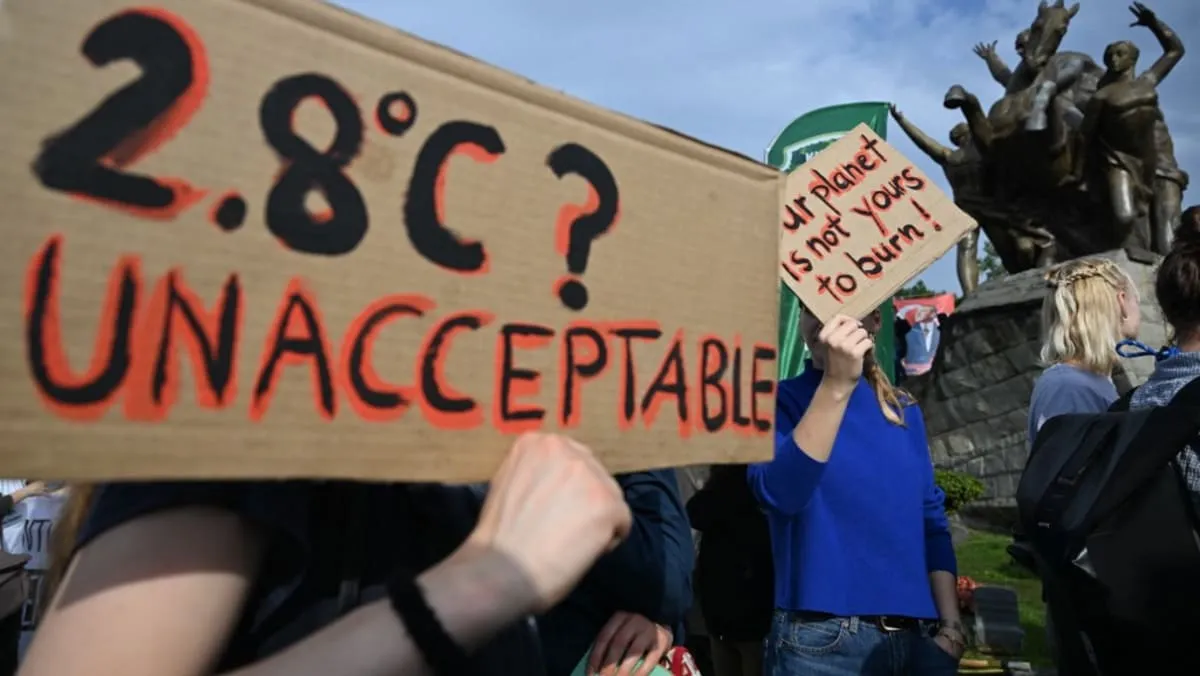
This summit's failure must serve as a wake-up call for all parties. Public pressure and climate movements are expected to intensify, demanding more decisive action from leaders. The future of Earth's sustainability heavily depends on political will and closer global cooperation in the coming years.
The journey towards a greener and more sustainable future is indeed arduous, but not impossible. Collective commitment, relentless innovation, and political courage are key to reversing the course of this crisis.
Editorial Insight: The failure of the UN Climate Summit 2026 marks a critical juncture in the global fight against climate change. The rollback of commitment to the 1.5C target is not merely a number, but a serious indication of the world's political inability to confront an existential threat. The editorial board believes that pressure from civil society and the private sector must be amplified to compel governments to take concrete steps, beyond mere rhetoric. Without real and swift action, the potential for ecosystem and global societal destabilization will further increase, triggering a series of interconnected crises.