 Demian Sahputra
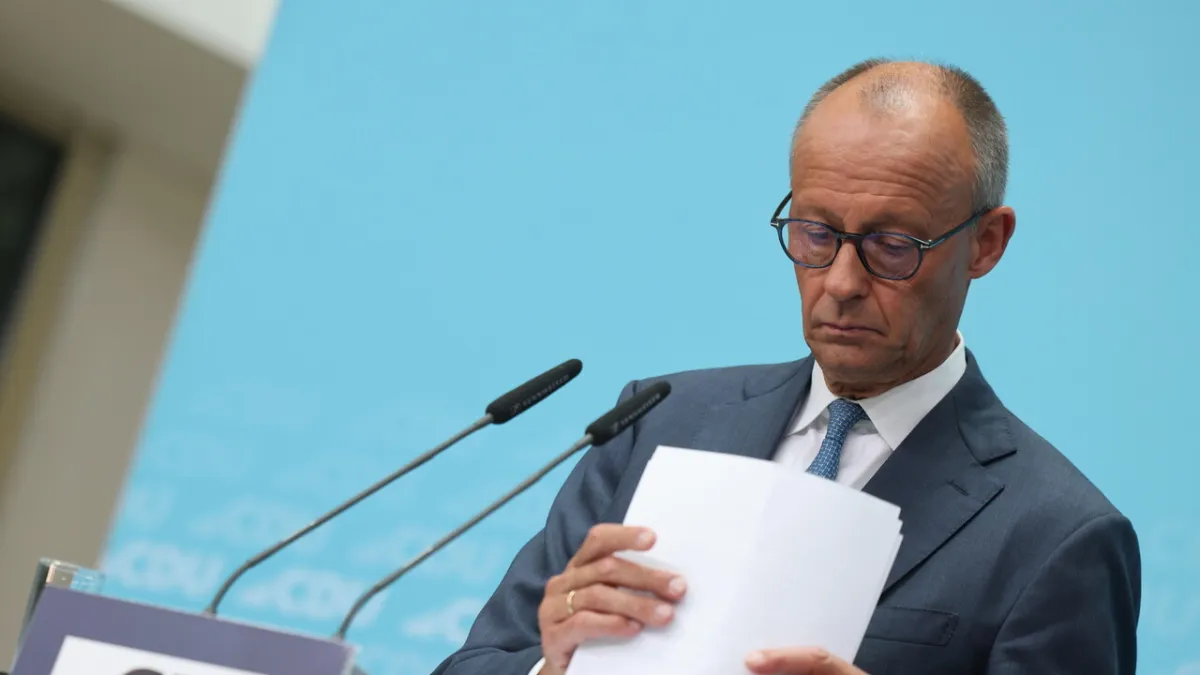
MAGDEBURG – The surprising results of the 2026 regional elections in the German state of Saxony-Anhalt have profoundly shaken the national political landscape. The Alternative for Germany (AfD) party secured a historic victory, compelling the leader of the Christian Democratic Union (CDU), Friedrich Merz, to admit defeat with a profound sense of shock. This development has triggered a spectrum of reactions, from bitter acknowledgment of loss to strategic optimism from the victorious party.
Merz, in his public statement, did not hide his disappointment over results far from the CDU's expectations. We are truly shocked by this outcome, he stated, highlighting the significant challenges his party now faces amidst shifting voter preferences. The CDU's defeat in Saxony-Anhalt marks a critical turning point for their future political strategy.
Conversely, senior AfD representative Alice Weidel, while celebrating the euphoria of victory, also acknowledged the immense responsibility that comes with it. It is a burden, Weidel remarked, implying that the challenge of fulfilling campaign promises and managing public expectations will be a demanding task for the AfD. This victory places the AfD at a central position in Saxony-Anhalt's political dynamics.
Despite the AfD's victory often being associated with divisive rhetoric, prominent AfD figure Siegmund showed a more moderate approach. No more walls, but we extend a hand for talks to form a government, Siegmund asserted, signaling the possibility of more pragmatic coalition negotiations. This statement opens new discussions about the CDU's political boundaries.
The AfD's triumph resonated not only in Germany but also garnered international attention. From Moscow, the victory was greeted with enthusiasm, even described as a 'historic AfD victory.' This perspective might reflect Moscow's hopes for a shift in German policy that would be more amicable towards Russia, given the AfD's frequent criticism of European Union foreign policy. Indeed, the tremors in Saxony-Anhalt have global resonance.
The rise of the AfD in Saxony-Anhalt is not a sudden phenomenon. This far-right party has long garnered support through issues of immigration, energy policy, and criticism of the European Union. The defeat of established parties like the CDU indicates significant voter dissatisfaction with the status quo.
These election results have the potential to reshape Germany's political landscape more broadly. The AfD's regional success will provide momentum for the party in preparation for upcoming federal elections. Other parties now face a strategic dilemma: how to confront the growing power of the AfD without compromising liberal democratic principles.
The formation of a coalition government in Saxony-Anhalt is certainly going to be a complicated process. With the AfD as the dominant force, other parties must consider whether to coalesce with it or form a broader alliance to isolate the AfD. This dynamic will test the resilience and flexibility of the German political system.
Public sentiment post-election shows sharp polarization. A significant portion of citizens welcomed the AfD's victory as a long-awaited voice for change, while others expressed serious concerns about the political and social implications of the far-right party's dominance. Previous large demonstrations in Magdeburg also reflected this tension.
With political tensions looming, attention now turns to the next steps for the parties in Saxony-Anhalt. Will Siegmund's proposed dialogue pave the way for consensus, or will the state enter a prolonged period of political uncertainty? The answer will determine the future direction of German politics.
Editorial Insight: The AfD's victory in Saxony-Anhalt in 2026 is more than just a regional election result; it is a barometer for seismic shifts in German voter preferences. Dissatisfaction with established parties has reached a critical point, allowing a far-right narrative to resonate strongly. The CDU's response, particularly Merz's shocked admission, suggests they may not yet fully grasp the depth of this wave. The crucial question is how mainstream parties will adapt. Isolating the AfD entirely may no longer be realistic, but coalescing with them could compromise core values. Germany now stands at a challenging political crossroads.