 Edward DP Situmorang
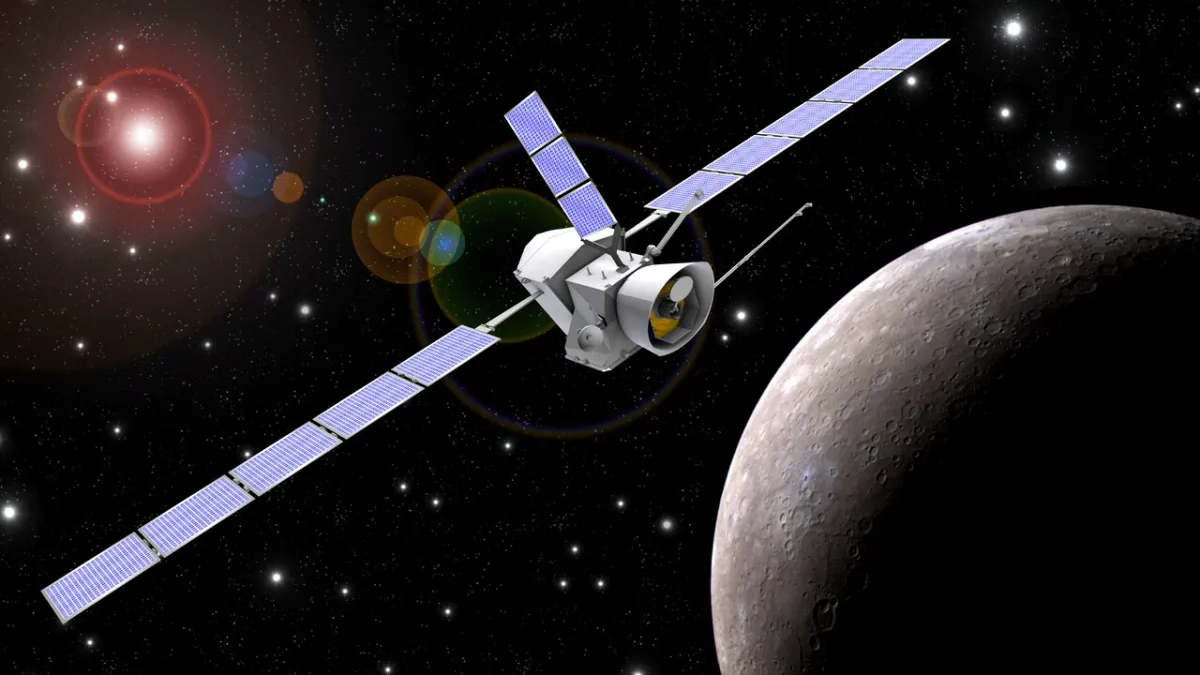
PASADENA – The BepiColombo spacecraft, an ambitious collaboration between the European Space Agency (ESA) and the Japan Aerospace Exploration Agency (JAXA), successfully entered Mercury's orbit in early 2026. This monumental achievement marks a significant milestone in the global effort to unravel the mysteries of the Sun's closest planet, opening a new chapter in our understanding of the solar system. The mission, which has journeyed for many years, is now poised to begin its intensive scientific phase.
The successful maneuver to capture Mercury's gravity is the culmination of meticulous planning and engineering execution. Launched in 2018, BepiColombo underwent a series of complex flybys and trajectory correction maneuvers, navigating the intricate gravitational fields between Earth, Venus, and Mercury. This journey was designed to gradually slow down the spacecraft, allowing it to enter a stable orbit around its target.
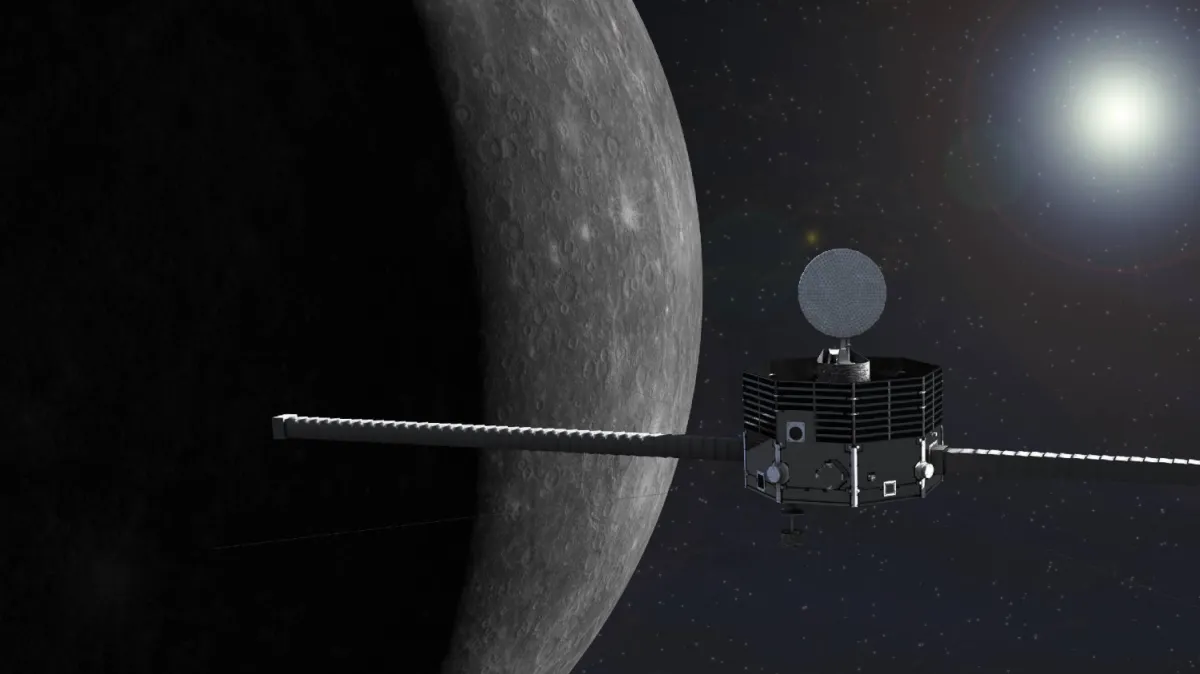
The BepiColombo mission comprises two main components: the Mercury Planetary Orbiter (MPO), built by ESA, and the Mercury Magnetospheric Orbiter (MMO), or Mio, developed by JAXA. Both orbiters will operate independently after separation, each equipped with advanced instruments designed to gather comprehensive data about Mercury's environment.
The primary objectives of this mission are diverse and fundamental to astrophysics. Scientists hope to unveil Mercury's internal composition, investigate its peculiar magnetic field, analyze its thin exosphere, and map the planet's surface with unprecedented detail. The collected data is expected to provide crucial clues regarding the formation and evolution of rocky planets within the solar system.
Exploring Mercury is no easy feat. The planet is exposed to unprecedented extreme conditions, including drastic temperature fluctuations between day and night, intense solar radiation, and powerful solar winds. BepiColombo's design and materials were specifically engineered to withstand these harsh environmental challenges, showcasing a high level of technical innovation realized by the international team.
The collaboration between Europe and Japan is a key element in the mission's success. It demonstrates the capacity of the global scientific community to unite against the biggest challenges in space exploration. The combined expertise from both continents enabled the development of the necessary technologies and strategies to overcome the complexities of traveling to Mercury.
Previously, missions such as Mariner 10 and MESSENGER provided initial glimpses of Mercury. However, BepiColombo is promised to deliver far more in-depth details, thanks to its more advanced instrumentation technology and longer mission duration. This information is essential for understanding how Mercury could possess such a large core and why it has a global magnetic field, an anomaly for its size.
During its operational period, BepiColombo will collect invaluable data. This includes high-resolution imaging of the cratered surface, gravitational measurements to reveal its interior structure, and studies of its mineralogical composition and any existing volatile elements. The separation of the two orbiters will enable simultaneous studies from two different perspectives, enhancing the scope of data that can be obtained.
The success of this mission also reaffirms the importance of sustained investment in space science. New discoveries from Mercury will not only enrich our knowledge of that planet but also help us understand the formation and dynamics of other planets, including Earth. With every piece of data transmitted back, we move a step closer to deciphering the grand puzzle of the universe. For further reference on this achievement, readers can explore the article Japan and Europe Conquer Mercury: BepiColombo Mission Reveals Closest Planet's Secrets 2026.
Editorial Insight: BepiColombo's achievement is tangible evidence of technological advancement and the spirit of international collaboration in space exploration. The data that this probe will transmit over the coming years will not only fill gaps in our knowledge of Mercury but also reshape our understanding of solar system formation. This mission has the potential to pave the way for new theories regarding planetary dynamics around their host stars and provide crucial insights into the potential for life beyond Earth, albeit indirectly.