 Dodi Irawan
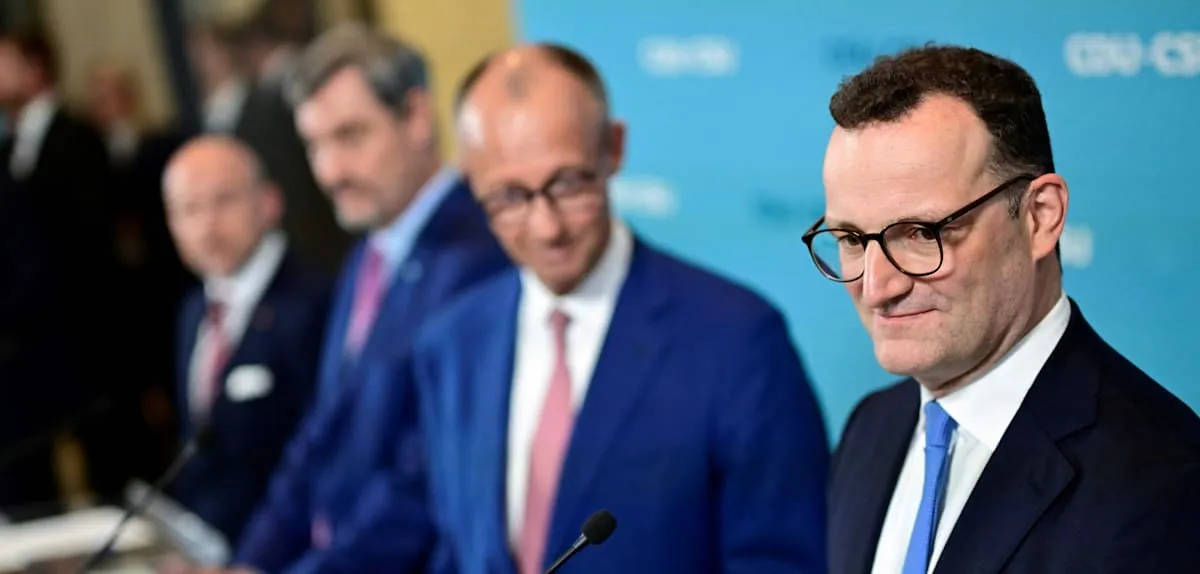
BERLIN — A wave of dissatisfaction and member resignations is shaking Germany's Christian Democratic Union (CDU) party. This situation triggers significant pressure on Friedrich Merz's leadership as mid-2026 approaches, following the re-emergence of an internal scandal involving serious accusations against senior politician Jens Spahn. This turmoil has reportedly eroded the party's foundations down to its grassroots, as disclosed by a local CDU faction leader.
The vortex of this issue stems from a series of 'sensitive matters' that have long circulated. However, its escalation reached a critical point when the head of the CDU faction in Friedrich Merz's hometown openly leveled sharp criticism against Jens Spahn. In an exclusive interview, he mentioned that 'serious accusations' were directed at Spahn, a central figure in the CDU's political landscape.
This biting criticism is not merely a minor ripple. The faction leader explained that the 'affair' that has come to light has created a domino effect, undermining trust among cadres and sympathizers. Party members at the grassroots feel betrayed and question the direction of the leadership.
A direct consequence of this turmoil is the increasing number of member resignations from the CDU. This phenomenon serves as a serious alarm for Merz and the party's leadership. Each resignation letter reflects deep frustration over the handling of the issue and a response deemed sluggish to demands for transparency and accountability.
German political analysts highlight that this incident has the potential to damage the CDU's overall image. The party, known for decades as a pillar of political stability, now faces a severe test of integrity. The party's credibility in the public eye is the primary stake.
Friedrich Merz, as party leader, now finds himself in a difficult position. He must balance maintaining internal solidarity with responding to external demands. His ability to pacify the party's base and provide clarification on the accusations against Spahn will determine his political future, and even the CDU's standing in the next election.
Issues related to Jens Spahn himself are not surfacing for the first time in German politics. His reputation has often been a subject of debate, and these latest accusations add to a long list of challenges he must face. Spahn's response to the allegations, which is not yet fully clear, is highly anticipated by the public and party members.
This situation is reminiscent of internal political dynamics previously experienced by the CDU, when factions clashed. However, the current scale of dissatisfaction, involving an exodus of members from the grassroots, indicates a different level of severity. This is not just an elite dispute, but mass unrest.
Opposition parties in Germany are undoubtedly monitoring these developments closely. The CDU's internal turmoil could provide an opening for them to strengthen their political positions and erode public support for the CDU. This is a crucial moment that could alter the national political landscape.
It is imperative for the CDU to promptly take concrete and transparent steps. Without a thorough and clear resolution, public trust will further erode. The handling of this issue will serve as a case study on how a major party confronts a credibility crisis and maintains the loyalty of its base.
The future of the CDU, particularly concerning Spahn's succession and the test of German political credibility, will heavily depend on how Merz and his leadership navigate this internal storm. The upcoming elections could be a tougher battle than anticipated, if the party's foundations continue to crack due to this upheaval.
Observers predict that if this issue is not handled seriously, the potential for losing votes in regional and federal elections in the coming years will increase. This is not just about one or two figures, but about the continuity of the CDU's ideology and influence in the European political arena.
This upheaval also has the potential to create further fragmentation within the CDU. Factions might emerge with different agendas, weakening the party's unity and collective strength. Merz faces the arduous task of reuniting the fractured elements.
Clarification and open dialogue with the party's base are key. Only by directly listening to members' complaints and concerns can the CDU begin to rebuild the broken bridges of trust. This is a long process that requires commitment and sincerity.
The year 2026 has witnessed various global political challenges, and Germany is not immune to these dynamics. This internal CDU turmoil adds to a long list of domestic issues that must be addressed, amidst global economic and geopolitical uncertainties.
Thus, the CDU's main focus right now is to quell the unrest, restore trust, and devise an effective communication strategy. Without these proactive steps, the party's foundation will continue to erode, leaving a detrimental legacy for the next generation of CDU politicians.