 Chris Robert
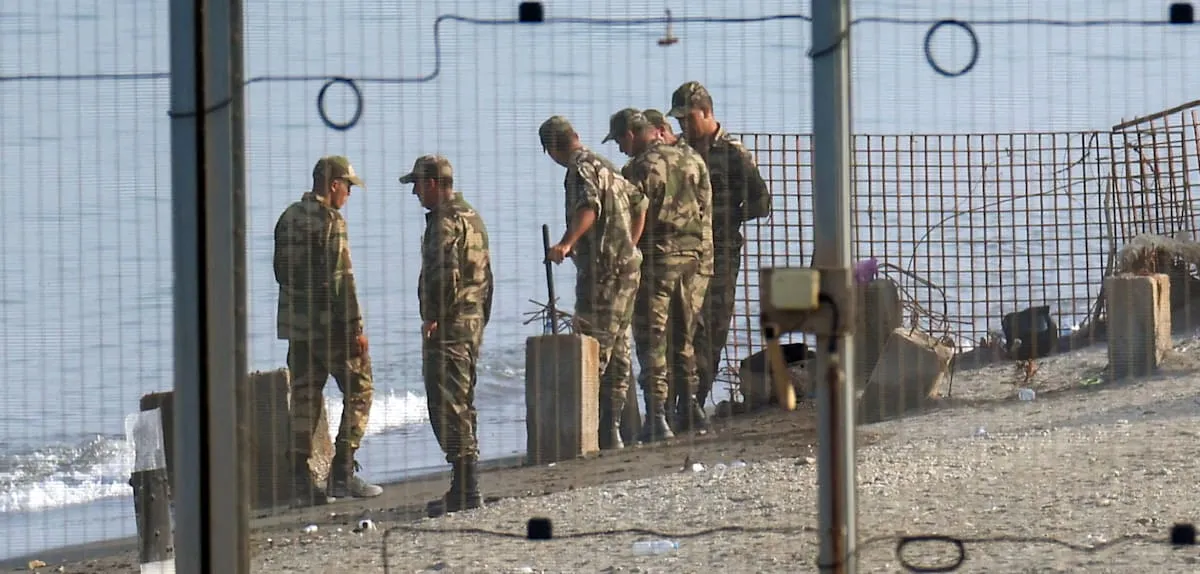
CEUTA – The Spanish autonomous city of Ceuta is now on high alert, deploying combat-uniformed soldiers to guard its beaches and reinforcing its borders with barbed wire fences. This action follows widespread calls on social media urging migrants to launch a mass assault on the Spanish exclave. The situation reflects an escalation of tensions at one of Europe's most sensitive migration points.
These stringent preparations underscore the Spanish authorities' commitment to safeguarding their territorial sovereignty against potential migratory pressures. Various reports indicate that barbed wire fences have been extensively erected along the land border separating Ceuta from Moroccan territory. This measure represents a proactive response to what is deemed a serious threat.
Close surveillance by military personnel in coastal areas aims to thwart illegal crossings via sea routes. Soldiers, fully equipped, form defensive barricades along vulnerable coastlines. The conspicuous military presence is expected to deter potential migrants planning to breach the border.
Similar tensions are not new to Ceuta and Melilla, two Spanish exclaves on the North African coast that have long been a magnet for thousands of migrants from Sub-Saharan Africa and the Middle East. These territories are seen as the closest gateway to mainland Europe, despite the extremely high risks involved.
_The phenomenon of mass calls through digital platforms, such as the current one, further complicates border control efforts. Social media serves as an effective medium for organizing and disseminating information among migrant communities, often without fully considering the inherent dangers of the journey.
The Spanish government, in this context, faces a complex dilemma between enforcing immigration laws and upholding humanitarian principles. Pressure from the European Union to manage migrant flows effectively also acts as a determining factor in these border security policies. The issue of illegal migration to Europe has been a primary concern, as frequently discussed in reports such as Drastic Drop in Illegal Migration to Europe: Will EU Policies Succeed?.
These security measures also align with calls from other European leaders urging the strengthening of the EU's external borders. The Italian Prime Minister, for instance, has previously emphasized the importance of such steps, as covered in the news Meloni Urges Europe to Strengthen Borders, Italian Economy 2026 Positive!. The deployment of soldiers and the construction of barbed wire fences in Ceuta are concrete manifestations of this tightening policy.
Human rights organizations and humanitarian agencies regularly express concern over the conditions faced by migrants at the borders. They highlight safety risks, potential treatment, and the lack of access to fair asylum procedures amidst increased military security.
The migrant crisis at the Ceuta border is not merely a local Spanish issue but a broader European concern, requiring multilateral coordination and comprehensive solutions. Conflicts in various parts of the world and economic hardships in home countries continue to drive thousands of individuals to seek better lives in Europe, making migratory pressure an unavoidable reality.
The Moroccan government, as a neighboring country, also plays a crucial role in this dynamic. Bilateral cooperation between Spain and Morocco in controlling migrant flows is often key to the effectiveness of security efforts. However, this relationship can also fluctuate depending on various regional political and economic factors.
The situation in Ceuta now reflects a complex global challenge: how to balance national security with international human rights commitments. The presence of soldiers on the beaches and barbed wire fences is a stark symbol of the robust response to what is perceived as a threat to border integrity.
- Deployment of combat-uniformed military forces along the beaches.
- Erection of barbed wire fences at the land border with Morocco.
- Increased surveillance and patrols in vulnerable areas.
- Response to calls for mass migrant assaults on social media.
Editorial Insight: The increased security in Ceuta is a clear indication that the European Union continues to grapple with migratory pressures, even after various diplomatic efforts and border reinforcements. While these actions aim to prevent illegal migrant entry, the potential for increased humanitarian risks for those attempting to cross remains high. This event also highlights the role of social media as a catalyst for mass migration movements, demanding more sophisticated strategies from authorities to address this evolving challenge. Moving forward, pressure on borders like Ceuta is expected to continue without addressing the root causes of migration.