 Angela Stefani
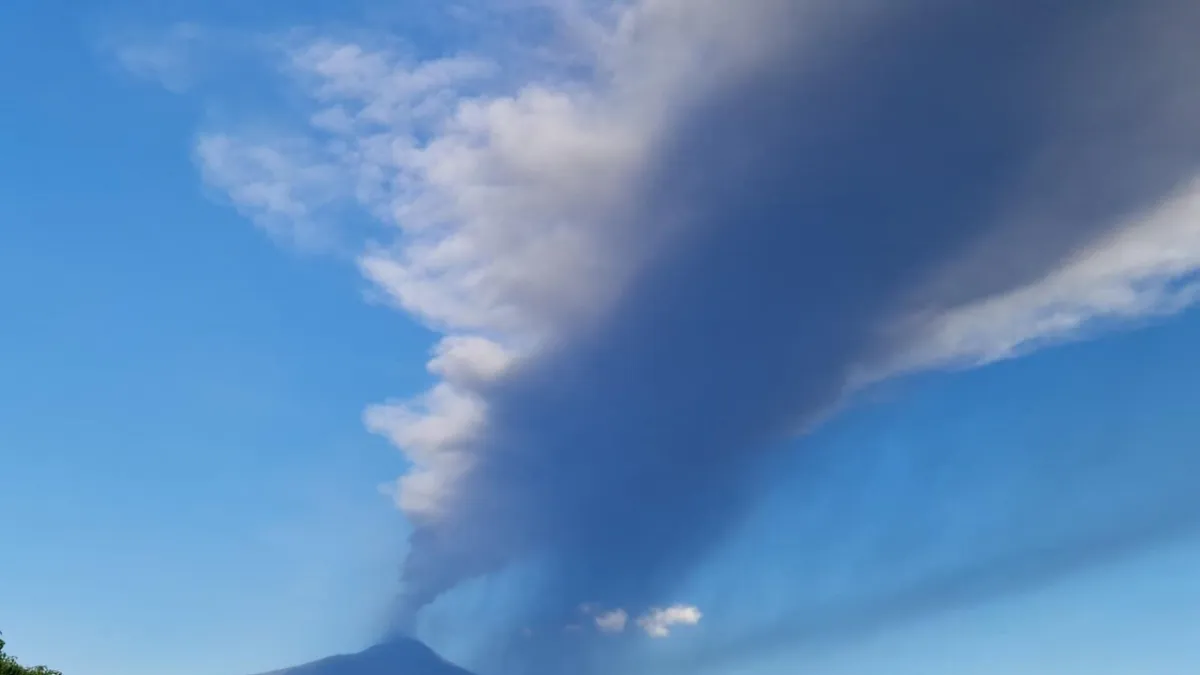
CATANIA – Catania Fontanarossa International Airport, a primary gateway to Sicily, now operates under severe restrictions following a fresh eruption from Mount Etna, spewing volcanic ash across the region. While departures remain unaffected, authorities have limited arrivals to just five aircraft per hour, potentially triggering widespread delays and uncertainty for thousands of passengers affected in early 2026.
The latest eruption from Mount Etna, one of the world's most active volcanoes, occurred suddenly, ejecting a thick column of ash that drifted over eastern Sicilian airspace. This situation forced civil aviation authorities to immediately issue a NOTAM (notice to airmen) to ensure operational safety.
The decision to restrict flights is well-founded. Volcanic ash is a known serious threat to aircraft engines, especially jet turbines, as it can cause severe damage and even total failure. The sharp silicate particles in the ash are capable of eroding vital components and disrupting flight sensors.
Airport authorities and air traffic controllers are working intensively to monitor the movement of the ash cloud. They are also coordinating with airlines to manage the highly limited arrival slots, minimizing the worst impacts on global flight schedules.
Several airlines have announced delays or diversions. Passengers are advised to continuously monitor the latest information from their respective airlines and the airport's website. The uncertainty of arrival schedules has created long queues at information desks and waiting areas at Catania Airport.
Travelers planning to arrive in or depart from Sicily via Catania now face logistical challenges. Hotels around the airport are reporting a sudden surge in reservations from stranded passengers or those choosing to stay overnight to await clarity on their flight schedules.
This situation is not new for Catania. Mount Etna is known for its relatively frequent eruption cycles, causing similar disruptions in the past. However, each incident still demands a rapid and coordinated response from all relevant parties to ensure public and operational safety.
Sicily's geographical condition, with Etna towering in its midst, makes its inhabitants accustomed to coexisting with volcanic activity. Nevertheless, the impact on vital sectors such as tourism and transportation always remains a primary concern for local government.
Volcanology experts from the National Institute of Geophysics and Volcanology (INGV) continue to conduct close monitoring of Etna's activity. Seismic data and visual observations form the basis for crucial predictions and early warnings for flight safety and the surrounding communities.
Editorial Insight:
The flight disruptions caused by Etna's volcanic ash in Catania serve as a stark reminder of modern infrastructure's vulnerability to natural forces. The swift response by authorities in prioritizing safety is crucial, even if it impacts mobility. This incident also highlights the importance of effective early warning systems and emergency protocols in regions with high geological activity, particularly to sustain the vital tourism and logistics sectors crucial for Sicily's economy.