 Dorry Archiles
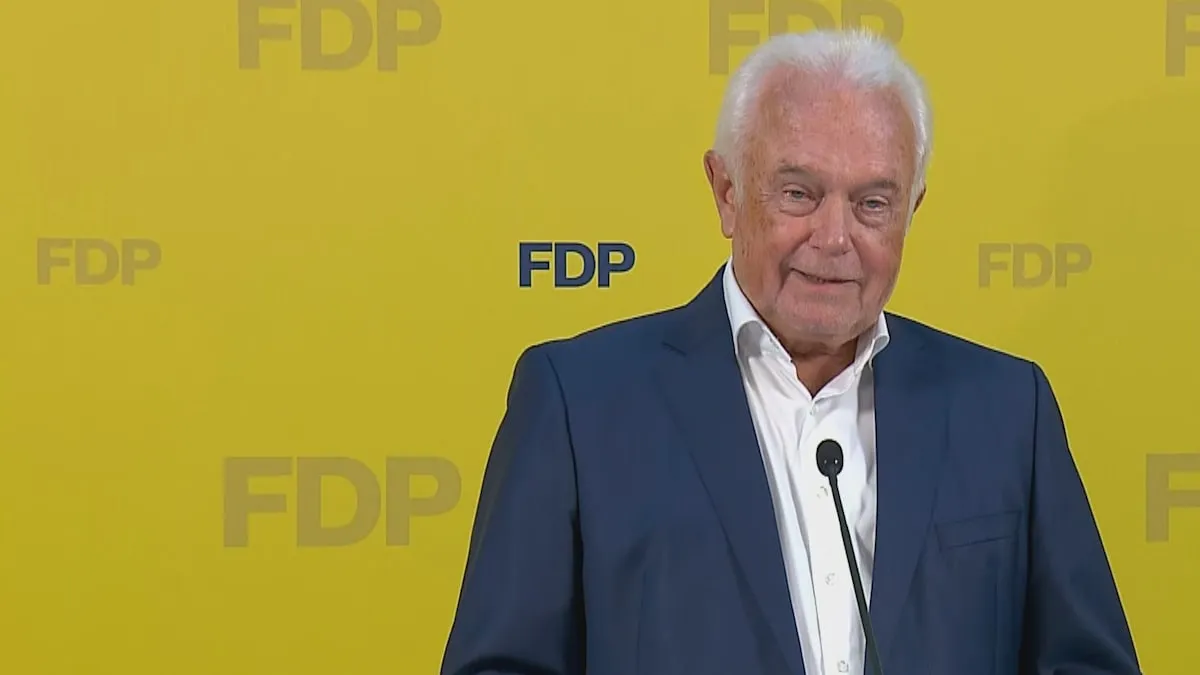
BERLIN – The Free Democratic Party (FDP) suffered a bitter defeat in the state election in Saxony-Anhalt, Germany, today, prompting a strong reaction from FDP Chairman Wolfgang Kubicki. Kubicki not only described the day as a bitter day for his party but also openly criticized the policies and direction of the Christian Democratic Union (CDU)/Christian Social Union (CSU), questioning their leadership in the federal government.
This defeat marks a significant setback for the FDP, a liberal party struggling to maintain its relevance in the German political landscape. The final results showed a drastic decline in voter support, well below expectations and the crucial threshold for legislative representation in Saxony-Anhalt.
In his emotional statement, Kubicki emphasized, This is a bitter day for the entire party, and also a bitter day for me personally. This expression reflects the heavy burden felt by the FDP leadership following the disappointing outcome.
Furthermore, Kubicki did not hesitate to point to the Union as the cause of this situation. He specifically referred to the course or policy direction of the Union in the federal government, which he deemed incorrect and unprogressive. This criticism indicates internal tensions within Germany's governing coalition.
The FDP's defeat in Saxony-Anhalt has the potential to disrupt German political dynamics, especially ahead of the upcoming federal elections. This result sends a warning signal to the ruling coalition parties, while also raising questions about government stability under pressure.
German political observers and media are widely discussing the implications of these election results. Many view it as an indication of public dissatisfaction with federal government policies as a whole, targeting not only the FDP but also its partner, the Union.
These results were quite surprising given some previous polls that offered better hopes for the FDP, although they did not promise an outright victory. The related article Saxony-Anhalt Election Survey Misses Mark: CDU Wins Resoundingly! noted how electoral projections can deviate significantly from ballot box realities.
Opposition parties, such as the AfD, will likely capitalize on these results to attack the government and strengthen their narratives, as seen in the article AfD's Siegmund Attacks CDU: 'Germany is Hard to Save with Them!'. This adds complexity to the post-election political map.
For the FDP, the biggest challenge now is to undertake deep introspection and formulate a new strategy to regain voter confidence. Failure at the state level often serves as a precursor to performance at the federal level.
Kubicki's sharp criticism of the Union also highlights potential cracks within the ruling coalition in Berlin. The big question now is how the Union will respond to this criticism and whether the emerging tensions will affect future policy-making.
Politics in Saxony-Anhalt often serve as a barometer for national sentiment, and this defeat can be interpreted as a reflection of broader unrest among the German populace. Political strategies and campaigns there, as highlighted in Elite Strategy in Saxony-Anhalt: Antje Hermenau Highlights Democracy Fear Campaign, often mirror larger ideological struggles.
Editorial Insight: The FDP's defeat in Saxony-Anhalt is not merely a local election result; it reflects the struggle for identity and political direction of the liberal party amidst an increasingly polarized German landscape. Kubicki's criticism of the Union also indicates that the federal coalition is facing a severe test. Moving forward, the FDP needs to rediscover a strong narrative to attract voters, while the Union must address internal and external criticisms to maintain government stability.