 Angel Doris

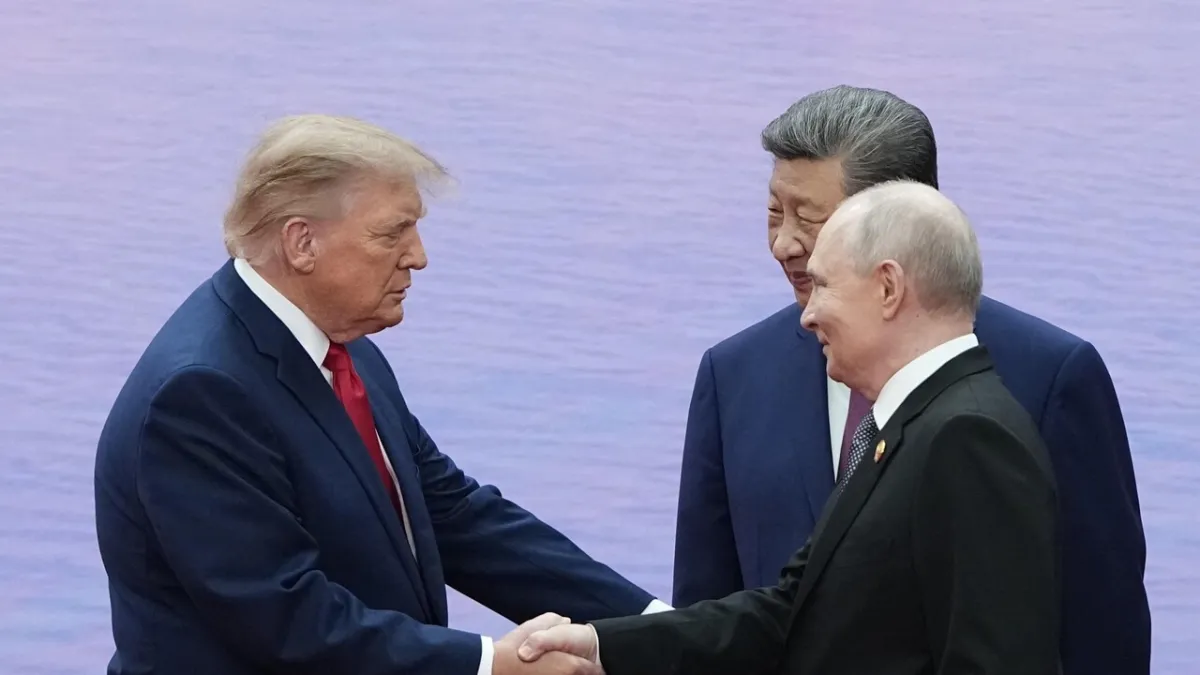
BEIJING – In early 2026, the People's Republic of China positioned itself as the central axis of global diplomacy, successfully initiating a summit that brought together Chinese President Xi Jinping, Russian President Vladimir Putin, and US President Donald Trump. This strategic initiative, held in Beijing, underscores China's ambition to mediate and shape the direction of the most crucial geopolitical dynamics, especially amidst lingering tensions in Eastern Europe and the struggle for influence in the Indo-Pacific region.
This rare tripartite meeting is seen as Beijing's effort to assert its constructive role amid the fragmentation of the post-conflict world order. Analysts observe that the simultaneous presence of these three nuclear power leaders in China is not merely symbolic but a concrete representation of a shift in diplomatic gravity towards Asia.
Diplomatic sources close to the negotiations indicated that the main agenda included de-escalation efforts in the Ukraine conflict, stabilization of the global economy affected by sanctions and trade wars, as well as issues of cybersecurity and climate change. President Xi Jinping, in his opening remarks, emphasized the importance of multilateralism and constructive dialogue to address collective human challenges.
President Trump, in a brief comment to the media before the closed-door meeting, expressed optimism about diplomacy's ability to find realistic solutions. Meanwhile, President Putin affirmed Russia's readiness to participate in any efforts aimed at creating a more balanced and inclusive global security architecture, without domination.
China's role in facilitating dialogue among these often-adversarial leaders is not new. Previously, in 2025, a similar rare moment occurred in Shenzhen, where the three leaders also met and shook hands, sparking new hope for a more constructive future of global dialogue. The Beijing meeting built momentum from that event, demonstrating Beijing's consistency in taking the initiative.
This Chinese diplomatic initiative has significant potential to alter geopolitical dynamics. Some parties view it as a bold step that could open new communication channels between Washington and Moscow, which have been hampered by distrust for years. It could also alleviate pressure on European nations caught in the spiral of conflict and polarization.
However, skepticism persists. Some observers argue that such meetings, while attention-grabbing, may only be a diplomatic spectacle without substantial breakthroughs. The main challenge is not bringing them together, but ensuring genuine commitment to long-term solutions, said a senior European diplomat who requested anonymity.
Beyond security issues, the economic dimension also formed a crucial focus. China, as the largest trading partner for many nations, desires stability that will support its Belt and Road Initiative and ensure the smooth flow of global supply chains. Discussions on the restructuring of multilateral trade and investment are also expected to be an integral part of the agenda.
For Asia, particularly the Indo-Pacific region, this meeting carries complex implications. With China holding a central role, other regional powers such as Japan, South Korea, and ASEAN nations will closely monitor any outcomes that could affect the balance of power and maritime security in their areas.
Whether Beijing will succeed in making history as the architect of global peace in 2026, or if this meeting will merely be another diplomatic episode, only time will tell. What is clear is that the presence of Xi, Putin, and Trump at one table, under China's auspices, has sent a strong signal about a shifting paradigm of global leadership.
Editorial Insight: This meeting of three major powers in Beijing is not merely a diplomatic incident but a manifestation of China's long-term strategy to establish its influence as a global mediator. Amidst increasingly intense rivalry between the United States and Russia, China's ability to bring both leaders to its table demonstrates the maturity of Beijing's diplomacy. Concrete results may take time, but the signal sent is that China is ready to assume a more proactive global leadership role, even in issues traditionally dominated by Western powers. This could also indicate that the era of unipolarity has ended, replaced by a multipolar order with China as one of its primary poles.