 Robert Andrison
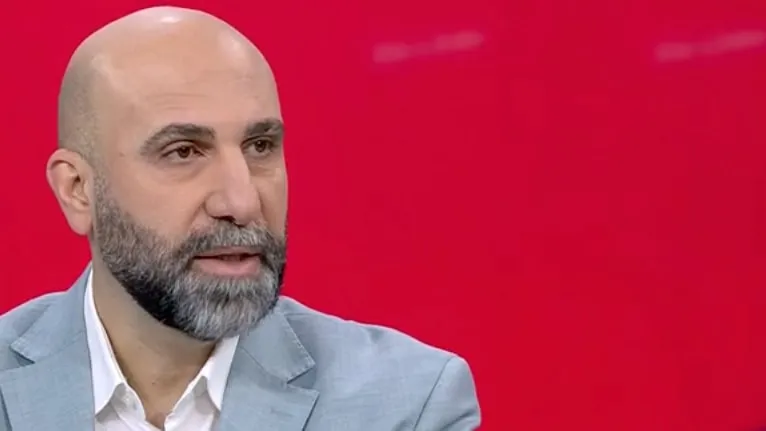
BERLIN – A recent visit by the former head of Israel's intelligence agency, Mossad, to the German parliament, the Bundestag, has ignited public outrage and fueled serious concerns about freedom of expression in the country. The incident, which occurred in 2026, highlights a prominent psychologist's warning about the widespread use of mafia-like structures to silence critical voices.
Ahmad Mansour, a licensed psychologist and author known for his outspoken views, expressed his fury over the dynamics that unfolded during the visit. Mansour asserted that any individual who dares to voice dissenting opinions or sharp criticism would directly confront what he termed mafia-like structures.
Anyone who resists will encounter mafia-like structures, Mansour stated, emphasizing the urgency of the issue. His declaration is not merely an empty alarm but a reflection of deep concern about the erosion of democracy and healthy discourse in Germany.
According to Mansour, this phenomenon is not just an isolated incident but a worrying development that systematically intimidates independent thinkers and critics. The presence of the former Mossad chief on Germany's political stage should have been an occasion for open dialogue, yet it led to a restrictive atmosphere.
The background of the visit, though not detailed in the initial report, implies strong polarization within German society and its political elite. Sensitive issues related to geopolitics and regional security often trigger fierce debates that have the potential to be divisive.
Mansour's concerns are not isolated. Several parties in Germany have long voiced concerns about pressure and attempts to silence those with differing views, especially on controversial foreign policy issues. This phenomenon hinders society's ability to engage in constructive deliberation.
Political analysts view Mansour's statement as a strong warning signal for democratic institutions in Germany. Freedom of the press and freedom of expression are fundamental pillars that must be strictly guarded to prevent the country from descending into a condition where a vocal minority can dictate public narratives.
Such incidents also echo issues related to transparency and accountability within public and private entities. Recently, the world was shocked by the alleged involvement of a German company boss as a major supplier of migrant smuggling boats, a case demonstrating how hidden structures can operate behind the scenes for illicit purposes. Read more here.
The German government, currently led by Chancellor Olaf Scholz, faces the challenge of ensuring that citizens' fundamental right to free expression remains protected. It is crucial for state institutions to guarantee that the public sphere remains a safe and inclusive arena for discussion.
This situation demands a firm response from the entire political spectrum and civil society. Collaborative efforts are necessary to combat all forms of intimidation and ensure that every voice, even the most unpopular, can be heard without fear of unjust consequences.
Editorial Insight: Ahmad Mansour's statement about mafia-like structures in Germany is not merely a critique of a specific incident but a reflection of a crisis of trust in institutions and political processes. If left unchecked, the intimidation of independent thinkers could undermine the foundations of pluralistic democracy, turning public debate into an arena of fear. The government must take proactive steps to protect freedom of speech and restore public confidence in the integrity of its political system.