 Dorry Archiles
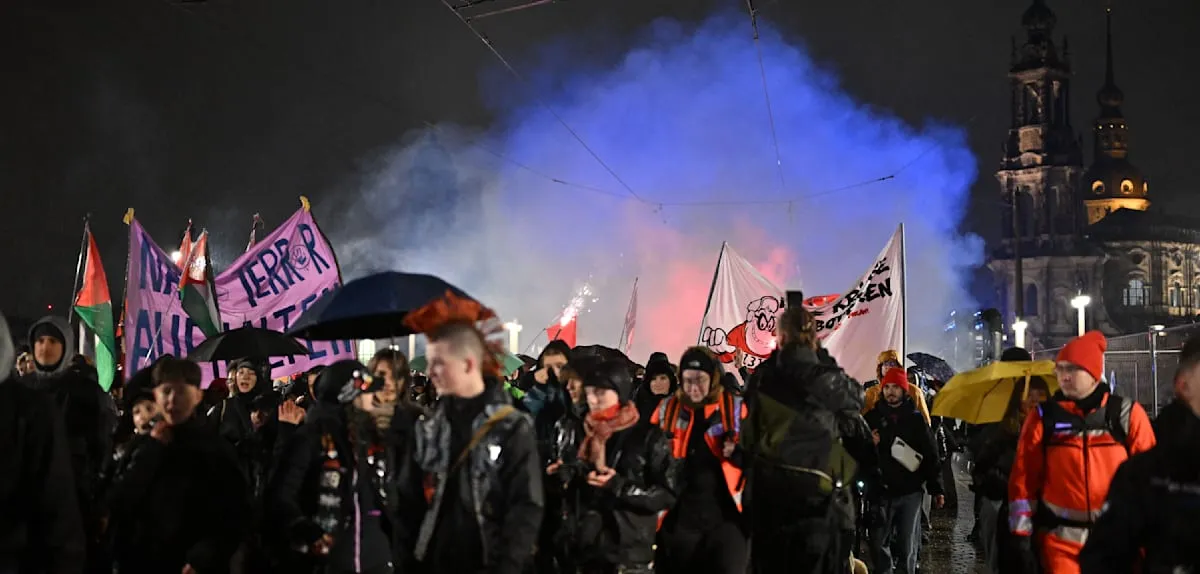
BERLIN – German police forces swiftly responded to a series of demonstrations initiated by the Gen Z group in several cities overnight, following the unfurling of a banner allegedly insulting prominent politician Friedrich Merz. This incident, which triggered blockades in city centers, has led authorities to issue entry bans for certain areas and file criminal charges against several individuals involved.
News of the provocative banner spread rapidly across social media, becoming a catalyst for the mass actions planned by the Gen Z regelt (Generation Z Rules) movement. The banner, whose specific content has not yet been detailed by the police, explicitly targeted the Chairman of the Christian Democratic Union (CDU), Friedrich Merz, sparking a wave of anger among his supporters and the general public.
According to local police reports from Frankfurt and Hamburg, blockades of main roads and public areas began in the early hours of the morning. The demonstrators, mostly identified as youth and students, used sit-in tactics and improvised barricades to halt traffic, demanding attention to the issues they were championing.
In response to the escalating situation, the police promptly imposed bans on entering several vital areas in the city center. Our primary priority is to maintain public order and ensure the safety of citizens, stated a Berlin police spokesperson, emphasizing that firm action would be taken against anyone who violates the law.
Authorities have also filed criminal charges against several individuals identified as masterminds behind the display of the insulting and provocative banner. These charges include defamation and disturbing public order, which could lead to serious legal penalties.
The Gen Z regelt movement itself is not a new phenomenon in the German political landscape. This group is known for actively voicing social, environmental, and political issues they deem crucial for the future. However, the use of protest methods involving insults against public figures marks an escalation in their tactics.
The issuance of these public area entry bans, or Betretungsverbot in German legal terms, underscores the seriousness with which the police are handling the situation. This step is taken to prevent further escalation and limit the movement of demonstrators deemed to be overstepping the boundaries of democratic expression.
This incident adds to the list of political tensions surfacing in Germany, amidst heated discussions on the national budget and energy policies. The public observes how political polarization is sharpening, particularly with the active participation of an increasingly vocal younger generation. This context is also linked to Germany's 2026 political tensions which have already drawn attention.
Friedrich Merz, as leader of the opposition and a central figure in German politics, is often a target of criticism from various political spectrums. However, a banner explicitly insulting him has crossed the line of healthy political debate, sparking discussion about protest ethics and freedom of expression.
City governments and security forces continue to monitor the situation's development, preparing for potential further waves of protest. Cross-city coordination is being carried out to ensure a uniform and effective response to any potential security disturbances that may arise.
Editorial Insight:
The incident of the provocative banner and the wave of Gen Z protests reflects Germany's increasingly complex political dynamics in 2026. This is not just an expression of dissatisfaction but an indication of rising polarization and the audacity of young groups to employ more confrontational tactics. While the firm police response might quell short-term actions, the root causes of Gen Z's dissatisfaction with the political status quo need to be examined more deeply by German leaders, including Friedrich Merz. Without constructive dialogue, this cycle of tension has the potential to recur.