 Edward DP Situmorang
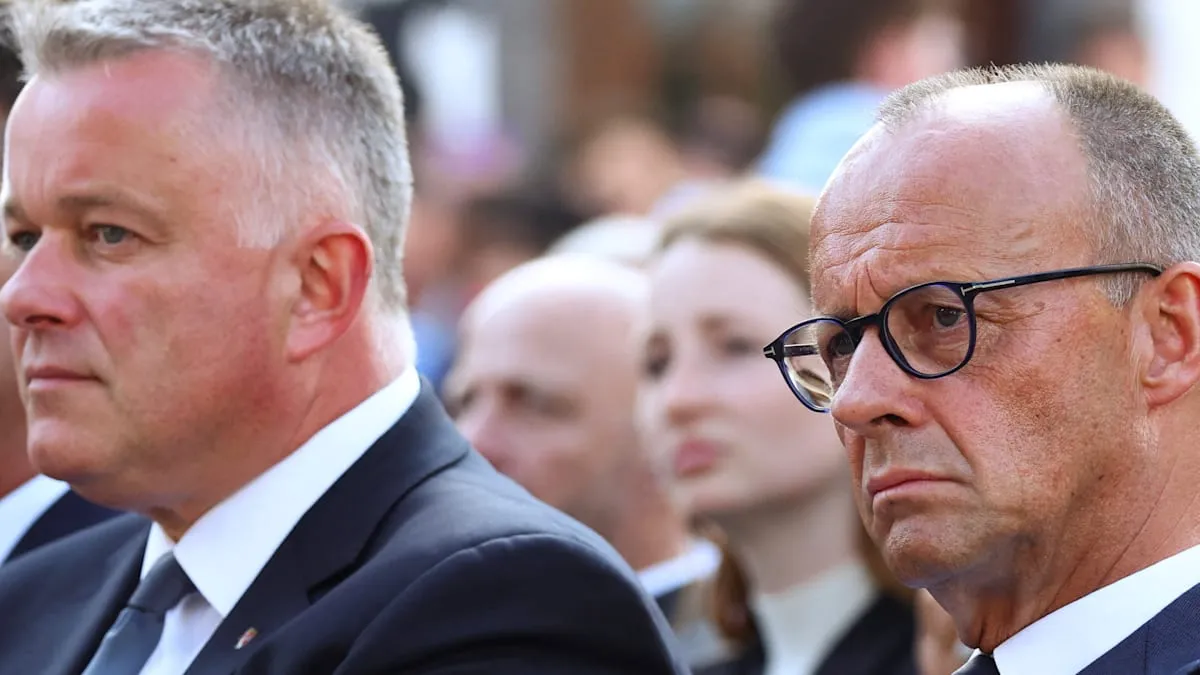
BERLIN — Chancellor Merz's planned cabinet reshuffle in Germany has hit a significant snag after the designated successor for Transport Minister Schnieder abruptly withdrew. This event not only complicates the chancellor's political agenda but also fuels widespread speculation regarding the stability and credibility of the coalition government in 2026.
This intricate situation emerged following the initial announcement of a change in leadership at the Ministry of Transport. The sudden withdrawal of the carefully selected successor, without clear public reasons, has created a political vacuum and placed Merz at a crucial crossroads.
Reporter Marco Reinke, covering German political dynamics, reported that “Merz now stands before a fundamental problem.” This statement underscores the structural challenges the Chancellor faces in his attempt to formulate a solid and functional team.
The Ministry of Transport is a vital post overseeing the nation's critical infrastructure, including road networks, railways, and aviation. Leadership stagnation in this sector has the potential to delay the implementation of strategic policies related to sustainability, logistical efficiency, and future infrastructure investments.
The background of Transport Minister Schnieder's departure, previously planned as part of the cabinet reorganization, is now under scrutiny. Although details regarding the reasons for Schnieder's replacement remain vague, the designated successor's decision not to proceed has dramatically complicated the transition process.
The opposition swiftly capitalized on this opening to criticize Merz's leadership. They accused the Chancellor of failing to manage his team and demonstrating a lack of control over internal political processes. This criticism could erode public support and weaken the position of the ruling coalition.
The impact of this incident is not expected to be transient. Germany's political stability amid global economic turmoil, including energy crises and inflation, is crucial. Internal cabinet upheavals could divert focus from addressing these pressing challenges.
Furthermore, this situation could trigger further discussions on the effectiveness of Germany's overall budget and public policies. Uncertainty at a vital ministry level has the potential to affect investor confidence and slow down the pace of planned reforms.
Political analysts believe that Merz must quickly find a solution to this succession issue to restore confidence and demonstrate leadership capacity. Failure to act swiftly could deepen the crisis and overshadow the remainder of his term.
In the short term, Chancellor Merz faces the urgent task of finding another competent candidate willing to fill this crucial position. This process is expected to be transparent yet swift, to maintain momentum and avoid a prolonged policy vacuum.