 Chris Robert
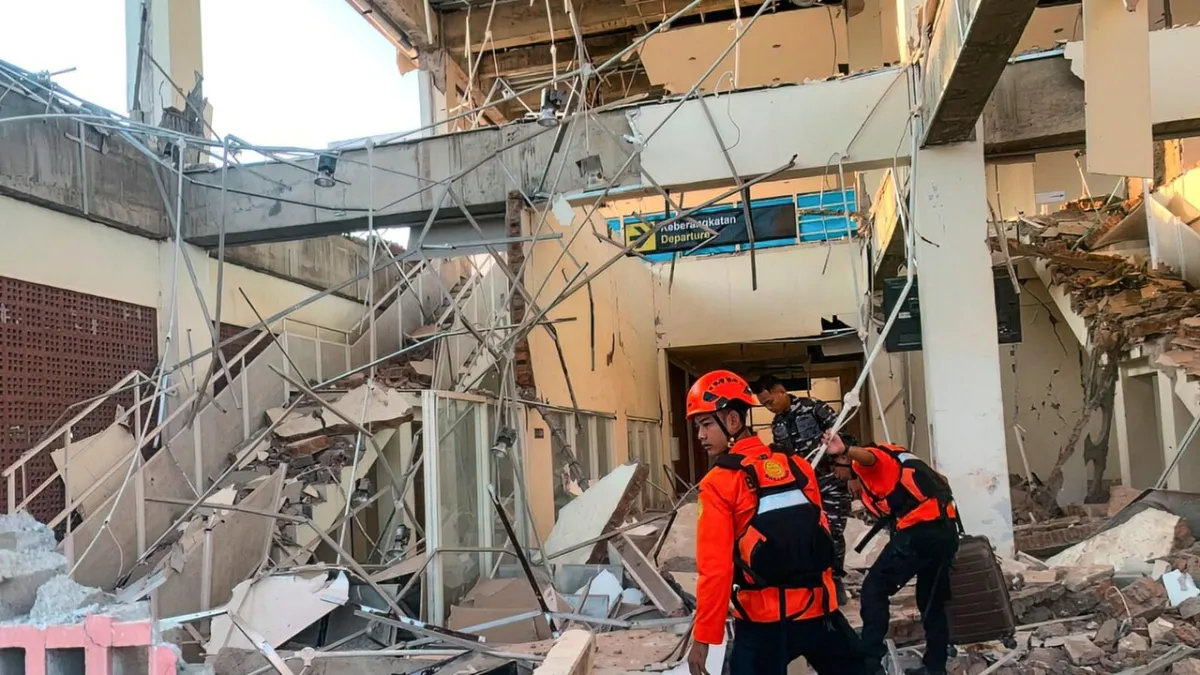
JAKARTA – A powerful 7.7 magnitude earthquake struck parts of coastal Indonesia in 2026, triggering widespread panic and claiming lives. At least 38 people have been reported dead due to the natural disaster, prompting local authorities to issue an urgent evacuation warning for residents in coastal areas to immediately move to higher ground.
This devastating tremor, which was centered at a location not yet specifically detailed, raised serious concerns about the potential for a tsunami. The Agency for Meteorology, Climatology, and Geophysics (BMKG) promptly issued initial information regarding this potential threat, urging the public to remain calm but vigilant.
The Spokesperson for the National Agency for Disaster Management (BNPB), during an emergency press conference, emphasized the importance of a rapid response. 'We urge all residents in coastal zones not to delay and to immediately evacuate to higher ground. Prioritize saving lives above all else,' he stated, highlighting the urgency of the situation.
Preliminary data indicates that most of the fatalities occurred in densely populated areas close to the earthquake's epicenter. Search and rescue efforts are ongoing, involving combined teams from BNPB, TNI (Indonesian National Armed Forces), Polri (Indonesian National Police), and local volunteers working together to evacuate victims and search for survivors.
President Prabowo Subianto, through the presidential office, expressed deep condolences for the calamity and instructed all government ranks to act swiftly in emergency handling, aid distribution, and post-disaster rehabilitation. He stressed that the government's top priority is currently the safety of its citizens.
Conditions in some affected areas are reported to be severe, with a number of buildings sustaining significant damage. Roads leading to coastal regions also suffered cracks and minor landslides, hindering access for rescue teams and the distribution of humanitarian aid. Infrastructure recovery poses a major challenge ahead.
Indonesia, located on the Pacific Ring of Fire, is indeed highly vulnerable to seismic activity. History records numerous earthquakes and tsunamis that have devastated the country. Therefore, disaster preparedness has been a continuous national agenda, although nature sometimes demonstrates its unpredictable power. The public is urged to always refer to official information from BMKG and BNPB, and not to trust circulating hoaxes.
This event serves as a grim reminder of similar tragedies in the past, including an incident that caused thousands of coastal residents to evacuate, as reported in the article Devastating Shakes: Thousands of Indonesian Coastal Residents Evacuate Due to Tsunami.
Humanitarian aid has begun to flow from various parties, both national and international organizations. The main focus currently is to provide temporary shelters, food, clean water, and medical services for the displaced persons scattered in several safe points. National solidarity is key in facing this disaster.
The government is also evaluating the tsunami early warning system to ensure its effectiveness and responsiveness. A comprehensive audit of infrastructure and buildings in earthquake-prone zones will be conducted to minimize future risks, aiming to ensure long-term safety for the Indonesian population.
Editorial Insight: Natural disasters like this 7.7 magnitude earthquake serve as a bitter reminder of Indonesia's geographical vulnerability. The speed of response and coordination among agencies are crucial in minimizing casualties and damage. However, this is also an opportunity to re-evaluate coastal spatial planning policies and enhance disaster mitigation education massively, not just reactive responses, but proactive and sustainable strategies. Community preparedness is the primary stronghold.