 Demian Sahputra
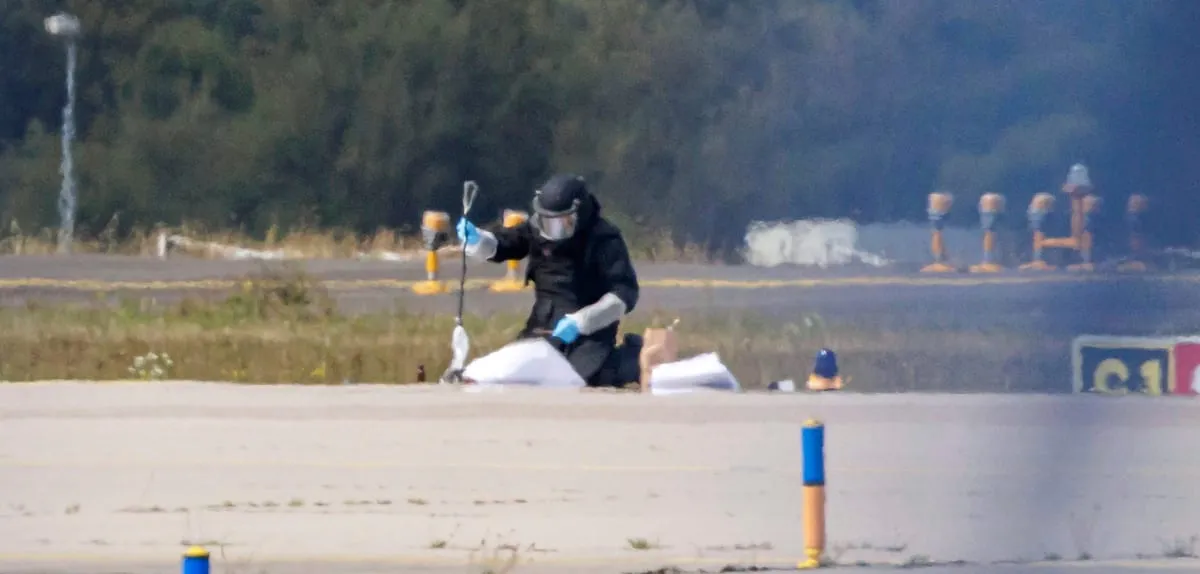
LEIPZIG – German authorities have successfully identified two individuals suspected of being Russian agents, including a member of the GRU military intelligence, as the perpetrators behind a drone attack that shook the city of Leipzig. This startling revelation stems from secret investigative documents exclusively obtained by the prominent newspaper WELT AM SONNTAG.
These highly sensitive investigative documents, encompassing forensic analysis and intelligence reports, unequivocally point to direct foreign involvement. One of the identified suspects is specifically linked to the Main Intelligence Directorate (GRU), the military intelligence agency of the Russian Federation, known for its clandestine operations on the international stage.
The drone attack in Leipzig, which occurred late last year, indeed sparked serious concerns regarding Germany's national security. Although specific details about the target or impact of the attack have not been widely publicized, the incident triggered an intense investigation by domestic and federal security agencies. Now, with the perpetrators' identities revealed, the motive behind this subversive act is beginning to come to light.
The GRU's involvement in this incident indicates that the attack was not merely common vandalism but rather part of a larger espionage or sabotage agenda. Russian military intelligence has a long track record of conducting hybrid operations, including the use of drone technology for reconnaissance, disruption, and even limited attacks, across various European regions.
The German government, through its spokesperson, has expressed profound concern over these findings. We take every attempt to interfere with our sovereignty and national security very seriously, stated an unnamed official, emphasizing Berlin's commitment to protecting its vital infrastructure and citizens from foreign threats.
This revelation is expected to further strain the already tense diplomatic relations between Berlin and Moscow. Similar incidents in the past have often led to diplomatic expulsions and sanctions, given that Germany is a key country in the European Union that has consistently voiced criticism of Russia's foreign policy.
Cases of drone attacks involving state actors are not a new phenomenon on the global stage. Some time ago, the world was also shocked by a drone incident that struck an an oil pipeline in Saudi Arabia, fueling regional tensions. The event in Leipzig serves as a bitter reminder of how vulnerable modern infrastructure is to increasingly sophisticated and difficult-to-detect drone attacks.
German intelligence services, the Bundesnachrichtendienst (BND) and the Bundesamt fur Verfassungsschutz (BfV), are now at the forefront of counter-terrorism efforts. They are required to further enhance their surveillance and detection capabilities against cyber and physical threats, especially from state entities that are increasingly aggressive in carrying out covert operations on European soil.
The next steps by German authorities will likely include efforts to apprehend suspects who may still be hiding or have left the country, as well as close coordination with intelligence partners in the European Union and NATO. A thorough investigation is expected to uncover the entire network and modus operandi used by these agents.
The incident in Leipzig also raises critical questions about Germany's internal security vulnerabilities. Amid increasing geopolitical polarization, the need for increased investment in anti-drone defense systems and strengthening espionage legislation becomes more urgent to maintain stability and public trust.
Editorial Insight: The revelation of Russian agents behind the Leipzig drone attack is not merely ordinary criminal news; it is a serious warning signal for European security. It reaffirms the pattern of covert aggression used by Moscow to test boundaries and assert influence. Germany, as a major economic and political power on the continent, will face significant pressure to respond firmly without triggering unnecessary escalation. This case also highlights the urgency of cross-national intelligence cooperation to address increasingly complex hybrid threats in 2026 and beyond.