 Gabriella
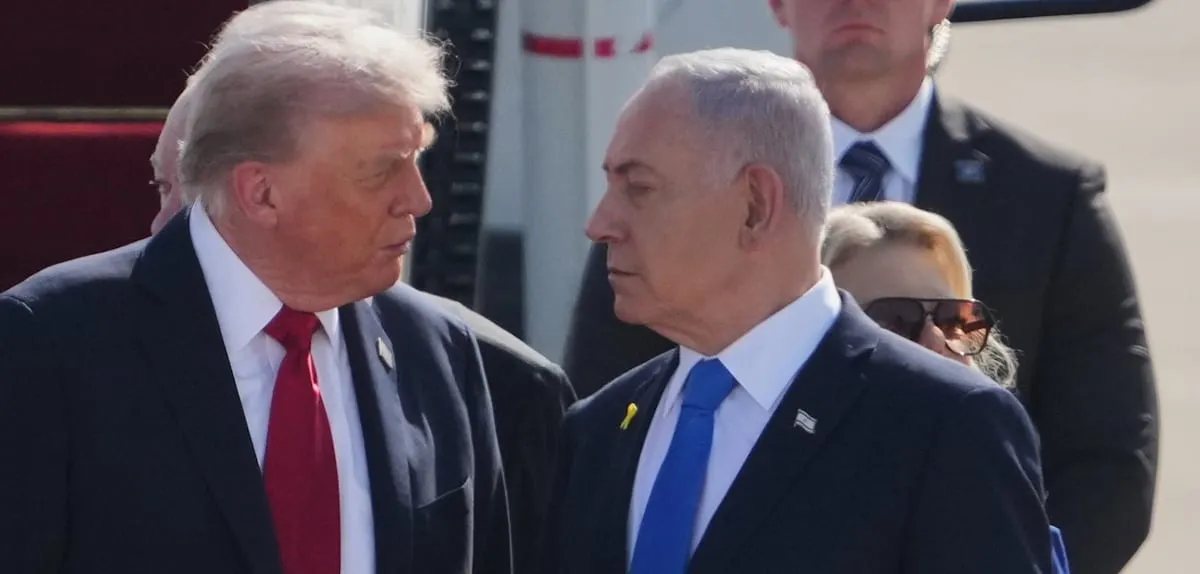
JERUSALEM — Benjamin Netanyahu, then Prime Minister of Israel, once directly conveyed deep concerns to United States President Donald Trump regarding Turkey. In a strategic phone conversation, Netanyahu asserted that Ankara, through various statements, had become a significant security threat to Israel. This discussion, which took place during the leadership era of both figures, focused on the urgency of establishing security zones along Israel's borders and urging Washington to block the sale of advanced fighter jets to Turkey.
The core of this diplomatic communication was Israel's effort to secure its territory from potential regional destabilization. Netanyahu specifically highlighted Turkey's rhetoric and foreign policy, which were deemed increasingly aggressive, especially in the Eastern Mediterranean and Middle East. Ankara's escalating narrative was seen as creating an unfavorable environment for Israel's stability.
Israel's requests were not merely expressions of concern, but concrete demands. Netanyahu pressed for the establishment of effective buffer zones in border areas to counter intrusion or direct threats. This step was considered essential for maintaining the sovereignty and security of its citizens amidst continuously volatile geopolitical dynamics.
Furthermore, the issue of US fighter jet sales, particularly the F-35 model, became a crucial point. Israel, as a key ally of Washington and recipient of advanced military technology, viewed Turkey's acquisition of fifth-generation fighter aircraft as a potential shift in the balance of power that would be detrimental to its interests. Netanyahu argued that such a technology transfer to a potentially threatening nation would jeopardize Israel's military superiority in the region.
The conversation between the two national leaders occurred during a complex period of international relations, where the dynamics of alliances and rivalries frequently shifted. Washington, under the Trump administration, had a fluctuating relationship with Ankara, marked by various tensions as well as diplomatic efforts.
Analysis from geopolitical experts at the time indicated that Netanyahu's insistence reflected Israel's strategic concerns about Turkey's regional ambitions. Although the two countries historically had good relations, the direction of Turkey's policy under President Recep Tayyip Erdogan had created significant uncertainty, including human rights issues and intervention in several conflicts.
The denial of fighter jet sales to Turkey by the US also became a hot topic. Israel's concerns aligned with some views in the US Congress which also doubted Turkey's loyalty as a NATO ally, especially after Ankara acquired the S-400 air defense system from Russia. This underscored the complexity of global military alliances.
In the broader regional context, the threat articulated by Netanyahu could also be seen as part of Israel's efforts to shape narratives and alliances in the Middle East. Certain Arab states also harbored suspicions about Turkey's regional agenda, allowing Israel's views to resonate in several regional capitals.
In the past, senior diplomats have commented on the impact of aggressive statements from global leaders. For instance, the incident of the “Erdogan Souvenir Pistol” served as an indicator of how even symbolic actions can trigger waves of interpretation and concern among diplomats. This Netanyahu-Trump case is another demonstration of geopolitical sensitivity.
Similar diplomatic tensions often accompany situations in conflict-prone regions. For example, concerns regarding “Mounting Tensions in the Strait of Hormuz” show how crucial flashpoints can trigger rapid diplomatic and military responses. Israel, with its long history of conflict, proactively sought Washington's support to mitigate risks.
In this year 2026, where the geopolitical landscape continues to evolve, the conversation between Netanyahu and Trump remains relevant as a case study. The event illustrates the intricate web of national security interests interacting with global power dynamics.
The legacy of that discussion may not be immediately apparent, but it forms one layer in the complex triangular relationship between the United States, Israel, and Turkey. Past decisions regarding arms sales and diplomatic support continue to be defining factors in the regional security architecture.