 Demian Sahputra
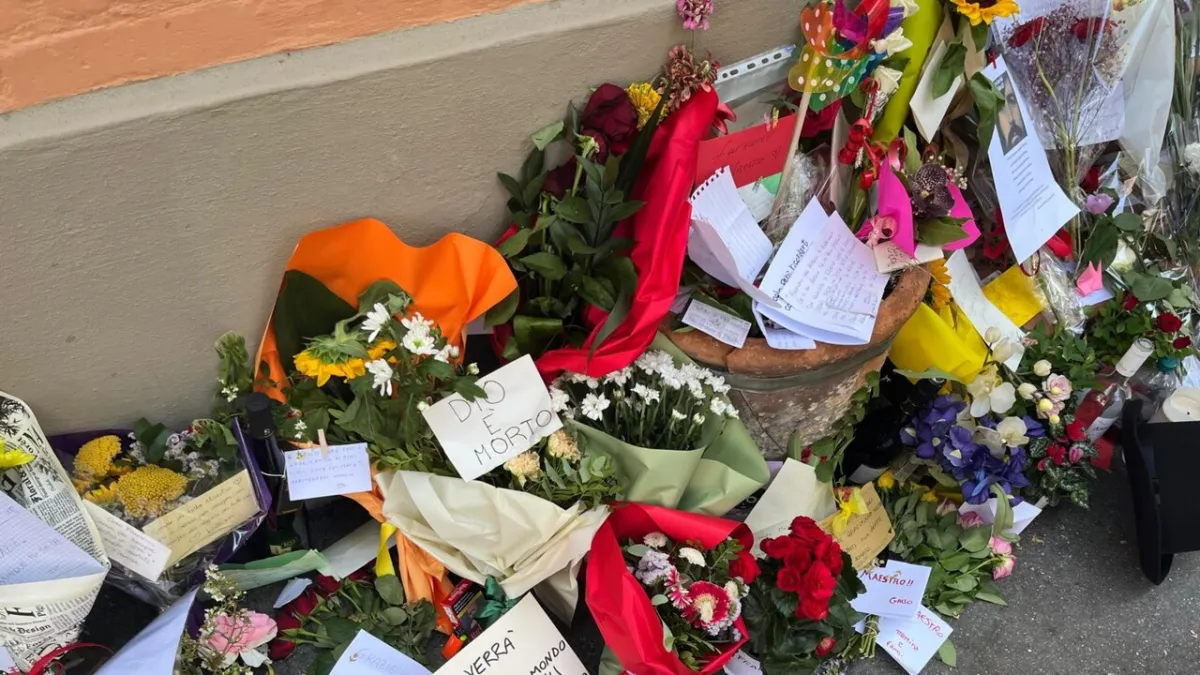
BOLOGNA – Italy mourns the passing of one of its cultural icons, Francesco Guccini, the legendary musician and poet. The cities of Bologna and Modena officially declared "lutto cittadino" or city mourning on Friday (January 17, 2026), following the artist's death, with his private funeral scheduled for tomorrow in Pavana. Thousands of fans gathered in Via Fabbri, expressing their grief and last respects.
A poignant atmosphere enveloped both cities, reflecting the profound depth of Guccini's influence on the Italian cultural landscape. Since the news of his passing broke, waves of condolences have continued to pour in from various segments of society, including artists and politicians.
The tribute procession in Via Fabbri became a focal point, with a sea of flowers and heartfelt messages from fans. They came from all corners, symbolizing the strong emotional bond with Guccini's works, which often voiced social realities and life philosophies.
Francesco Guccini, born in 1940, was known as one of Italy's most influential singer-songwriters. His poetic, introspective, and often satirical lyrics earned him the title of "a poet among singers" (cantautore). His works frequently explored existential, political, and social critique themes.
Guccini's music transcended generational boundaries, shaping the musical identity of many. His songs like "Dio e morto" and "L'Avvelenata" became anthems for the youth and reflections for thinkers, solidifying his position as the nation's conscience. Related to this, the band Nomadi performed 'Dio e morto' in remembrance of Guccini.
The declaration of *lutto cittadino* in Bologna and Modena affirms Guccini's status as a national treasure. Flags flying at half-mast and the postponement of public events are official tributes from the city governments for his contributions.
The family decided to hold a private funeral in Pavana, the village where Guccini spent much of his life and which often inspired his lyrics. This decision was respected by the public, even though many wished to attend his farewell directly.
Fellow musicians and artists also expressed their deep sorrow. Jovanotti, a popular Italian musician, had previously called Guccini a "giant" of Italian music, immortal in memory. "He was a beacon, an endless inspiration," he stated.
The loss of Guccini is not merely the loss of a musician, but the fading of an era of thought and artistic expression. He leaves a rich legacy, including dozens of albums, books, and films, that will continue to live on and inspire future generations.
Here are some details of the public outpouring of grief:
- Hundreds of floral tributes and candles were placed outside Guccini's residence in Via Fabbri.
- Social media was flooded with hashtags #CiaoGuccini and #LuttoCittadino, serving as platforms for collective grief.
- Several radio and television stations played his best works throughout the day as a mark of respect.
The University of Bologna, where Guccini once studied and taught, also held a moment of silence to commemorate his contributions to Italian culture and literature. His legacy as a thinker and social critic will continue to be a subject of study and appreciation.
Guccini's passing closes a significant chapter in the history of Italian popular music, yet the resonance of his work will continue to echo through time.
Editorial Insight: Francesco Guccini's passing in 2026 is not merely an event of sorrow for Italy, but also a reminder of art's power in shaping national identity. The declaration of *lutto cittadino* in two major cities signifies official recognition of artists as custodians of public conscience and interpreters of their era. This phenomenon could strengthen appreciation for local cultural values amidst globalization, while also encouraging the emergence of new artists brave enough to voice truth through profound works.