 Edward DP Situmorang
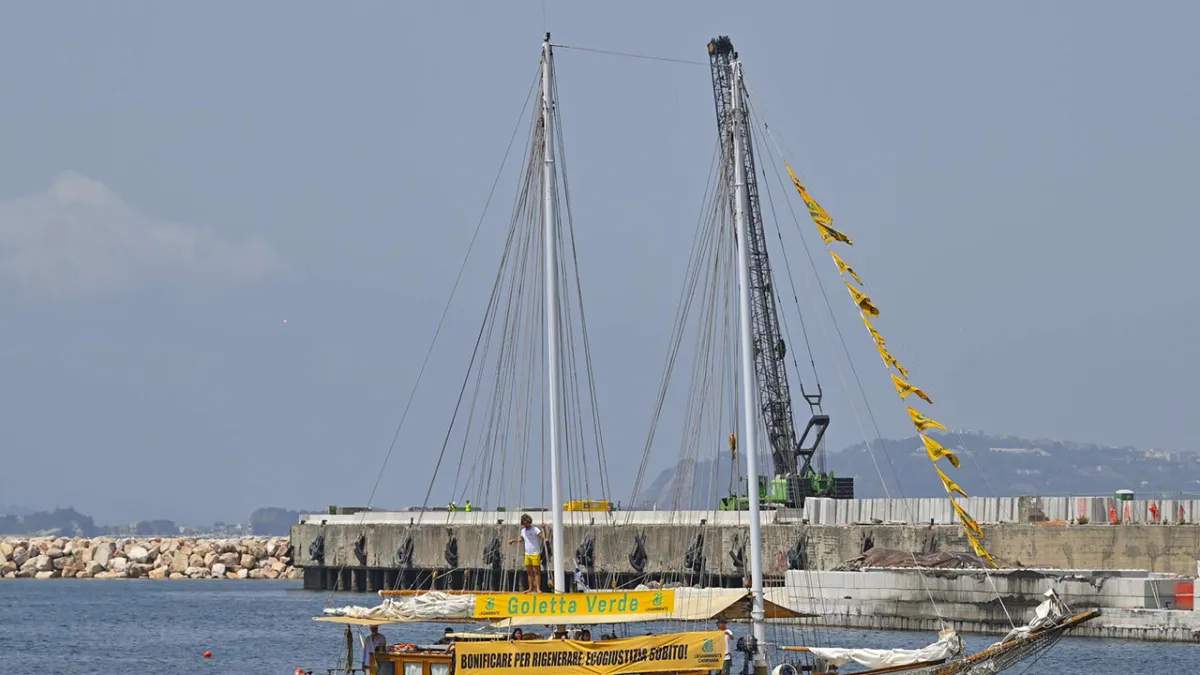
ROME – A new report from Goletta Legambiente in 2026 reveals a startling fact: 34% of Italy's marine and lake areas are in a severely polluted state. This finding highlights the failure of inadequate wastewater treatment systems, triggering four ongoing European Union infringement procedures against the nation. River estuaries, in particular, represent critical pollution hotspots.
The renowned environmental organization, Legambiente, through its annual Goletta Verde and Goletta dei Laghi expeditions, consistently monitors the quality of Italian waters. Their survey results this year confirm that wastewater treatment infrastructure remains far from the standards required to protect these vital aquatic ecosystems.
The 34% figure is not merely a statistic; it represents thousands of kilometers of coastline and lake surfaces exposed to dangerous pollutants. This contamination not only threatens biodiversity but also directly impacts the tourism sector and public health, both reliant on clean waters.
The term mala depurazione refers to poor or ineffective wastewater treatment practices. This phenomenon encompasses various issues, ranging from obsolete and poorly maintained treatment facilities, a lack of investment in modern technology, to uncontrolled illegal discharge systems.
The Goletta Legambiente report specifically points to river estuaries as punti critici or critical points. Rivers often serve as primary conduits for inadequately treated domestic and industrial waste to reach seas and lakes, exacerbating pollutant concentrations in these areas.
This situation has drawn serious attention from the European Union. The European Commission has launched four infringement procedures against Italy regarding compliance with the Urban Wastewater Treatment Directive. These procedures could lead to significant financial penalties if Italy fails to meet the established standards.
The consequences of these infringement procedures are not trivial. Beyond potential fines, Italy's credibility as an EU member committed to environmental protection is also at stake. This could affect the country's image in the eyes of the international community and tourists.
Here are some of the ongoing infringement procedures:
- Infringement concerning urban wastewater quality standards.
- Deficiencies in wastewater collection and treatment infrastructure.
- Failure in environmental data monitoring and reporting.
- Non-fulfillment of specific pollutant reduction targets.
The Italian government faces immense pressure to take concrete action immediately. Urgent investment in modernizing wastewater treatment facilities, stricter enforcement of laws against polluters, and public education campaigns are essential steps to restore water quality.
Issues of water pollution are not new to Italy. Previous cases, such as the struggles of the community in Taranto against the impacts of industrial pollution, underscore the urgency of addressing environmental problems. Polluted environments often echo the Cry of Andrea, a Sick Teenager from Taranto, Challenging Governor Dekaro on Ilva, a bitter reminder of the price society must pay.
The future of Italy's marine and lake ecosystems hinges on the seriousness with which the government and public confront this challenge. Italy's natural beauty, a magnet for global tourism, now stands at a crossroads between sustainability and further degradation.
Editorial Insight: This event not only reveals an urgent environmental challenge for Italy but also reflects a broader governance failure within certain EU member states to comply with environmental directives. The infringement procedures from the European Union serve as a crucial accountability mechanism, compelling nations to seriously tackle the impact of industrial and domestic activities on ecosystems. Italy's case has the potential to become a precedent for other countries still neglecting similar issues.