 Edward DP Situmorang
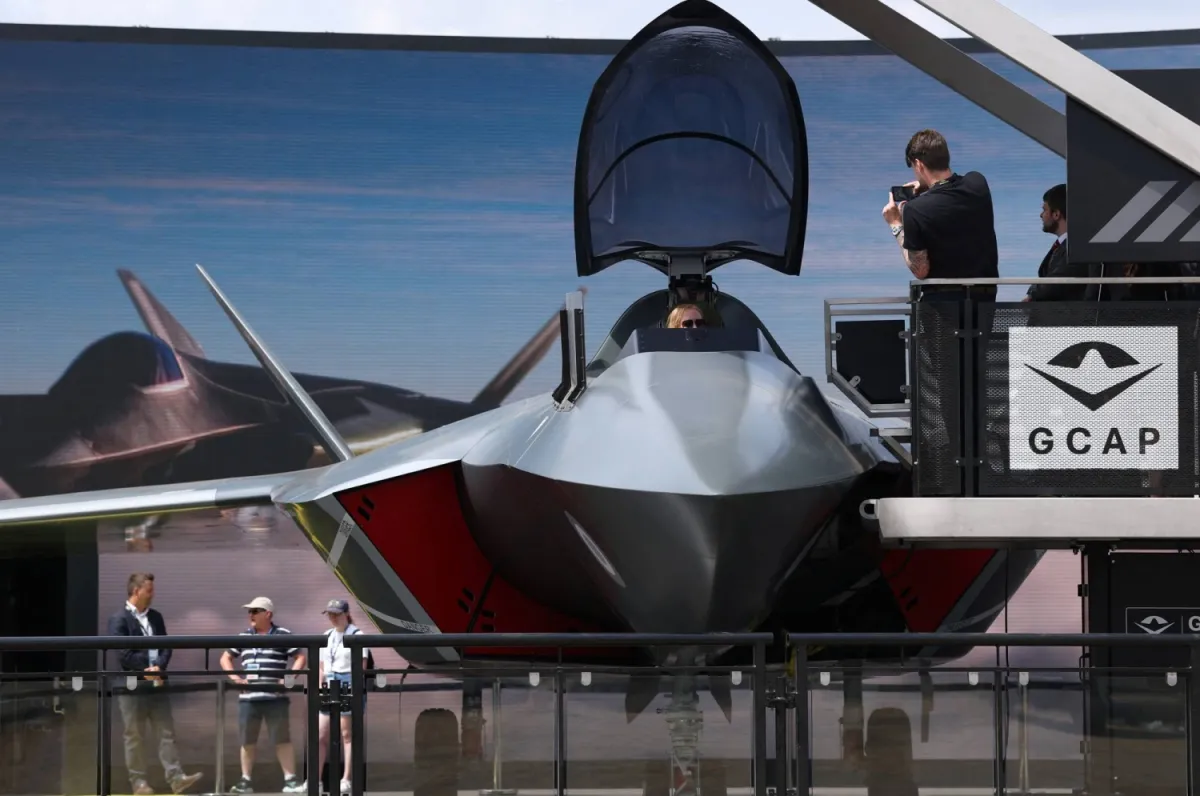
TOKYO – The prospect of Germany joining the Global Combat Air Programme (GCAP), a next-generation fighter jet development initiative, has triggered serious concerns among officials in Tokyo. Japan, a cornerstone of this ambitious project, has voiced apprehension regarding potential delays to the planned 2035 introduction date should a new partner be integrated at this critical juncture.
GCAP is a multinational defense initiative initially conceived by Japan alongside the United Kingdom and Italy. The program aims to create an advanced combat aircraft capable of addressing future global security challenges, while also enhancing the defense capabilities of the participating nations. The 2035 launch deadline has been fundamental to the strategic planning of all three countries.
Germany's interest in joining GCAP, while viewed positively as an alliance strengthening move, also brings complex implications. Adding a new participating nation mid-course has the potential to slow down the development process. Each country brings unique technical, operational, and logistical requirements that necessitate consensus and integration into the design blueprint.
Officials in Tokyo have explicitly stated that integrating an additional partner at this stage could disrupt the established working momentum. The process of harmonizing various specifications and requirements from a fourth nation is feared to consume substantial time, thereby delaying vital progress towards the 2035 target.
These concerns are not unfounded. Modern fighter jet development projects are inherently complex, involving the coordination of thousands of engineers and billions of dollars in investment. Any alteration in scope or the inclusion of additional parties typically triggers revisions to timelines, budgets, and even core designs, all of which risk postponing project maturity.
Japan has an urgent strategic imperative to acquire a sixth-generation fighter jet on schedule. Amidst the constantly volatile regional security dynamics, such as escalating tensions in the Sea of Japan and repeated provocations from Pyongyang, state-of-the-art aerial defense capabilities are a top priority. Delays could signify a critical capability gap.
(Also read: Pyongyang's Provocation: Barrage of Missiles Strikes Sea of Japan, World Reacts Harshly 2026)
The GCAP program is designed to replace aging fighter fleets in the three nations, including the Eurofighter Typhoon in the UK and Italy, and the F-2 in Japan. A smooth and timely transition is essential to maintain air superiority and military response capabilities.
High-level negotiations and discussions concerning Germany's potential participation are ongoing. London and Rome are also actively involved in these talks, seeking common ground that can accommodate the interests of all parties without compromising the program's integrity and schedule.
Decision-making requires balancing the strategic benefits of alliance expansion against the practical risks to efficiency and development timelines. Consensus will be key in determining the future of GCAP as a multinational defense collaboration program.
Editorial Insight:
The addition of a new partner to a program as significant as GCAP is indeed a dilemma. On one hand, Germany's presence would strengthen the industrial base and budget of the program, while deepening European and Asian defense integration. On the other hand, Japan's concerns about the 2035 delay are entirely valid, given its urgent need to modernize its air force amidst an increasingly complex geopolitical landscape. A possible solution might involve a modular approach or more specific task divisions, but this would still demand significant compromises from all parties to keep the project on track.