 Stefani Rindus
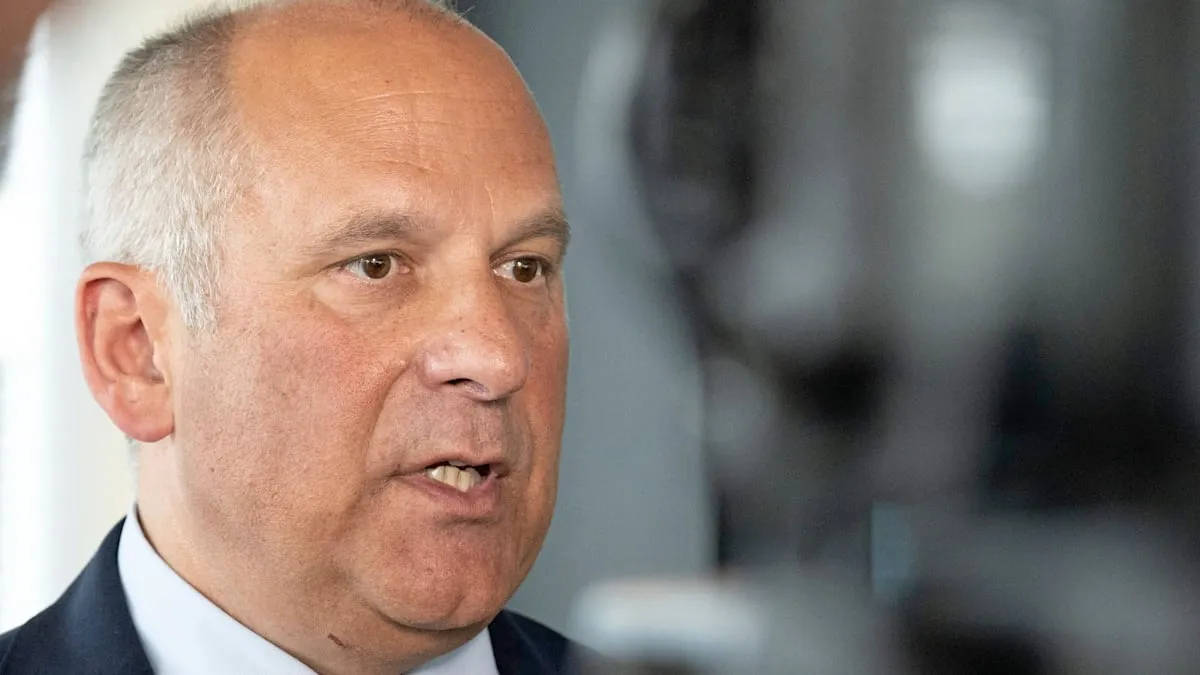
FRANKFURT – Political unease grips Germany after Hessen's Interior Minister, Roman Poseck, openly refuted statements by Defense Minister Boris Pistorius regarding post-Generation Z protest riots that led to looting and attacks on police. Poseck asserted that Pistorius was not at the scene, implying his understanding of the situation was inaccurate. This controversy follows politician Alexander Dobrindt's claims about the involvement of migrant chaotic elements in the violence.
This verbal confrontation between high-ranking German officials erupted when Poseck delivered a sharp response to Pistorius. In his statement, Poseck invited Pistorius to come directly to Frankfurt, suggesting the need to witness the evidence firsthand before drawing public conclusions. I would gladly invite Mr. Pistorius to Frankfurt – you can clearly tell he wasn't there, Poseck stated, highlighting the Defense Minister's perceived lack of direct information.
Poseck's statement serves as explicit support for Alexander Dobrindt, a prominent politician from the Christian Social Union (CSU). Dobrindt previously ignited heated debate by labeling migrant chaotic elements as the masterminds behind shop looting and assaults on security forces during and after Gen Z climate protests.
The riots in question occurred recently in 2026, following a series of protests initiated by youth groups from Generation Z. These protests, initially focused on climate issues and social justice, unfortunately escalated into acts of vandalism and violence in several German cities, including Frankfurt. The incidents tarnished the image of peaceful protest movements.
Looting targeting retail stores and brutal attacks on police officers became the focal point of this debate. Video footage and eyewitness accounts indicate organized groups exploited the crowds of protesters to commit criminal acts, exacerbating the security situation.
Defense Minister Boris Pistorius, from the Social Democratic Party (SPD), reportedly issued statements perceived as downplaying or denying the scale of migrant involvement in the riots. His perception contrasts sharply with reports from local police and state interior ministries, such as Hessen's.
This divergence in views is not merely a common disagreement; it highlights cracks in the central and regional government narratives concerning security issues and migrant integration. The term migrant chaotic elements itself is highly sensitive in Germany, given the long history of debates surrounding immigration policies and their societal impact.
Dobrindt's statements, now supported by Poseck, have triggered mixed reactions across the German political spectrum. While some advocate for openly naming the problem, others fear stigmatization of entire migrant communities, potentially leading to social tensions.
The German federal government is under pressure to provide a coherent and comprehensive response to these incidents. Disagreement between two influential ministers could erode public trust in the government's ability to maintain law and order.
Public discourse now focuses on the need for thorough and transparent investigations to identify the perpetrators behind the riots, regardless of their background. The importance of firm and impartial law enforcement is a primary call from various parties.
This event also serves as a reminder of the challenges facing Europe, including Germany, in managing complex social dynamics amidst immigration issues and global economic vulnerabilities. Concerns regarding social contributions in Germany are also part of the broader discussion.
Poseck's invitation to Pistorius to Frankfurt can be seen as an attempt to pressure the Defense Minister to acknowledge the realities on the ground and become more deeply involved in resolving the problem. It represents an open challenge for Pistorius to witness the direct impact of the anarchic acts that occurred.
Editorial Insight: The controversy between Roman Poseck and Boris Pistorius is more than a mere debate; it reflects deeper political tensions in Germany regarding how the government should respond to public violence and migration issues. The use of the phrase migrant chaotic elements by politicians like Dobrindt, subsequently supported by Poseck, indicates an attempt to specifically identify perpetrator groups, yet simultaneously risks fueling polarization and stigmatization. This situation demands caution in public narrative, while upholding transparency and fair law enforcement. The political ramifications of this divergence of views could impact long-term security and integration policies in Germany, especially with upcoming elections.