 Debby Wijaya
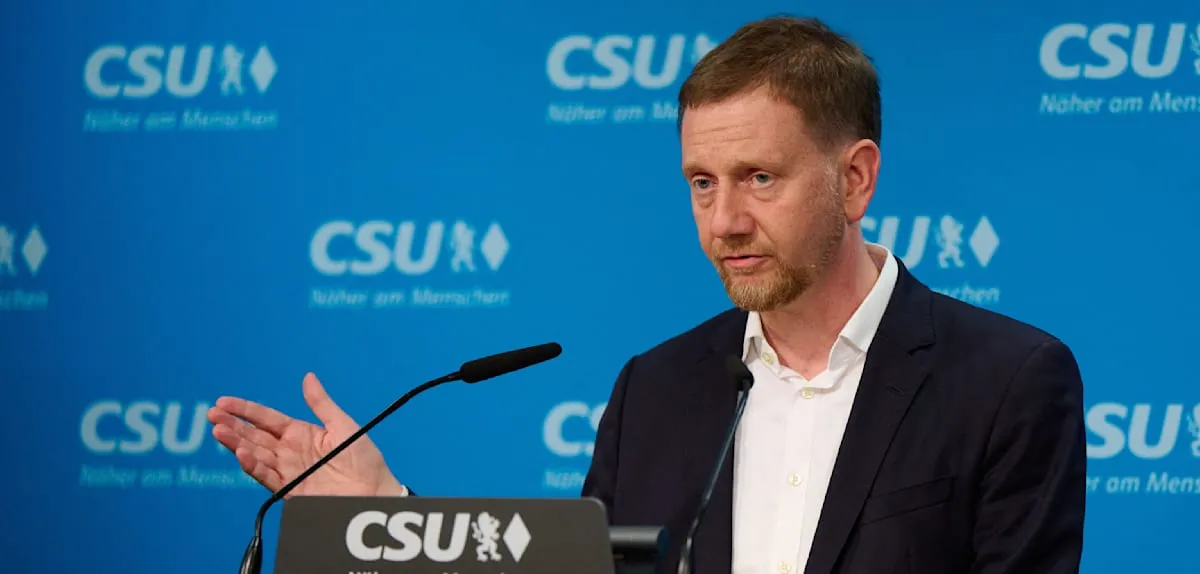
DRESDEN – Saxony Prime Minister Michael Kretschmer has launched a scathing critique of Germany's ongoing policy of supporting Ukraine. He asserted that the aid constitutes a big mistake and urged Berlin to redirect its focus towards strengthening national defense through the development of domestic arms industries. This controversial statement by Kretschmer comes amidst heated debate regarding the direction of Germany's foreign and security policy.
Kretschmer not only criticized but also defended the establishment of new arms manufacturing facilities in Germany. For him, these initiatives are essential as an integral part of the nation's defense strategy. He emphasized that investing in military production capacity is a fundamental pillar for ensuring Germany's security and sovereignty amidst global geopolitical dynamics.
The Christian Democratic Union (CDU) politician highlighted the necessity of reviewing budgetary priorities and resources. According to him, excessive focus on external conflicts risks neglecting fundamental domestic needs, particularly concerning military readiness and citizen protection.
That is a big mistake, Kretschmer stated, referring to the level and type of assistance provided to Kyiv. His criticism adds to a growing chorus of voices in Germany questioning the effectiveness and sustainability of the current strategy, particularly from conservative circles.
His statement has sparked intense discussions within German political spheres, especially given the sensitivity of the Ukraine issue and Berlin's commitment to its Western allies. However, Kretschmer appears determined to voice his perspective for Germany's long-term interests.
The decision to maintain and even expand defense industries in Saxony, the region he leads, is seen as a concrete manifestation of his rhetoric. Kretschmer believes that this move not only creates jobs but also strengthens Germany's strategic autonomy.
We must be able to defend ourselves, he asserted, underscoring the urgency for Germany not to be entirely reliant on other nations for its defense. This view aligns with a trend among several European countries to increase defense spending following the conflict in the east.
The issue of supporting Ukraine has indeed been a point of contention within German politics. Some politicians, as also highlighted in the related article Merz Shocks Europe: Peace Threatened, Ukraine Attacks Trigger Western Division, have raised concerns about the broad implications of Germany's involvement.
Conversely, strong views exist from those who argue that support for Ukraine is crucial for maintaining regional stability and upholding democratic values in Europe. They fear that withdrawing support would send the wrong signal to potential aggressors.
Secret German defense documents, which once garnered attention, also illustrate the complexity of this issue. As revealed in the report German Defense Secrets: CDU Attempts to Secure from AfD, efforts to safeguard strategic national defense data reflect an awareness of the importance of readiness amidst diverse threats.
Kretschmer added that building domestic defense capabilities would provide Germany with a stronger bargaining position on the international stage. It is not merely about purchasing weapons, but about having control over military supply chains and innovation.
His statements can also be interpreted as an attempt to redefine Germany's foreign policy identity, moving from a passive mediator role to a more assertive power in defending its own interests.
Editorial Insight:
Michael Kretschmer's views reflect a shifting nuance in Germany's foreign policy debate, especially among conservatives. His sharp criticism of Ukraine support and emphasis on domestic defense signal a stronger tendency towards strategic isolationism, potentially sparking tensions with other European allies. It also indicates a greater prioritization of German national interests in facing increasingly complex geopolitical challenges, rather than fully adopting a narrative of transnational solidarity.