 Gabriella
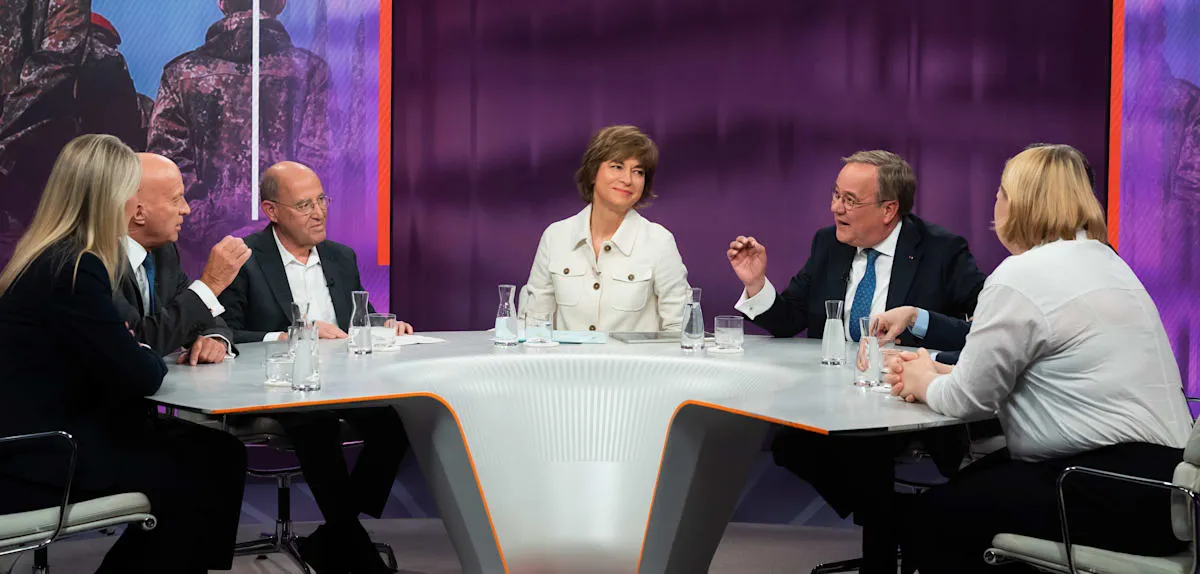
Berlin — A fierce debate between senior Christian Democratic Union (CDU) politician, Armin Laschet, and the defense expert from the Alternative for Germany (AfD) party, Rüdiger Lucassen, has resurfaced as a focal point of public attention. This heated incident occurred on the television talk show "Maybrit Illner" in a previous period, when Laschet repeatedly interrupted Lucassen, sparking intense tension surrounding the vision for Europe's future, the legacy of statesman Konrad Adenauer, and the direction of Germany's defense policy.
The discussion deviated from typical geopolitical topics such as the United States under Donald Trump or Russia under Vladimir Putin, shifting focus entirely to Germany's internal dynamics and its role on the European stage. The fundamental differences in perspective between the two parties regarding Germany's national identity and strategy formed the core of the conflict.
Laschet, representing the CDU mainstream, consistently advocated for strong European integration and underscored the importance of transatlantic alliances. He frequently referred to the principles laid down by Konrad Adenauer, West Germany's first chancellor, who positioned Germany within the framework of European and Western cooperation as the foundation for post-war stability.
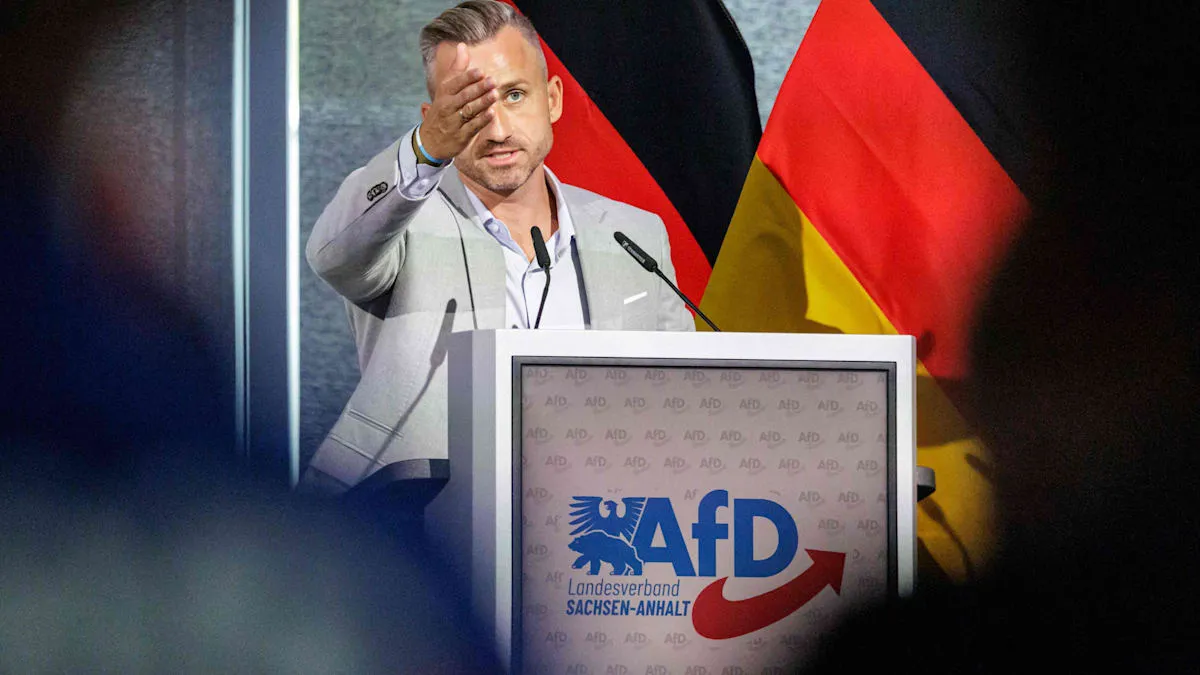
Conversely, Lucassen from the AfD presented arguments that tended to challenge the narrative of European integration. The AfD party is known for its platform that emphasizes greater national sovereignty and is often skeptical of current European Union policies, including aspects of defense. This perspective indicates a desire to re-evaluate Germany's commitments and priorities.
The peak of the tension occurred when Laschet, visibly agitated, repeatedly interrupted Lucassen's speech, asserting the now iconic phrase, "Nein, nein, Herr Lucassen." The interruption was not merely a spontaneous response but a reflection of the deep ideological chasm between the two politicians regarding Germany's strategic direction.
The moment quickly spread, triggering various discussions on social media and among journalists. Many observers regarded this incident as a tangible illustration of how political polarization has extended into public discourse forums, especially concerning fundamental issues shaping German and European identity.
The emergence of the AfD as a significant political force has transformed Germany's political landscape. The party has successfully garnered support by raising issues such as immigration and nationalism, and by criticizing European Union policies deemed too restrictive of German sovereignty. This situation forces established parties like the CDU to confront increasingly complex electoral challenges. A related article titled "AfD Pimpin Survei Berlin Pertama Kali: Jerman Geger Aliansi Politik" (available at CognitoDaily.com) provides further insight into this trend.
For the CDU, confrontation with the AfD is inevitable in its efforts to maintain a centrist and pro-European stance. That period represented a crucial phase for the CDU to reassert its core values amid the onslaught of alternative narratives from the far-right.
The aspect of "Aufrüstung" or Germany's military strengthening also became a crucial point in the debate. Germany's complex post-war history makes defense issues a sensitive topic. However, with changing global geopolitical dynamics, especially in this year 2026, questions regarding Germany's defense capabilities and its contribution to NATO and European security are once again a primary agenda.
This debate, though seemingly local to German television, inherently reflects larger upheavals within the European integration project. Germany, as the largest economy in the European Union, plays a central role in determining the bloc's direction. These internal tensions could have implications for the cohesion and effectiveness of the European Union as a whole.
Political analysts believe that the "Maybrit Illner" incident serves as a reflection that political debate in Germany is becoming increasingly intense and personal. The public witnessed firsthand the difficulty of finding common ground between conflicting ideologies, especially when discussing historical legacies and the nation's future.
The entire debate between Laschet and Lucassen reaffirms the importance of open, albeit fierce, discourse in a democracy. It demonstrates that the foundational values of Europe and the direction of defense policy will continue to be a fundamental battleground for ideas in Germany's political arena in the coming years.