 Angela Stefani
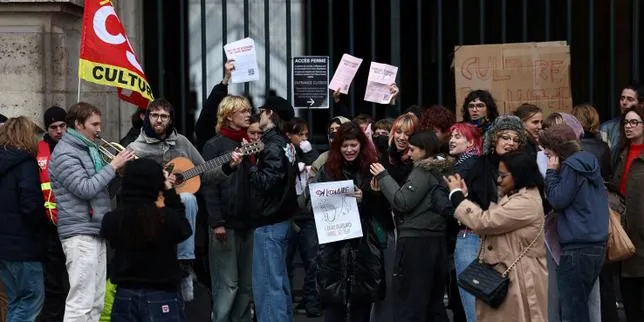
Paris – The Louvre Museum, one of the world's leading cultural icons in Paris, France, was completely paralyzed again on Monday, October 19, 2026, following a massive blockade by hundreds of students. This demonstration aimed to voice support for the 'mouvement lyceen' or high school student movement, but directly sparked tension and fierce arguments with thousands of disappointed international tourists who were unable to enter.
The blockade began in the morning, effectively closing access to the museum complex which is usually bustling with visitors. The students, mostly from universities around Paris, urged the government to listen to the demands of the student movement, which have not been specified but are believed to be related to education reforms or social policies.
The scene in front of the Louvre's glass pyramid became a stark contrast. On one side, shouts of slogans and protest banners adorned the sky. On the other, long lines of tourists from various countries, from families to tour groups, expressed their frustration. The dialogue between the two sides was sometimes difficult, filled with exasperation from tourists who had traveled long distances.
We came from Japan specifically to see the Mona Lisa. This is a waste of time and money, complained a tourist while trying to get information from overwhelmed security personnel. Students retorted that their struggle was greater than just a holiday agenda, leading to heated but peaceful debates.
Many tourists were forced to cancel pre-purchased tickets or change their travel plans. This situation not only disrupted their travel experience but also caused potential financial losses for Paris's tourism sector, which had just recovered from a series of global uncertainties.
Such protests are not new in France. The country often witnesses large-scale demonstrations that paralyze public activity. The Louvre blockade adds to a growing list of incidents that show social unrest remains a part of France's political landscape, even amidst national economic recovery efforts.
Authorities and local police were seen trying to mediate the situation, but there were no signs the blockade would end soon. President Emmanuel Macron had previously strongly condemned acts of destruction and public blockades, emphasizing that such actions harm national interests and must be dealt with firmly.
A student spokesperson, who declined to be named, stated, We have no other choice. Our voices are often ignored. This is an effective way to draw public and government attention to crucial issues faced by young people. They affirmed that the action would continue until their demands are seriously addressed.
This uncertainty also raises security concerns. Several countries, including Germany, have previously issued travel warnings for their citizens in France due to escalating demonstrations. Although the Louvre blockade was relatively peaceful, the potential for friction with affected parties remains a serious concern for law enforcement.
This incident underscores the ongoing challenge for the French government in balancing democratic rights with maintaining public order and economic stability, especially in the vital tourism sector. Long-term solutions are needed to address the root causes that trigger recurring waves of protests.
Editorial Insight: The student blockade of the Louvre is a reflection of the complex socio-political dynamics in France. While students have a constitutional right to protest, its impact on the vital tourism sector and public inconvenience should be seriously considered. The government needs to find more effective dialogic solutions to prevent such conflicts from escalating in the future, without sacrificing freedom of expression. The impact on Paris's image as a global tourist destination also needs to be addressed immediately through transparent communication and responsive action.