 Angela Stefani
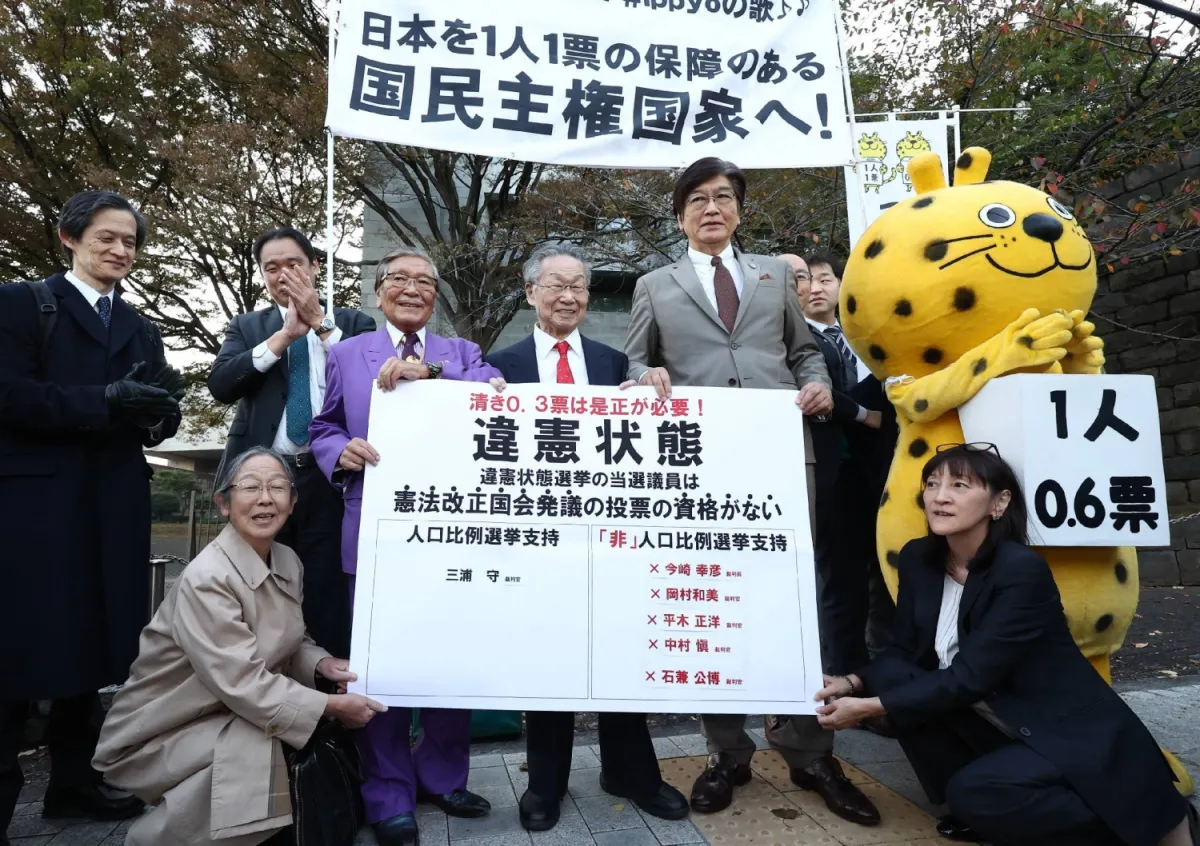
TOKYO – Japan's Supreme Court today made a surprising declaration, ruling that the 2025 General Election was held in an 'unconstitutional state' due to extreme vote-value disparity across various constituencies. Nevertheless, the crucial decision, read by Chief Justice Yukihiko Imasaki, did not grant the requests to invalidate the election results that had already taken place, sparking an intense wave of discussion regarding the future of democracy in the Land of the Rising Sun.
This declaration by the Supreme Court marks a serious acknowledgment of a fundamental inequality in voter representation. Vote-value disparity occurs when a single vote in a densely populated area carries significantly less weight than a single vote in a less populated, rural constituency. This practice, a subject of controversy for years, is considered a violation of the principle of equality enshrined in Japan's constitution.
Chief Justice Yukihiko Imasaki, during the delivery of the ruling, explicitly highlighted profound constitutional concerns. The maximum vote-value disparity that occurred has raised serious issues related to the principle of equality of citizens before the law and in political rights, he stated. Imasaki emphasized that a stark difference in vote weight can erode the legitimacy of the democratic process.
However, Imasaki also elucidated the reasons behind the refusal to invalidate the 2025 election results. The court considered the massive political and administrative destabilization implications if the election results were entirely nullified. Despite constitutional concerns, a complete invalidation of election results would create a legislative vacuum and far greater uncertainty for the nation, he added.
This ruling places the Japanese parliament in a difficult position. Although the election results remain valid, the court implicitly urges legislative reform to address the issue of vote-value disparity. Without significant changes, Japan's electoral system risks facing similar constitutional challenges in the future, possibly even with harsher judgments.
Electoral reform activists and civil society groups welcomed the court's recognition of this constitutional problem but also expressed frustration over the failure to invalidate the election results. They argue that a ruling without invalidation might reduce the urgency for legislators to act promptly.
Among politicians, responses varied. Some parliament members called for the establishment of a special committee to review election laws, while others argued that the current system, though imperfect, has served Japan's political stability well. This debate is expected to intensify in the National Diet in the coming months.
Japanese legal history records several similar cases in the past, where courts have warned about the unconstitutionality of vote disparity, but rarely have they led to election invalidation. The 2025 case stands as one of the Supreme Court's strongest affirmations of the need for systematic reform.
The Japanese public now awaits concrete steps from the government and parliament. The crucial question is how quickly and effectively they can respond to these constitutional demands. Failure to act could further erode public trust in the integrity of the political system and fair representation.
The year 2025, amidst a volatile global landscape and internal demographic shifts in Japan, marked a crucial period. The decision to maintain political stability by upholding election results while acknowledging constitutional flaws reflects a dilemma faced by many democratic nations: balancing procedural justice with the necessity of a stable government.
Editorial Insight: This Supreme Court ruling in Japan serves as a stern rebuke to the nation's electoral system, albeit with a pragmatic approach. By declaring the 2025 election constitutionally flawed yet refusing to invalidate its results, the court has sent a powerful message to the legislature to act. The reluctance to overturn the election outcome prioritizes short-term political stability, but it generates significant pressure for long-term reforms to safeguard the legitimacy of Japanese democracy. Parliament must now demonstrate its capacity to respond to the demands for constitutional justice.