 Demian Sahputra
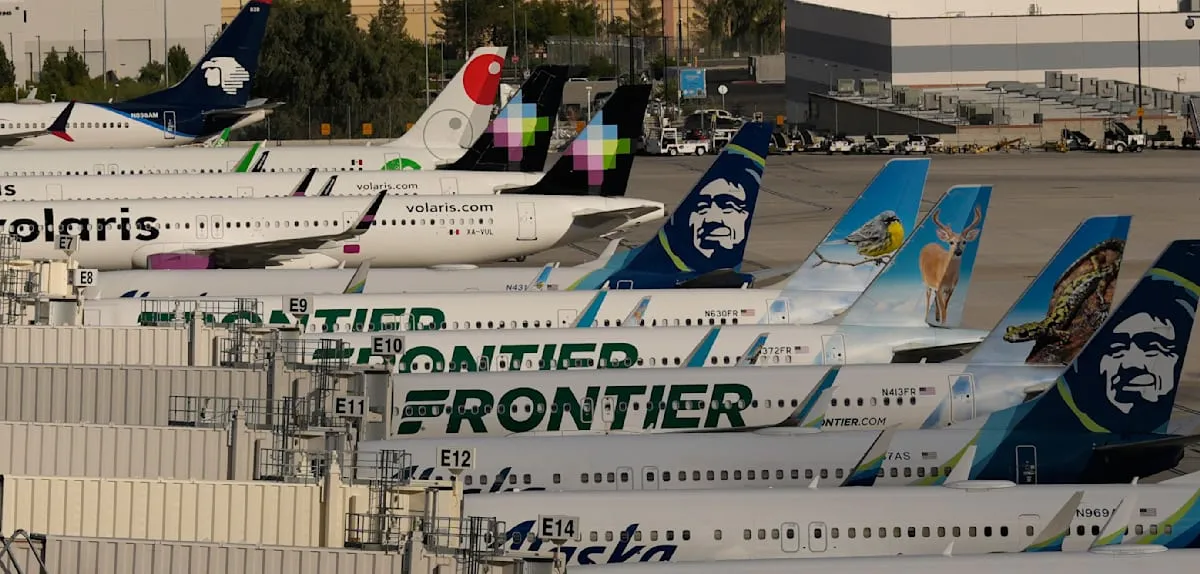
New York – Thousands of flights across the United States experienced mass cancellations in early January 2026, following a systemic disruption that crippled airport and airline operations nationwide. This critical incident not only caused domestic chaos but also impacted major international hubs like Heathrow in London, prompting deep questions about the true cause – whether it was purely a technical failure or if incompetence played a role in the management of vital aviation systems. The US government has launched an intensive investigation to uncover the root cause behind this unprecedented air transport crisis.
Chaos gripped the United States air transport system in January 2026 after more than 4,000 flights were cancelled in a short period. The incident, stemming from a nationwide system outage, left thousands of passengers stranded and triggered significant economic losses.
The domino effect of this incident quickly extended beyond American borders. London Heathrow Airport, one of the world's busiest aviation hubs, also felt the impact with a number of inevitable cancellations and delays.
US federal aviation officials, the Federal Aviation Administration (FAA), immediately issued an emergency statement, enforcing a nationwide ground stop for all domestic departures. This was a drastic and rarely seen measure, indicating the seriousness of the problem at hand.
FAA spokesperson, John Carter, stated in a virtual press conference, 'We are working tirelessly to identify the exact cause of this disruption. Our top priority is to restore flight operations safely and as quickly as possible.' He emphasized that a thorough investigation is underway.
The disruption was reportedly linked to the Notice to Air Missions (NOTAM) system, which is used to disseminate vital information to pilots regarding potential hazards or changes in flight facilities. The failure of this system effectively blinded air traffic control operations.
United States President, Donald Trump, via his X (formerly Twitter) social media account, expressed his disappointment. 'My administration will ensure a full investigation is conducted. We cannot tolerate incompetence or system failures that endanger millions of Americans,' wrote President Trump, reaffirming his commitment to seeking clarity.
The global aviation sector is now highlighting the vulnerability of the digital infrastructure underpinning vital operations. This crisis serves as a stark reminder of the urgency of investing in system modernization and mitigating increasing cyber risks.
Major airlines such as American Airlines, Delta, and United Airlines faced a barrage of complaints from passengers. They struggled to re-accommodate thousands of affected travelers, many of whom had to find emergency lodging or postpone important journeys.
Aviation economist, Dr. Anya Sharma, from George Washington University, estimated that the economic losses from these cancellations could reach hundreds of millions of dollars. 'The ripple effects will be felt in tourism, business, and supply chains. This is not just a technical issue, but also a crisis of public trust,' she remarked.
The US government, in collaboration with technology experts from the private sector, is racing against time not only to fix the system but also to strengthen it against similar threats in the future. A primary focus is on identifying whether the disruption was purely a software malfunction or the result of a cyber attack.
This incident also sparked a heated debate in Congress regarding budget allocations for the maintenance and upgrade of national aviation infrastructure. Some parliament members voiced concerns about possible underinvestment over the years.
In response, US Secretary of Transportation, Mark Peterson, pledged a comprehensive audit of all critical FAA systems. 'No stone will be left unturned in our efforts to ensure the safety and efficiency of air travel for the public,' he affirmed.
The crisis also garnered international media attention, with many comparing its scale of impact to the 9/11 incident in terms of airspace closure, although the causes and contexts are vastly different.
European airlines, including British Airways and Lufthansa, have issued travel advisories for passengers planning to travel to or transit through the US, urging them to regularly check their flight status.
Editorial Insight: A systemic disruption at a global aviation hub like the United States is a reflection of the vulnerability of modern digital infrastructure. More than just financial losses, this incident erodes public trust in systems that should be the backbone of global mobility. Questions surrounding incompetence or a lack of modernization are not mere rhetoric, but a serious call for every nation to evaluate and strengthen their cyber resilience and emergency preparedness in vital sectors. This event could set a precedent for significant reforms in aviation system management worldwide.