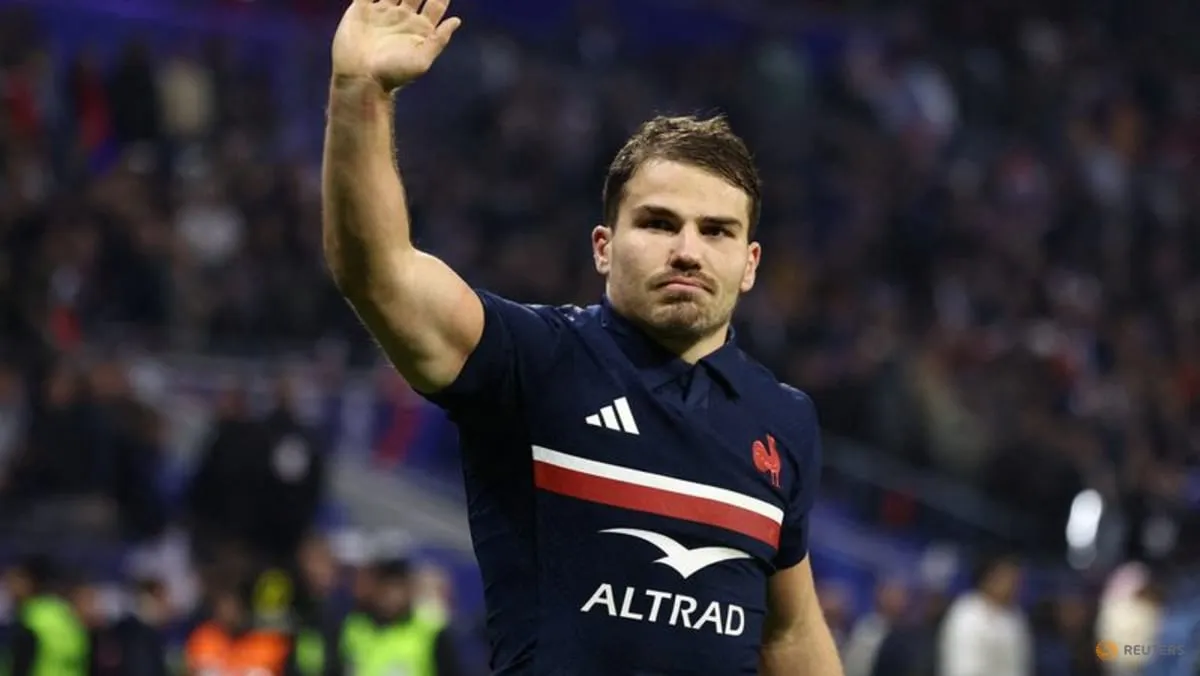
PARIS – Antoine Dupont, captain and one of the maestros of the French rugby team, has shrouded his role as flyhalf in thick secrecy ahead of a crucial match against the global rugby powerhouse, South Africa, in 2026. This silence has triggered widespread speculation among fans and analysts, attempting to decipher the tactical strategy France will employ to achieve a prestigious victory.
The star player, renowned for his ability to play effectively in various key positions, has consistently avoided explicit confirmation on whether he will wear the number 10 jersey when facing the Springboks. This deliberate ambiguity is clearly seen as an integral part of the psychological warfare tactics leading up to the major upcoming clash.
During a recent press conference in Paris, Dupont offered only a slight smile when questioned about his position. He affirmed his readiness to play wherever the team needs him and that their primary focus is on collective performance to ensure the team plays its best against one of the strongest teams in the world.
Encounters between the French national team and South Africa always deliver an exciting spectacle, rife with physical intensity and tactical acumen. This 2026 match is not merely a test of strength but also serves as an important barometer for both teams in the international rugby arena.
The flyhalf position carries immense responsibility, including orchestrating attacking play, executing crucial placement kicks, and reading opponent defenses. With Dupont's reputation as one of the world's best rugby players, his potential shift to this position would significantly alter the dynamics and playing style of the French team.
French sports media is currently bustling with analyses of Dupont potentially playing as flyhalf. Some argue this is a brilliant move to maximize his creativity and playing vision, while others express concerns about the potential risks that might arise from changing roles from his usual scrum-half (number 9) position.
The South African national rugby team, affectionately known as the Springboks, previously asserted that they are focused on their own game, although the potential threat from an Antoine Dupont always remains a primary concern, regardless of the position he plays. This statement indicates the high level of vigilance the South African team holds towards the French captain.
The tight secrecy maintained by Dupont undoubtedly poses a challenge for the Springboks' coaching staff. They must now prepare for two different scenarios: anticipating Dupont as a nimble and dangerous scrum-half, or as a visionary flyhalf capable of orchestrating attacks from the backline.
The long history of matches between the two teams reveals a very competitive rivalry, with both sides securing victories. Each game consistently becomes a display of strength, refined strategy, and mental fortitude, ultimately raising high expectations for the upcoming duel.
With tension continuously mounting across the global rugby community, the public worldwide now eagerly awaits the official announcement of France's player lineup. The final decision regarding Dupont's position, or at least the disclosure of his role, will be a key factor in shaping predictions for the outcome of this guaranteed fierce match.
Editorial Insight: Antoine Dupont's enigmatic stance is not merely a clever psychological tactic but also a reflection of the extraordinary flexibility and strategic depth of the French team under its coach's guidance. It also underscores how crucial the role of an exceptionally talented individual like Dupont is in determining the dynamics of international-level matches. Regardless of the position he occupies, Dupont's presence on the field is always a serious threat to opponents, and his ability to adapt is an invaluable asset to Les Bleus. This duel will be a true test for the French captain and the resilience of the Springboks.