 Debby Wijaya
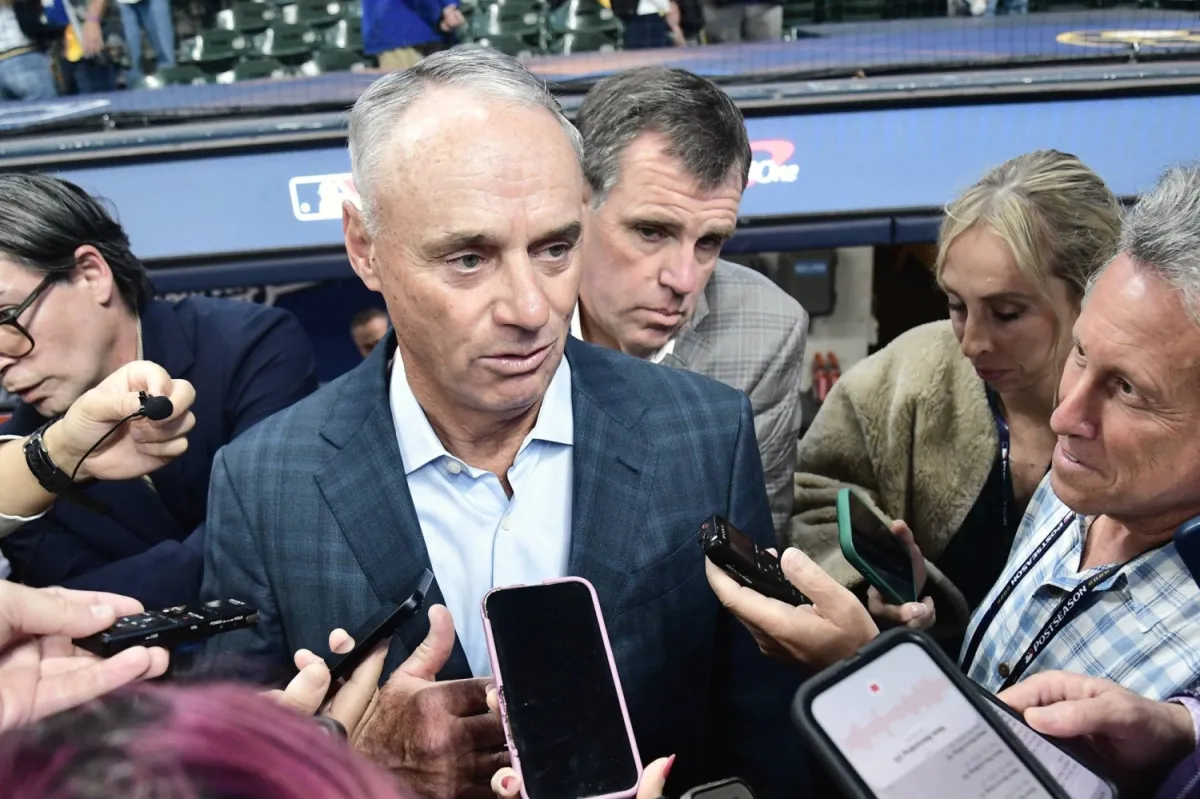
NEW YORK – The future of Major League Baseball (MLB) once again hangs in the balance. MLB Commissioner Rob Manfred has unequivocally stated that he cannot envision a new agreement with the players union without the implementation of a salary cap. This declaration has immediately sparked deep concerns about a potential lockout that could jeopardize the 2027 season.
Manfreds firm stance, delivered at a forum in New York this week, underscores the league's unwavering position. He emphasized the salary cap as an absolute prerequisite for financial stability and competitive balance among the league's teams, an issue that has long been a stumbling block in collective bargaining negotiations.
On the other hand, the MLB Players Association has repeatedly rejected the idea of a salary cap, calling it a nonstarter. They argue that a salary cap would limit player earnings and undermine the free-market principles that have historically characterized American professional baseball.
This fundamental divergence in views, between the league's desire to control spending and the union's insistence on protecting its members' incomes, creates a wide chasm in the negotiations. Without a common ground, a labor crisis looms as a real threat over the world's premier baseball league.
MLB's history records several dark periods due to labor disputes, including a lockout in 1994 that canceled part of the season and the World Series. A more recent conflict in 2021 also briefly delayed the start of the season. This pattern indicates how vulnerable the league is to disagreements between management and players.
The concept of a salary cap, popular in other North American professional sports leagues like the NBA and NFL, serves to limit the total amount of salary expenditure allowed for each team. Its goal is to prevent the dominance of wealthy teams and ensure more balanced competition.
However, the players union argues that a salary cap would diminish the bargaining power of star players and reduce the average player's income overall, ultimately harming their careers and welfare. They insist on the current system, which relies on a luxury tax for teams that exceed certain spending thresholds.
If a lockout truly occurs leading up to the 2027 season, its impact will be widespread. Thousands of players will lose salaries, tens of thousands of stadium employees and related businesses will be affected, and most crucially, millions of fans will lose their favorite baseball entertainment.
This situation places negotiators under immense pressure. The deadline is fast approaching, and failure to reach an agreement will have severe economic and reputational consequences for Major League Baseball as a global sports institution.
The prospect of a halted competition in the 2027 season is not only a threat to the baseball industry but also a severe blow to the spirit of sport and American culture that is deeply rooted in the game. All eyes are now on the negotiating table, awaiting whether common sense or narrow interests will win this battle.
Editorial Insight: The threat of an MLB lockout epitomizes the perennial conflict between sports capitalism and labor rights. Manfred's firm decision signals the league's seriousness in implementing structural financial reforms. However, the union's resolute response suggests protracted and potentially damaging negotiations. Without compromise, the financial losses and erosion of public trust will be a steep price for both sides to pay, outweighing the gains being contested. This is not merely an economic battle, but a gamble on the future of baseball itself.