 Dorry Archiles
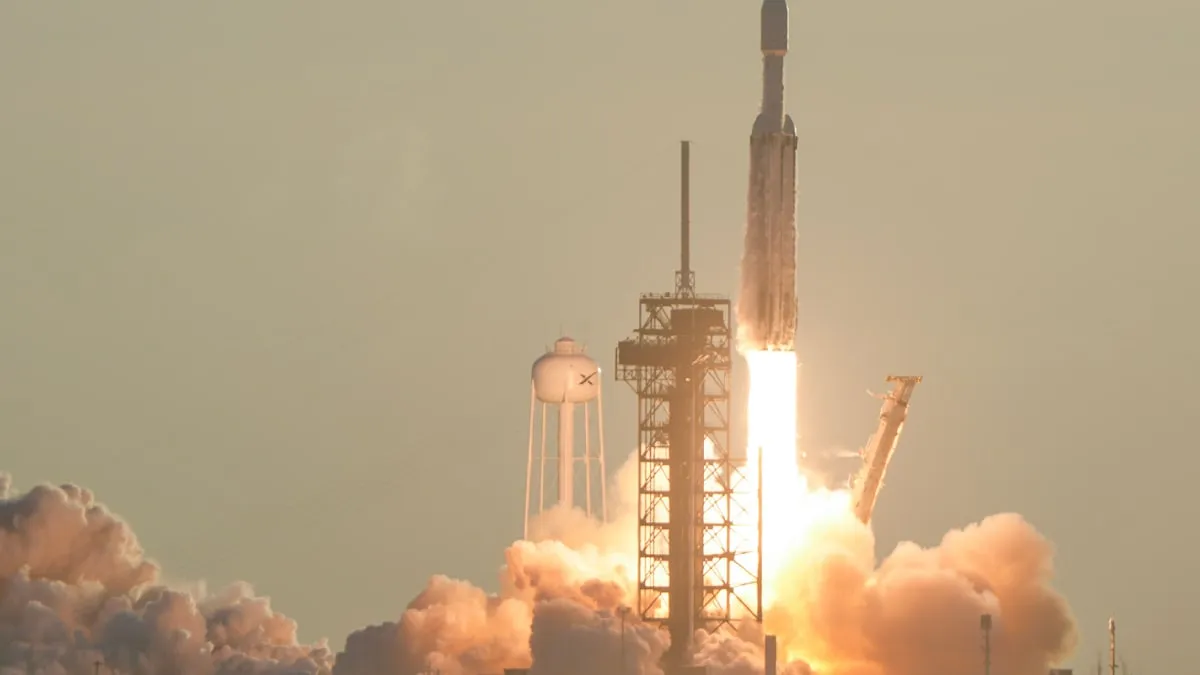
WASHINGTON – The U.S. National Aeronautics and Space Administration (NASA) has made new history by launching the Nancy Grace Roman Space Telescope in 2026. This revolutionary observational vehicle carries an ambitious mission: to unravel the untouched mysteries of the universe, from dark energy to potentially habitable exoplanets. This eagerly anticipated launch by the global scientific community promises a broader horizon of cosmic understanding.
The dawn light at the launch facility bore silent witness to the departure of Roman, named after a pioneering female NASA astronomer. A booster rocket carried this advanced telescope into an orbit millions of kilometers from Earth, where it will begin its crucial observations of space and time. Scientists anticipate data that will shift modern astrophysics paradigms.
Prominent former astronaut, Ulrich Walter, highlighted the significance of this mission. 'This mission aims to bring light to the unknown,' he stated, affirming NASA's great hope of gaining a deep understanding of dominant cosmic components such as dark energy and dark matter. These two mysterious entities constitute about 95% of the total mass-energy of the cosmos, yet their nature remains an enigma.
The Roman Telescope is specifically designed with a field of view a hundred times wider than the Hubble Space Telescope, enabling massive and efficient sky mapping. This capability is vital for extensive galaxy surveys, searching for anomalies in matter distribution, and detecting gravitational lensing effects caused by dark matter.
Furthermore, Roman will be a primary instrument in the discovery and characterization of exoplanets, planets beyond our solar system. Through the gravitational microlensing technique, the telescope can detect thousands of small planets, including those potentially having Earth-like conditions in their host star's habitable zone. This data is crucial for understanding the diversity of planetary systems and the possibility of life beyond Earth.
The name Nancy Grace Roman itself is not without meaning. She was one of the first women in an executive position at NASA and is known as the 'Mother of Hubble' for her role in planning and developing the Hubble Space Telescope. Her dedication to astronomy and space exploration continues to inspire current generations of scientists.
Researchers worldwide hold high hopes for this project. With imaging resolution comparable to Hubble but with a much wider coverage, Roman will generate an unprecedented volume of data. This will enable astronomers to build a more comprehensive three-dimensional map of the universe, tracing the evolution of galaxies from their earliest times.
The advanced coronagraph instrument on Roman will also allow direct imaging of exoplanets by blocking their host star's light. This feature opens opportunities to spectroscopically analyze exoplanet atmospheres, searching for biochemical signatures that indicate the presence of life.
NASA's ambition with the Roman Space Telescope is to fundamentally change our understanding of the universe, similar to how the James Webb Telescope revolutionized infrared studies. With its focus on the visible and near-infrared spectrum, Roman will complement and expand upon discoveries made by its predecessors.
This mission is not solely about technology and science; it is also about the human spirit of inquiry. Every piece of data transmitted by Roman from the cosmic depths will be a trace of our intellectual journey, pushing the boundaries of knowledge and provoking new questions about our existence in this vast universe.
Editorial Insight: The launch of the Roman Telescope represents a quantum leap in observational astrophysics. The ambition to map the universe on a grand scale and characterize exoplanets with high precision will spark a wave of new discoveries. The potential to unravel the nature of dark energy or find biosignatures on exoplanets positions this mission as one of the most significant milestones in space exploration this decade, shaping our scientific narrative for generations to come.