 Dorry Archiles

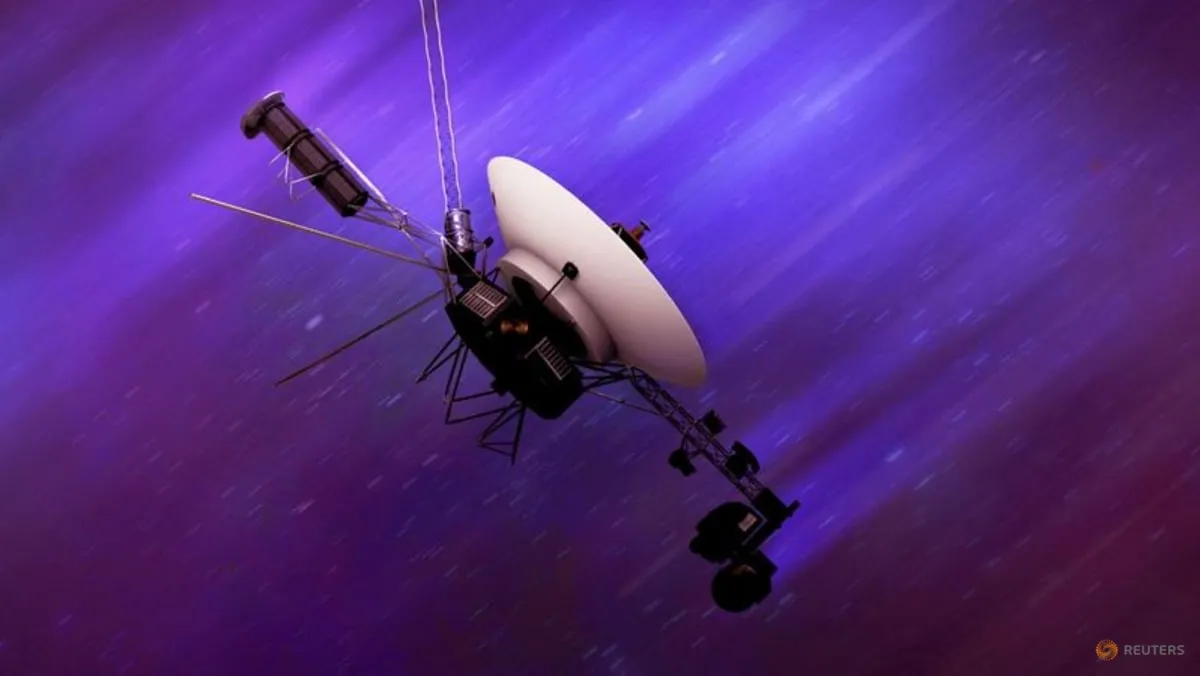
TOKYO – Japans unmanned space probe, Hayabusa-2, which successfully brought back pristine materials from the asteroid Ryugu in 2020, is now facing critical technical issues with its propulsion system. This situation has forced the Japan Aerospace Exploration Agency (JAXA) to alter the ambitious trajectory of its extended mission, sparking speculation about the future of space exploration in the quest for clues to the origin of life.
The Hayabusa-2 mission previously achieved a brilliant historical milestone. In December 2020, a capsule containing samples from the asteroid Ryugu safely landed in the Australian desert after a six-year journey. These samples are ancient materials believed to hold fundamental clues about how water and life first emerged on Earth, a discovery that captivated the scientific world.
This success established Hayabusa-2 as a symbol of Japans technological prowess in space exploration. Scientists worldwide eagerly awaited further analysis of the microscopic particles brought home, hoping to unravel cosmic mysteries.
However, that optimistic spirit is now somewhat tempered. Recent reports from JAXA indicate an anomaly in one of the probes main propulsion systems. Although Hayabusa-2 has passed its sample collection phase, its extended mission aimed to visit another asteroid, 1998 KY26, with an arrival scheduled for 2031.
This engine trouble, while not directly endangering the probe, limits its maneuvering capabilities and fuel efficiency. A JAXA spokesperson stated that their primary priority is to maintain the integrity of the probe and the data already collected, while seeking the most optimal solution for the remaining mission.
A change in mission target has become unavoidable. JAXA engineers are now evaluating various scenarios, including the possibility of redirecting Hayabusa-2 to a closer celestial object or one with less demanding maneuver profiles. This decision will be based on careful calculations of remaining fuel efficiency and engine capacity.
The implications of this target change are quite significant. The potential for scientific discovery from asteroid 1998 KY26, a different type of asteroid than Ryugu, may have to be postponed or replaced with the exploration of another object that might not offer the same high scientific value. This is undoubtedly a disappointment for the astronomical community.
Japan, through JAXA, has long been recognized as a key player in asteroid exploration missions. The success of the first Hayabusa mission in 2010 and Hayabusa-2 underscores the nations commitment to innovative space research. The current challenges serve as a reminder of the inherent complexities and difficulties in space exploration.
Despite facing obstacles, experts affirm that the data already collected from Ryugu remains invaluable. These samples continue to be analyzed in specialized laboratories, providing new insights into the early composition of our solar system and the process of planetary formation.
This incident also highlights the importance of system redundancy and adaptability in space mission design. Every spacecraft sent into space has the potential to encounter unforeseen problems, and the ability to respond and adapt is crucial for the long-term success of a mission.
Editorial Insight: The engine trouble on the Hayabusa-2 probe is a stark reminder of the complexities and inherent risks in every space exploration mission. Nevertheless, the tremendous success of the Ryugu sample collection mission in 2020 remains a phenomenal achievement that provided invaluable scientific data. This alteration to the extended missions target, while regrettable, demonstrates JAXAs pragmatism in managing their space assets. The priority now is to maximize the remaining lifespan of the probe for relevant scientific objectives, even if less ambitious than originally planned. This offers an important lesson for space agencies worldwide regarding the significance of operational resilience and flexibility.