 Gabriella
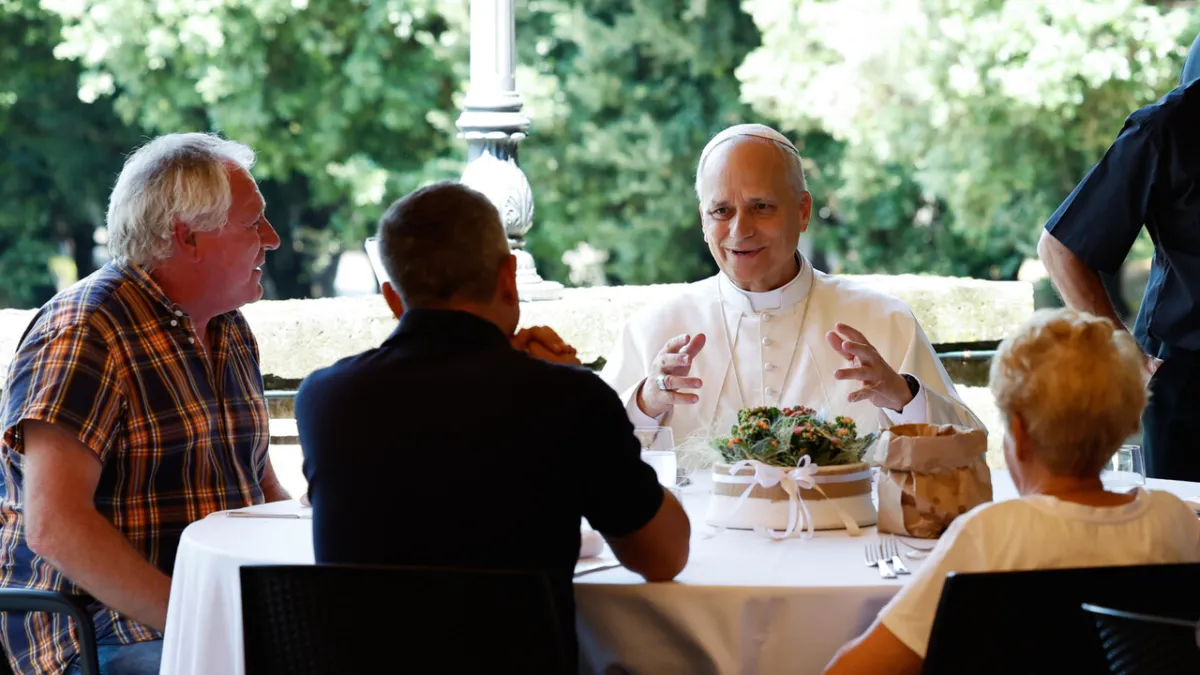
CASTEL GANDOLFO — Pope Francis on Tuesday, April 21, 2026, broke from formal Vatican tradition by hosting two hundred vulnerable individuals for lunch at the papal summer residence, Castel Gandolfo. This symbolic act was marked by his emphatic statement, “I am hungry for justice,” resonating as a moral call amid global inequality issues. The event, involving homeless people, refugees, and underprivileged families, reaffirmed the Holy Father’s commitment to the marginalized and the urgency of social justice.
The lunch, held in a historic setting typically off-limits to the general public, became a powerful symbol of inclusivity. Castel Gandolfo, now more frequently open to the public as a museum, was chosen by the Pope to draw closer to the realities of those most in need, away from the ceremonial bustle of Vatican City.
The guests, hailing from various backgrounds of poverty and marginalization in Rome and its surroundings, were personally welcomed by Pope Francis. They included homeless war veterans, immigrant families seeking asylum, and elderly individuals living in economic hardship. An atmosphere of camaraderie prevailed at the simple long tables, reflecting the spirit of fraternity that the Pope consistently advocates.
In his brief yet profound speech, Pope Francis underscored the importance of seeing every individual with dignity. The phrase “I am hungry for justice” was not merely a metaphor but a concrete call for systemic reforms that can address the root causes of poverty, inequality, and discrimination still afflicting global society.
This action aligns with Pope Francis’s consistent teachings since the beginning of his pontificate. He has unceasingly highlighted “the economy that kills” and called for the church to be “a poor church for the poor.” This lunch initiative is a tangible manifestation of Catholic social doctrine, which emphasizes a preferential option for the poor.
One participant, Maria Antonietta, a retired widow struggling to make ends meet, expressed her profound emotion. “It felt like being hosted by family. It wasn’t just the food, but the Holy Father’s attention that made us feel seen, heard, and valued,” she said. This acknowledgment demonstrates the deep emotional and spiritual impact of the Pope’s actions.
With global economic conditions volatile in 2026, where wealth disparities are widening and millions remain in extreme poverty, the Pope’s message becomes increasingly relevant. Recent reports from international institutions indicate a rise in vulnerable individuals due to post-pandemic effects and regional conflicts.
The Pope’s lunch with the poorest sends a strong message to world leaders and global institutions. It is a reminder that true development must be inclusive and that justice is not merely a theoretical concept, but an urgent moral imperative to be upheld in every aspect of society.
This event is not merely about providing food but also a prophetic act that challenges the status quo. Through gestures of humility and solidarity, Pope Francis once again demonstrated that true leadership is rooted in service and care for those most in need.
Hopefully, Pope Francis’s actions in Castel Gandolfo will inspire more individuals, communities, and governments to strive more actively for social justice, ensuring that no one is left behind on the journey toward a more just and humane world. This is a concrete step towards the realization of the “hunger for justice” proclaimed by the Holy Father.