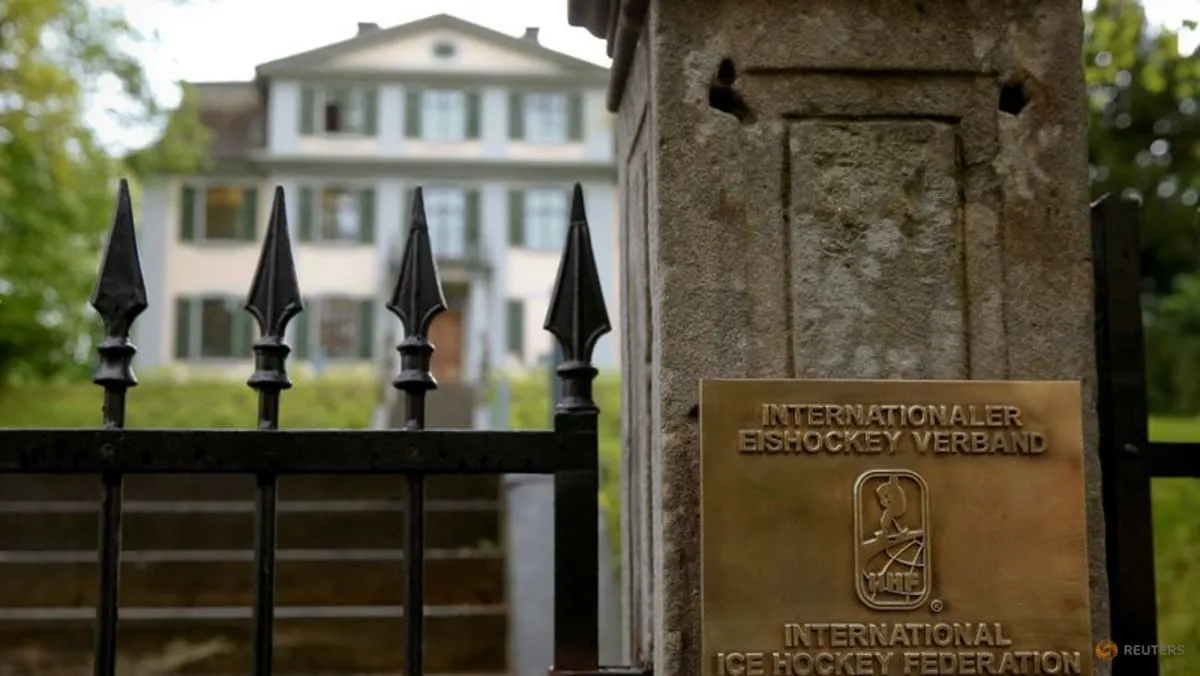
ZURICH – Russia's national junior ice hockey team has been officially barred from competing in the 2026 World Junior Hockey Championship to be held in Canada. The International Ice Hockey Federation (IIHF) confirmed this decision last week, following a series of strict restrictions and sanctions imposed by the Canadian government on the participation of Russian athletes in international sporting events. This ban marks a significant escalation in tensions between global politics and the world of sport.
The IIHF's decision emerged after intensive discussions with Canadian sports authorities and considering the ongoing geopolitical situation. This is not the first time Russia has faced sanctions in the world of sports, but exclusion from a prestigious tournament like the World Junior Hockey Championship has a major impact on the development of young athletes and Russia's sports reputation.
IIHF President, Luc Tardif, in his official statement, said that the decision was made reluctantly but was necessary to ensure the integrity and safety of all tournament participants. We must comply with the regulations and policies of the host country, especially concerning security and immigration issues, Tardif stated. Nevertheless, he also emphasized that the IIHF hopes the situation will improve so that all countries can compete without hindrance in the future.
Canada's sanctions themselves are rooted in their foreign policy related to contemporary issues involving Russia. The Canadian government has consistently maintained a firm stance on Russian participation in international events within its territory, as a form of solidarity with a number of allied countries. These restrictions cover visas, accreditation, and other logistical aspects fundamental to team participation.
The suspension of participation has triggered a wave of disappointment from the Russian ice hockey federation. A number of officials criticized the decision as an unfair politicization of sport that harms young athletes who have trained hard. They argued that athletes should not be victims of geopolitical conflicts they did not create.
Our young players have sacrificed everything to reach this level. Why should they be punished for something beyond their control? said an unnamed representative of the Russian Hockey Federation in an interview. This sentiment reflects the deep frustration felt by the Russian sports community.
The World Junior Hockey Championship is an important stage for players under 20 to showcase their talent and attract the attention of professional clubs. Russia's absence, historically one of the major powers in ice hockey, will leave a competitive void and potentially alter the tournament's dynamics.
This is also not the first time such an incident has occurred. Previously, there have been reports regarding Canada's Sanctions Freeze Russia from the 2026 World Junior Hockey Championship, which underlines a consistent policy pattern from the Canadian government. This pattern indicates a firm and uncompromising stance on issues deemed crucial.
The long-term impact of such restrictions on global ice hockey remains to be seen. Concerns arise about the fragmentation of international sport if countries continue to use sporting events as an arena to vent political tensions.
International sports observers highlight that this decision could set a precedent for other upcoming sports tournaments, especially in countries that have similar policies towards Russia. This situation places international sports federations in a difficult position, having to balance sports autonomy with compliance with the laws and policies of host countries.
Editorial Insight: The IIHF's decision to exclude Russia from the 2026 World Junior Hockey Championship highlights the eternal dilemma between sport and politics. Although the principle of sports apoliticization is often echoed, modern geopolitical realities increasingly push these boundaries. This incident reaffirms that global sports entities cannot completely ignore the policies of host country governments, even if it means sacrificing the universality of athlete participation. Its impact on the development of Russian ice hockey and the reputation of this tournament is worth observing, as it may shape the future direction of international sports policy.