 Demian Sahputra
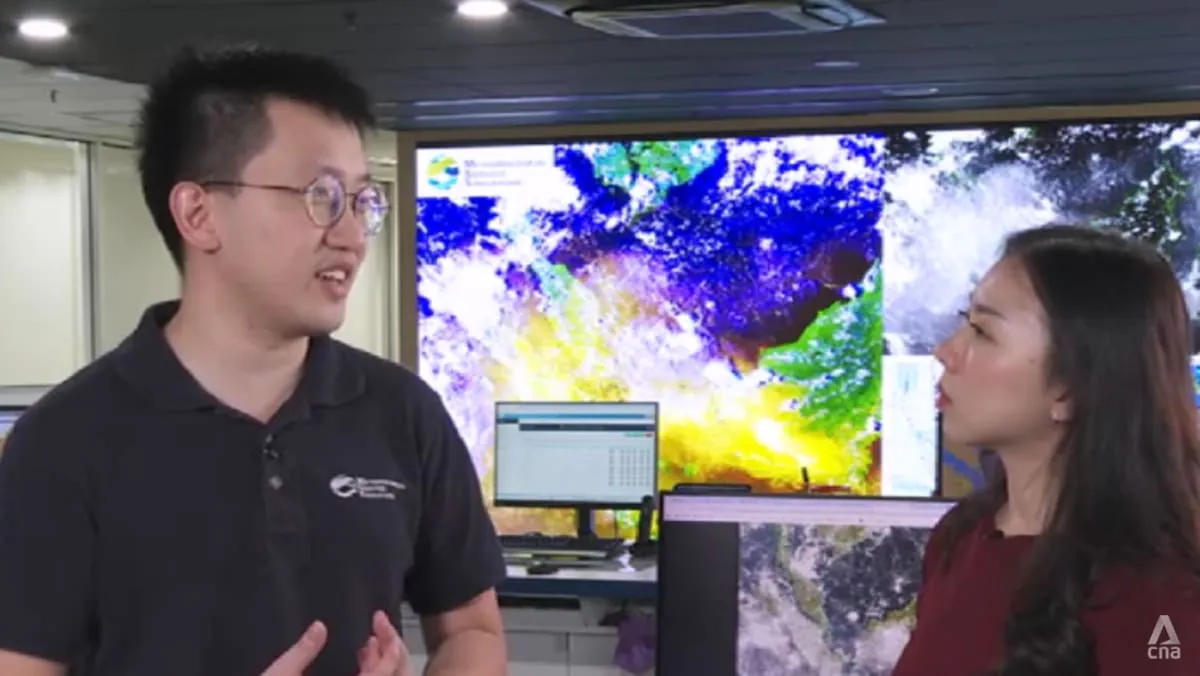
Singapore – Gabriel Lim, an executive meteorologist at Singapore's National Environment Agency (NEA), bears the critical burden of forecasting haze that could envelop the city-state in 2026. His vital role involves navigating climatic uncertainties and regional patterns to safeguard the health and well-being of millions of residents. This task is not merely a scientific endeavor; it is a significant gamble for the collective fate.
Haze, an annual phenomenon largely originating from land burning in surrounding regions, has long posed a serious threat to Singapore. Its effects are widespread, ranging from respiratory issues and reduced visibility impacting air and sea transport, to significant economic losses.
In 2026, with increasingly unpredictable climate change, the intensity and duration of haze are a primary concern for the government. Accurate forecasts form the foundation for swift responses, enabling authorities to issue early warnings, activate health protocols, and protect vital infrastructure.
Lim and his team at NEA face complex challenges. The haze forecasting process is not linear; it involves analyzing satellite data, intricate atmospheric models, and real-time monitoring of regional weather conditions. Fire sources, wind direction, and rainfall in neighboring countries are crucial variables that must be deeply understood.
An internal source at NEA, who requested anonymity, explained, 'It's like assembling a giant puzzle with constantly moving pieces. A small error in data interpretation can have widespread consequences for the entire population.'
For Gabriel Lim, his extensive experience in forecasting haze has shaped his work philosophy. He stated, 'This job has taught me to embrace uncertainty. We never have all the answers, but we must make the best decisions with the information available.'
This philosophy reflects the harsh reality of environmental forecasting in Southeast Asia, where geopolitical and economic factors often complicate efforts to mitigate haze sources. Nevertheless, Lim is determined to ensure Singapore is always prepared for the worst potential outcomes.
Technology plays a central role in NEA's efforts. Advanced air quality monitoring systems, such as the Pollutant Standards Index (PSI) and PM2.5, provide vital data that underpins public recommendations. Furthermore, supercomputers run predictive simulations to project haze movements.
Regional collaboration is also paramount. Singapore actively cooperates with ASEAN member states through various initiatives to address transboundary haze issues. Data exchange and shared mitigation strategies are expected to reduce the frequency and intensity of crises.
However, despite best efforts, the public must remain vigilant. Public health guidelines on mask usage, limiting outdoor activities, and seeking medical attention if needed, are consistently emphasized by Singapore's Ministry of Health whenever the threat of haze emerges.
Public education is also a priority. NEA regularly conducts campaigns to raise community awareness about the dangers of haze and preventive measures that can be taken. They hope the public can become active partners in safeguarding collective health.
Gabriel Lim, with his composure, represents the dedication of scientists on the front lines of climate change. Their forecasts are not just numbers, but essential living guides for millions amidst evolving environmental threats.
Lim's personal experience in managing this pressure serves as a reminder that behind every data point and model, there are individuals working tirelessly. They are unsung heroes striving for clean air and a healthier future.
Editorial Insight: The issue of haze in Singapore and the Southeast Asian region is not merely an environmental problem, but also a reflection of complex regional challenges involving policy, economy, and science. The role of individuals like Gabriel Lim underscores the urgency of investing in human resources and technology for improved weather forecasting. Without accurate predictions and coordinated responses, the threat of haze will continue to cast a dark shadow, harming health and regional economic stability.