 Debby Wijaya
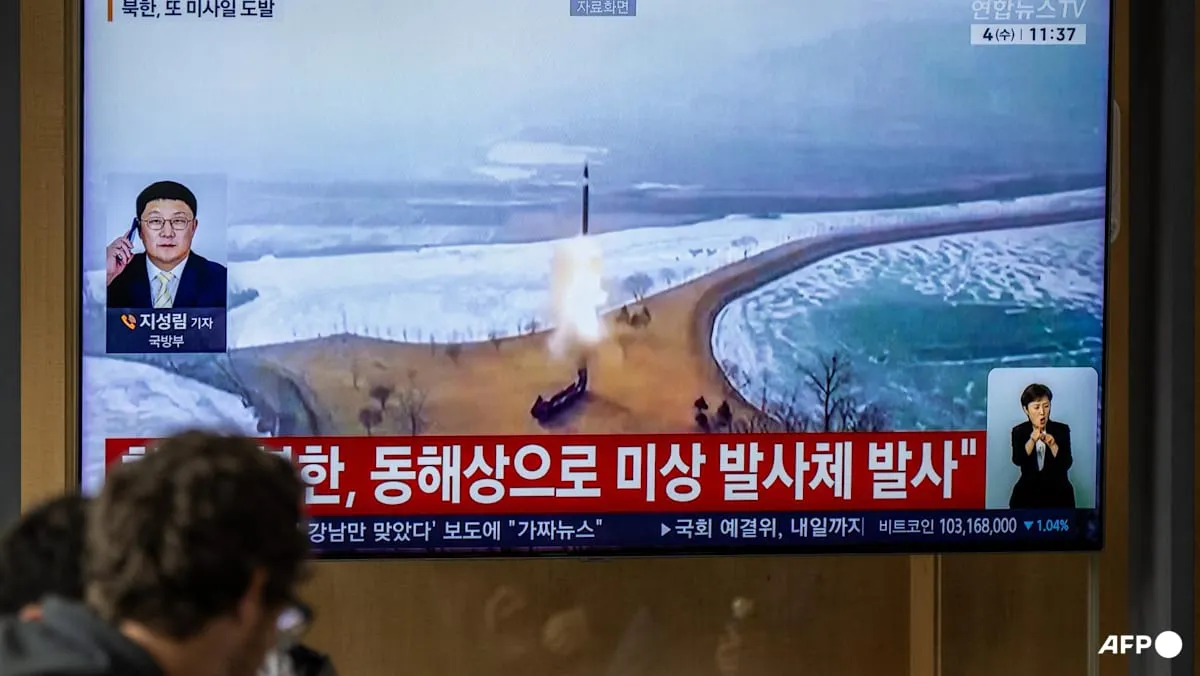
SEOUL – The Korean Peninsula flared up again after North Korea launched a barrage of ballistic missiles towards the Sea of Japan, also known as the East Sea, on the morning of November 4, 2026. This provocative action by Pyongyang was immediately detected by South Korea's military, triggering new concerns over regional security stability in East Asia.
The South Korean Joint Chiefs of Staff (JCS) confirmed the incident in its official statement. Our military detected several missiles launched from the Sondok area of North Korea towards the East Sea on the morning of November 4, the JCS report stated, reaffirming the early detection of the military maneuver.
This missile launch is part of a series of tests frequently conducted by Pyongyang, but its frequency in 2026 has prompted in-depth analysis from various parties. Observers view it as Pyongyang's attempt to strengthen its bargaining position amid stalled denuclearization talks with the United States and its allies.
The action can also be interpreted as a response to joint military exercises conducted by South Korea and the United States. Such exercises are often viewed by North Korea as a threat to its sovereignty and preparation for an invasion.
Japan's Ministry of Foreign Affairs immediately issued a statement strongly condemning the launch. Japanese Foreign Minister Yoshimasa Hayashi, called it a serious threat to regional peace and stability, and a clear violation of United Nations Security Council resolutions. Tokyo urged Pyongyang to refrain from further actions that could escalate tensions.
Meanwhile, reactions from Washington indicated disappointment, but also readiness for dialogue. US President Donald Trump, through his spokesperson, reiterated the US commitment to the denuclearization of the Korean Peninsula, while also stating that the door to diplomacy remains open if Pyongyang shows seriousness.
International security analyst, Dr. Kim Minjoon from Seoul National University, revealed that this missile test might have several motives. Beyond displaying power and testing technical capabilities, this could be an internal signal for consolidating power, or a way to attract global attention amidst other international issues, he explained.
This is not the first time North Korea has used such a strategy. History shows that missile launches often coincide with important political moments or when Pyongyang feels cornered by international pressure. Threats against high-level meetings have also been a tactic used to pressure the US.
The immediate impact of this launch was seen in Asian financial markets, albeit on a limited scale. Stock indices in Seoul and Tokyo showed slight weakness at the opening session but quickly recovered as concerns of a larger conflict escalation subsided.
The UN Security Council is likely to hold an emergency meeting to discuss this incident. Previous resolutions have prohibited North Korea from conducting ballistic missile tests, but Pyongyang consistently ignores these prohibitions, insisting it is its right to self-defense.
In a regional context, this increased tension demands greater vigilance from neighboring countries. Both South Korea and Japan have heightened their military surveillance, ensuring readiness to respond to potential future threats.
Editorial Insight:
North Korea's actions, amidst the geopolitical dynamics of 2026, are not mere empty threats. This is a calculated maneuver, designed to test the limits of international patience and assert relevance on the global stage. The crucial question is no longer whether Pyongyang will launch missiles, but how the international community will respond to break this cycle of escalation without sacrificing the fragile regional stability. Diplomacy remains the best path, but it must be accompanied by coordinated and consistent pressure.