 Dorry Archiles
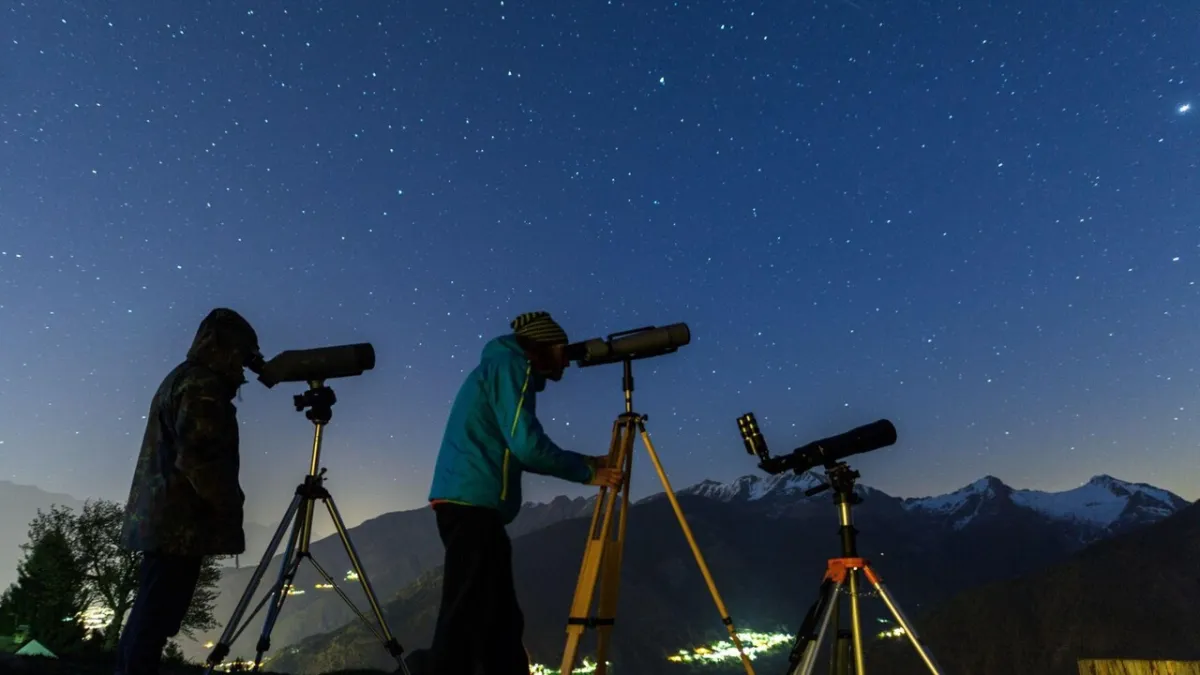
ROME – The infinite beauty of the universe is once again captivating the public as the phenomenon of stargazing gains popularity across Italy. This activity offers a unique experience of witnessing the glitter of millions of stars, planets, and galaxies in the clear night sky. The trend of astrotourism is rapidly growing, especially in remote locations with minimal light pollution, from the peaks of the Alps in Trentino to the Mediterranean coastline in Sicily, promising an unforgettable visual experience for astronomy enthusiasts and tourists alike.
Stargazing is not merely a hobby but a spiritual and scientific journey. Why? Because this activity allows humans to momentarily detach from the hustle and bustle of modern life and reconnect with the vast universe. This phenomenon offers a new perspective on our position among clusters of stars, fostering awe for the grandeur of the cosmos.
In northern Italy, the Trentino region stands as a prime haven for stargazers. Surrounded by the majestic peaks of the Dolomites, this area boasts several observation sites with the lowest levels of light pollution. The clear mountain air and high elevation create ideal conditions for observing the night sky. Many national parks in Trentino are now actively promoting “dark sky” initiatives to preserve astronomical visibility.
For instance, around the Adamello Brenta Natural Park, some accommodations even provide telescopes for guests. Local observatories frequently host educational events and night tours, guiding visitors to identify constellations, the Andromeda galaxy, or even faint nebulae. This activity is highly sought after by families and educators looking to introduce astronomical science.
Moving far south, the allure of stargazing also extends to the island of Sicily. Although its geographical conditions differ, Sicily offers an equally stunning night sky, particularly in coastal areas far from urban centers. Sicily's uniqueness lies in the combination of celestial views with its characteristic Mediterranean landscape, often accompanied by the soothing sound of waves.
Remote beaches around Agrigento or rural areas in Val di Noto are favorite spots for observers. Here, visitors can enjoy the vast expanse of the Milky Way or witness meteor showers during certain seasons, unobstructed by tall buildings. Some local travel agencies are even starting to offer special stargazing tour packages integrated with typical Sicilian culinary tourism.
The popularity of astrotourism in Italy has shown significant growth since 2020. This is not just a fleeting trend; many local governments and nature conservation organizations recognize the great potential of night sky-based tourism. Initiatives to reduce light pollution are increasingly promoted, not only for astronomical purposes but also for the health of ecosystems and humans.
The benefits of this activity are multifaceted. Besides boosting sustainable tourism, stargazing also raises public awareness about the importance of environmental preservation and maintaining “dark skies.” Education about the solar system and cosmic phenomena becomes more accessible and engaging when witnessed directly under the stellar dome.
To enjoy an optimal stargazing experience, some preparations are recommended. In addition to choosing a location far from urban light sources, carrying a portable telescope or binoculars will be very helpful. Star map applications on mobile devices can also serve as a practical guide to identify celestial objects. The best time is during a new moon, when moonlight does not dominate the sky.
Given the continuously growing enthusiasm, the prospects for stargazing in Italy in 2026 and beyond appear bright. Governments and local communities are expected to continue supporting initiatives for developing “Dark Sky Parks” and promoting cosmic natural tourism, making Italy a prime destination for seekers of night sky beauty from around the world.
Editorial Insight: The increasing interest in stargazing across Italy, from Trentino to Sicily, not only reflects the human need for connection with nature but also presents significant potential for sustainable tourism development and scientific education. This is a golden opportunity for Italy to position itself not only as a center of culture and history but also as a vanguard in preserving night skies and promoting astrotourism. Investment in “dark sky” infrastructure and educational programs can solidify Italy's image as a holistic destination offering beauty both on Earth and above it.