 Debby Wijaya
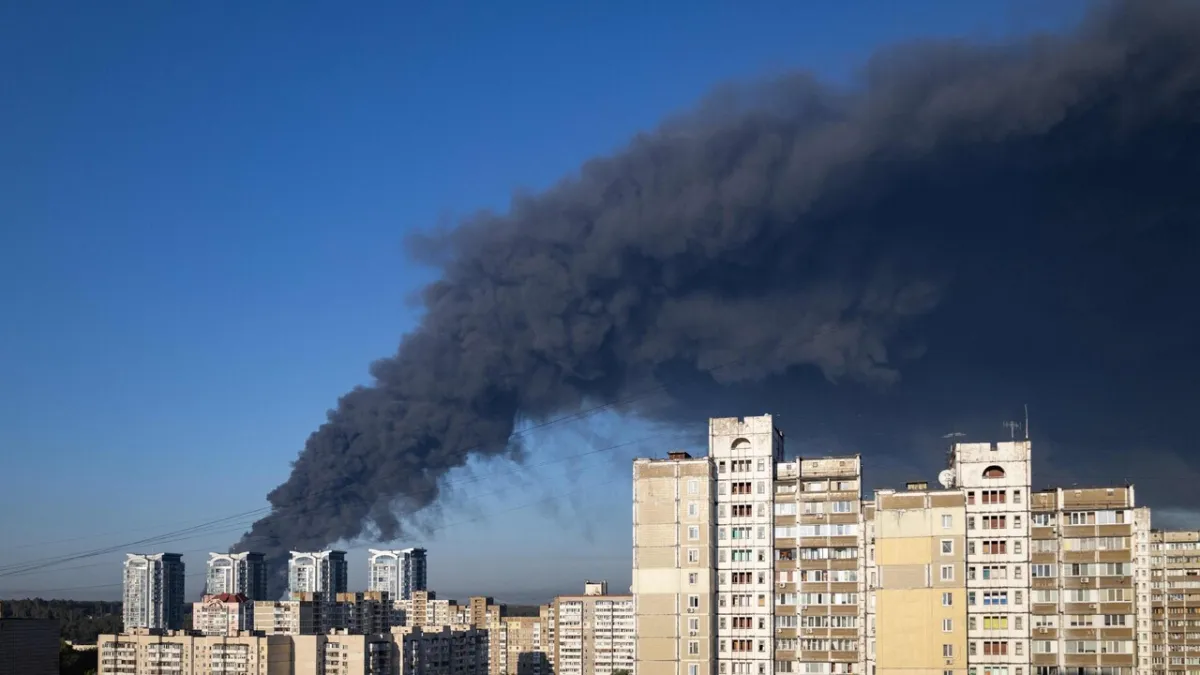
MOSCOW – A massive logistics warehouse belonging to Ozon, Russia's leading e-commerce platform, was once again targeted by a Ukrainian drone attack in the early hours of Tuesday, January 21, 2026. The incident, which occurred in the Moscow region, caused significant damage and disrupted supply chain operations. This attack marks an escalation in Kyiv's tactics, focusing on civilian infrastructure that supports the Kremlin's war economy.
Ukrainian military sources claimed the attack as a strategic response to Russia's ongoing aggression. Advanced drones successfully penetrated Russian air defenses, causing a large fire at the Ozon storage facility.
Ozon, often referred to as Russia's Amazon, plays a crucial role in the distribution of consumer goods. The repeated targeting of their facilities indicates Ukraine's efforts to destabilize Russia's domestic economy, a strategy consistent with insights discussed in our earlier coverage: Ukraine Targets 'Russian Amazon', War Shifts to Civilian Life 2026.
Although there were no reports of casualties, local authorities confirmed substantial material losses. Videos and images circulating on social media showed raging fires engulfing large parts of the warehouse building, creating a scene of devastating destruction. Firefighters battled the blaze for hours, facing significant challenges from the incident's scale.
The Russian Ministry of Defense has not yet issued an official statement regarding the incident. However, Kremlin spokesman Dmitry Peskov has previously condemned similar attacks as unacceptable acts of terrorism targeting civilians and civilian infrastructure.
Economic analysts predict that disruptions to Ozon's logistics network will impact product availability and prices in the Russian market. This adds to existing inflationary pressures, potentially sparking public discontent and exacerbating the domestic economic climate.
Drone attacks by Ukraine against targets in Russian territory have sharply increased since early 2026, encompassing energy facilities, military installations, and now vital commercial infrastructure. Kyiv asserts these attacks are legitimate as part of its self-defense against the ongoing invasion.
The Russian public has shown diverse reactions. Some demand improved air defense systems, while others are beginning to feel the direct impact of the war on their daily lives, not just on the front lines.
The international community is closely monitoring these developments. Several Western countries have expressed concern over the potential for conflict escalation beyond traditional war zones, which could have broader geopolitical consequences.
Targeting distribution centers like Ozon reflects a broader shift in Ukraine's strategy, aiming to spread the burden of the conflict into Russian territory, rather than solely on the front lines of battle.
The war has evolved from a conventional battlefield into a struggle of economic and logistical resilience, where the ability to maintain supply chains and disrupt the opponent's becomes a key to strategic success.
Ozon, through its official channels, announced that it is evaluating the damage and working to minimize the impact on customers. They assured that emergency measures would be taken for operational recovery as quickly as possible, although the scale of the damage is expected to require significant time.
Editorial Insight: The attack on the Ozon warehouse is not merely a military incident, but a strong strategic message. Ukraine consistently demonstrates its capability to strike deep into Russian territory, targeting economic arteries that sustain civilian life. This could increase domestic pressure on the Kremlin and force a reevaluation of Russia's internal defense strategy, while also fueling debate about the legitimate boundaries of civilian targeting in modern armed conflicts that appear to be expanding.