 Stefani Rindus
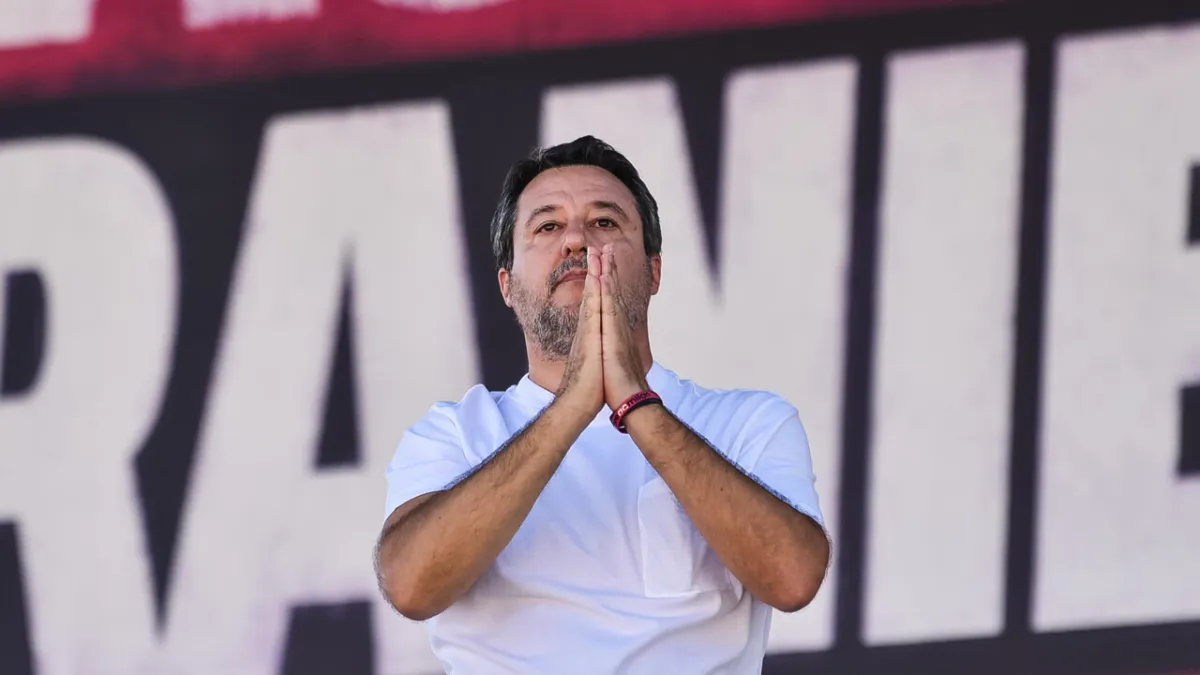
ROME – Senator Matteo Salvini, a central figure in Italy's political landscape, recently urged parliament to pass 'courageous' legislation without resorting to budget deviation schemes. This controversial statement has polarized opinions within the governing coalition, particularly with the Fratelli d'Italia (FdI) party, which explicitly opposes such fiscal relaxation in mid-2026.
Salvini asserted that 'being constrained by zero point something' in the budget only hinders government performance and complicates development efforts. For him, this condition reflects an inadequate approach to tackle complex macroeconomic challenges. 'Bold' legislation is seen as a fundamental solution to free Italy from rigid fiscal regulations, foster growth, and respond to urgent public needs.
We cannot work optimally if we are constantly limited by very small deficit figures, Salvini stated, highlighting his frustration with what he considers overly restrictive budget parameters. He argued that greater flexibility is necessary to promote progressive and anticipatory policies.
However, this view sharply contrasts with the stance of Fratelli d'Italia, the dominant party in the coalition. FdI representatives unequivocally declared that budget deviation is not the right step to take at this time. They emphasized the importance of maintaining fiscal discipline and avoiding risks that could exacerbate the nation's economic condition.
FdI's concerns are well-founded. Italy has historically faced significant pressure from the European Union regarding its debt and deficit levels. Adopting budget deviation could trigger strong reprimands from Brussels and worsen market sentiment towards the country's economic stability. Indeed, Italy's deficit continues to worsen according to the latest Istat report, with the European Union maintaining its warnings.
This debate reflects a classic dilemma faced by many European nations: how to balance the need for economic stimulus policies with commitments to fiscal stability mandated by the EU's Stability and Growth Pact. Salvini, in his characteristic style, appears to favor a more aggressive approach for domestic interests.
Political observers note that these differences in opinion, while fundamental, may also be part of the coalition's internal dynamics to appeal to different voter segments. Salvini, who often champions the interests of the working class and small entrepreneurs, might see budget deviation as a shortcut to provide aid and stimulus.
Conversely, FdI, being more fiscally conservative, seeks to maintain its image as a guarantor of economic stability. This conflict could be strategic, but it also has the potential to test the government's solidity. Market concerns have also emerged, prompting investors to adopt adaptive investment strategies.
If Salvini succeeds in advocating for 'bold' legislation without budget deviation, it means the government must find alternative funding sources or implement drastic efficiencies. Alternatively, the 'bold law' might refer to structural reforms that do not require fresh capital injection but rather an overhaul of regulations and bureaucracy.
Italy's fiscal future depends on how these two factions can find common ground or resolution. Economic stability and investor confidence will be significantly influenced by decisions made in the coming period regarding the budget and legislative policies. The Italian people await tangible steps from their government to navigate the complexities of the global economy in 2026.
Editorial Insight: The political turmoil surrounding Italy's budget deviation is an indicator of the persistent economic pressures facing Europe. The debate between the need for stimulus and the imperative for fiscal discipline will continue to be a major challenge, demanding adaptive leadership and strong consensus to ensure long-term stability.