 Debby Wijaya

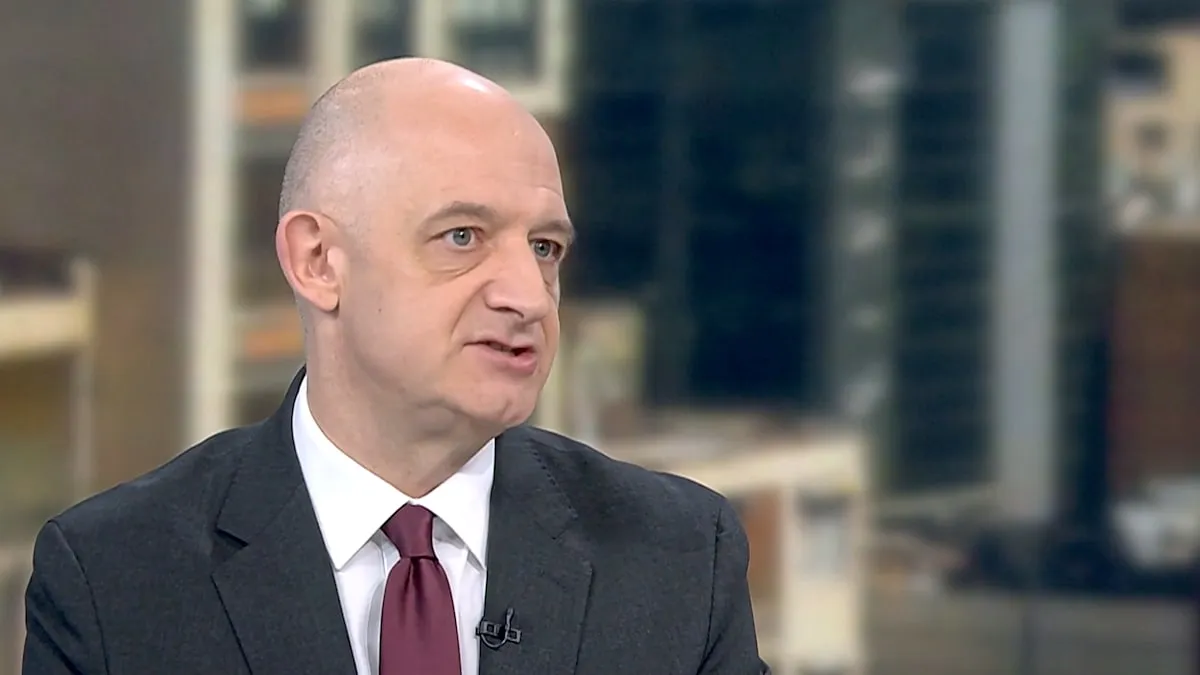
Magdeburg – Saxony-Anhalt's Minister-President, Sven Schulze of the Christian Democratic Union (CDU), has launched a strong criticism against the Alternative for Germany (AfD) party, asserting that he does not want the state he governs to become an experimental field for aimless populist policies. In a recent exclusive interview with WELT TV, Schulze explicitly expressed his disappointment with the AfD's approach, which he claims merely identifies problems without offering concrete solutions.
I do not want Saxony-Anhalt to become an experimental field, Schulze stated, emphasizing the importance of stability and proven policies. This statement comes amidst rising political tensions in Germany, particularly with the emergence of far-right parties like the AfD, which frequently voices anti-establishment sentiments.
Schulze highlighted that the AfD, despite successfully attracting public attention with sharp rhetoric, often neglects to formulate a framework of implementable solutions. They only describe problems without providing real solutions for the citizens of Saxony-Anhalt, he added, underscoring the AfD's failure to offer constructive alternatives.
This criticism is not merely political rhetoric. It reflects a deep concern among established parties regarding the AfD's capacity to govern. Issues such as regional economy, social integration, and energy policy have become battlegrounds for intense debate, where the CDU strives to present itself as a guarantor of stability and progress.
Saxony-Anhalt, a state in eastern Germany, has a complex political history with significant support for parties across various political spectrums. This makes it an important barometer for Germany's national political dynamics. Schulze's statement can be seen as an effort to draw a clear line between the CDU's pragmatic approach and what he perceives as empty promises from the AfD.
Global economic uncertainties and ongoing geopolitical challenges in 2026 further complicate Germany's domestic political atmosphere. Voters seek certainty and strong leadership, and Schulze aims to project the CDU as the only party capable of delivering it.
Schulze's attack also indicates the CDU's strategy to discredit the AfD in the eyes of voters, particularly ahead of upcoming regional elections. By highlighting the AfD's weaknesses in formulating solutions, the CDU hopes to maintain its political dominance and ward off the influence of populist parties.
This issue is also relevant to the national discussion on how political parties should handle complex issues. Is it enough just to criticize, or should there be a responsibility to propose solutions? Schulze clearly opts for the latter approach.
This is not the first time the AfD has faced similar criticism. Various political figures and analysts have repeatedly highlighted the party's tendency to focus on criticism and negative narratives without presenting detailed and actionable work programs.
In the dynamic context of German politics, Schulze's statement underscores the ongoing battle of ideologies and strategies. The CDU seeks to protect its territory from the growing wave of populism in Europe, while the AfD continues to position itself as a radical alternative to the existing system.
The debate about the AfD's role and capacity in regional government also emerged in discussions about military aid. For instance, an unexpected coalition between BSW and AfD once threatened to halt military aid to Ukraine, demonstrating how their policies can have broad impacts.
Editorial Insight:
Minister-President Schulze's firm statement is more than just a typical political response; it is a strategic declaration highlighting the shifting landscape of German politics. By openly challenging the AfD to offer tangible solutions, the CDU aims to shift the narrative from populist criticism to demands for policy accountability. This reflects the efforts of established parties to curb the tide of political extremism, while reminding voters of the risks of electing leaders who merely present problems without a vision for development. The future of Saxony-Anhalt, and more broadly Germany, will heavily depend on how effectively parties can bridge public expectations with the complex realities of governance.