 Edward DP Situmorang
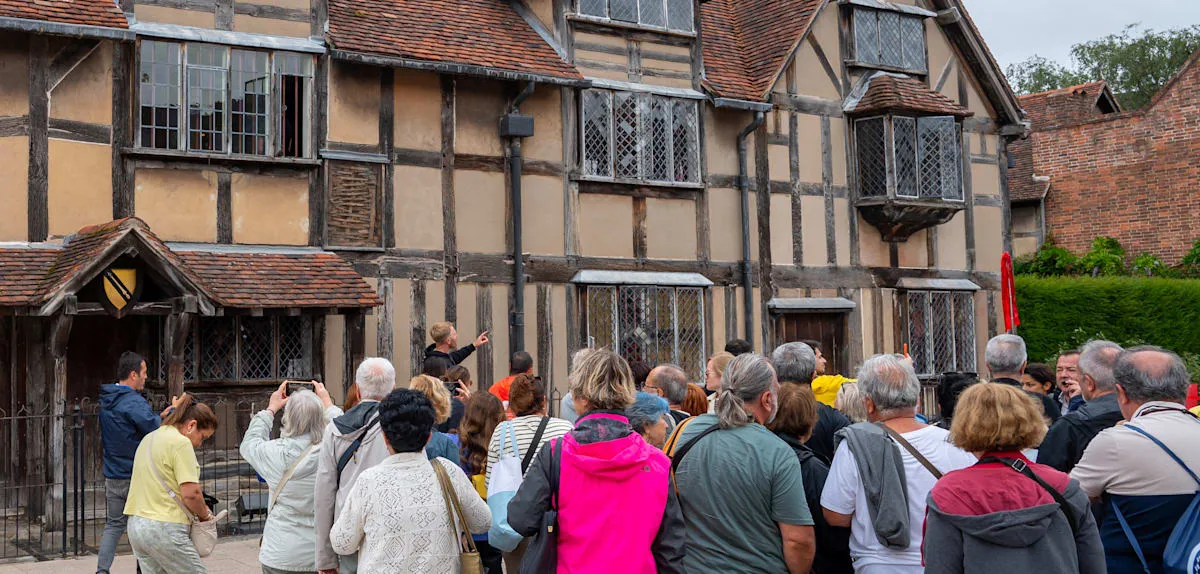
STRATFORD-UPON-AVON — The birthplace of legendary playwright William Shakespeare, Stratford-upon-Avon, is grappling with an extreme tourism dilemma in 2026. The ceaseless flow of visitors, driven by a 'Disney-esque' branding, raises questions about the authenticity of the cultural experience amidst massive commercialization. How does this town on the River Avon balance its magnificent historical legacy with the demands of an ever-expanding global market? This situation has become a major focus for cultural preservationists and local authorities.
The 'Disneyfication' phenomenon refers to efforts to package historical sites into attractions that are easier to consume and more entertaining for a wider audience, often accompanied by massive souvenir sales and various artistic replicas. In Stratford-upon-Avon, this is evident in the proliferation of gift shops, highly structured thematic tours, and interactive shows designed to appeal to every segment of visitors, including families with children.
The surge in international tourist visits post-pandemic reached its peak in 2026, causing extreme congestion in the city center and historical areas. The city's infrastructure, despite significant improvements, feels strained. Long queues at major sites like Shakespeare's birthplace and his grave at Holy Trinity Church have become a daily sight, eroding the reflective experience many visitors hope for.
William Shakespeare, England's greatest poet, left an invaluable literary legacy. His works have influenced global language and culture for centuries. Stratford-upon-Avon, as the place where he was born, grew up, and was buried, inherently holds deep historical and emotional value for millions of his admirers.
Several cultural observers have voiced concerns. "The true essence of Shakespeare's presence risks being buried under piles of memorabilia and crowds," said Eleanor Vance, an independent literary historian, in a recent interview. She emphasized the importance of maintaining historical tranquility and context so visitors can truly absorb the spirit of the maestro.
Nevertheless, the economic impact of this tourism cannot be overlooked. Thousands of jobs depend on this sector, ranging from accommodation and restaurants to tour guides. The revenue generated also finances the maintenance of historical sites and Shakespeare-related educational initiatives. This represents a complex balance that must be maintained.
Local authorities, along with heritage preservation foundations such as the Shakespeare Birthplace Trust, continue to seek solutions. More in-depth educational programs, visitor number restrictions at certain times, and the development of alternative tour routes are being piloted. The goal is to spread out the crowds and offer richer experiences to visitors seeking historical depth.
The Royal Shakespeare Company (RSC) also plays a crucial role. With high-quality performances at the Royal Shakespeare Theatre, the RSC offers an authentic artistic experience, complementing visits to historical sites. They strive to ensure that Shakespeare's poetic legacy remains alive and relevant through innovative contemporary interpretations.
For some tourists, the experience of enjoying Stratford-upon-Avon amidst the crowds still holds charm. They find joy in the bustling global atmosphere, interaction with visitors from various parts of the world, and easy access to modern tourist facilities. This perspective affirms that 'enjoyment' can be found in various forms.
Preservation efforts are not only about maintaining physical buildings but also about preserving the narrative and spirit behind them. The dialogue between sustainable tourism development and cultural integrity continues to be a hot topic in Stratford-upon-Avon. This challenge is not unique; it is a reflection of a global phenomenon faced by many world heritage sites.
The local government collaborates with stakeholders to formulate more comprehensive policies. Priorities are given to managing tourist flows, developing digital tourism to reduce physical pressure, and promoting more authentic and less industrialized local experiences. The main hope is that Stratford-upon-Avon can continue to be a prime tourist destination without sacrificing its cultural soul.
Thus, Stratford-upon-Avon in 2026 stands at a crossroads, where a magnificent past meets present-day demands. The town serves as a fascinating case study of how an invaluable cultural heritage adapts to the realities of modern tourism, while still striving to offer a profound experience for every individual who comes seeking the footsteps of the Bard of Avon.