 Stefani Rindus
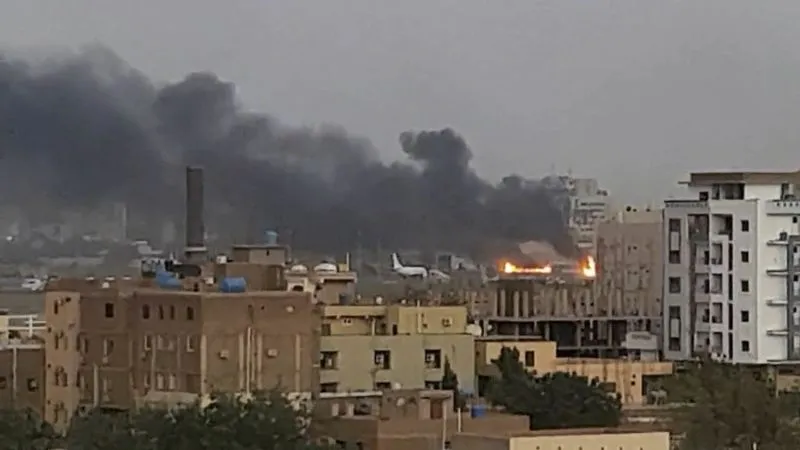
Nairobi – Four years ago, almost to the day, the people of Sudan celebrated a successful revolution that toppled the authoritarian regime of Omar al-Bashir after decades in power. Today, in 2026, that euphoria has given way to deep concern. The East African nation now faces the threat of a complete collapse, mirroring the patterns of chaos that devastated Yemen or Libya.
The popular uprising in 2022 marked a beacon of hope for a transition toward democracy and stability. Millions of citizens took to the streets, demanding fundamental change, ultimately succeeding in forcing the autocratic ruler from power. That moment became an inspiration for many nations yearning for freedom.
However, the post-revolution phase brought complex challenges. Power struggles between military factions and fragmented civilian aspirations hindered the formation of a solid transitional government. The gap between the promises of the revolution and political reality created fertile ground for uncertainty.
This fragile political stability was exacerbated by a prolonged economic crisis. Inflation soared, unemployment rates surged, and access to basic necessities like food and medicine became increasingly difficult. These conditions triggered new waves of protests and deepened public distrust in the political elite.
Armed groups began to emerge and strengthen across various regions, exploiting the power vacuum. Internal conflicts, initially latent, erupted into open clashes, resulting in civilian casualties. Vital infrastructure suffered severe damage, and millions of citizens were forced to flee for safety.
The United Nations (UN) and several humanitarian organizations have voiced serious concerns over the situation in Sudan. They warn of a potential large-scale humanitarian catastrophe if the crisis is not urgently addressed. International aid efforts are hampered by the precarious security situation.
The transitional government, meant to pave the way for democratic elections, found itself entangled in internal intrigues. Instead of uniting the nation, they exacerbated polarization. The failure to achieve consensus and a shared vision became the root problem haunting Sudan's future.
The international community, including the United States under President Donald Trump, and European Union nations, continues to call for dialogue and a peaceful resolution. However, fragmented responses and a lack of effective external pressure have allowed the situation on the ground to deteriorate further. Such conflicts represent a global challenge, reminiscent of complex geopolitical issues. One might also consider how the Kremlin bullies the world: Is Putin losing control or is it a stern warning?
Some analysts compare developments in Sudan to the situation of a corruption scandal shaking the office of Ukrainian President Volodymyr Zelensky, where political instability also poses a serious threat, albeit in a different context. However, for Sudan, the threat of total collapse is far more tangible, endangering the very existence of a sovereign state.
The threat of collapse not only implies internal destruction but also potential destabilization for the entire East African region. The flow of refugees will increase, and extremist groups may find openings to operate, extending their influence into vulnerable neighboring countries.
Sudan's future now hangs in the balance. Without significant intervention and effective mediation from the international community, along with a strong will from all domestic parties to set aside differences, the dream of the 2022 revolution may only be recorded as a prelude to a greater tragedy.
Editorial Insight:
The situation in Sudan is a bitter reflection of the post-revolution challenges in many nations. The fall of a dictator does not automatically guarantee the birth of stable democracy. It requires strong political consensus, resilient institutions, and solid community support. Sudan's failure serves as a lesson that political transitions need more than just a change in leadership; they demand the building of inclusive and accountable state foundations. Without these, the potential for internal conflict and external interference will always loom.