 Demian Sahputra
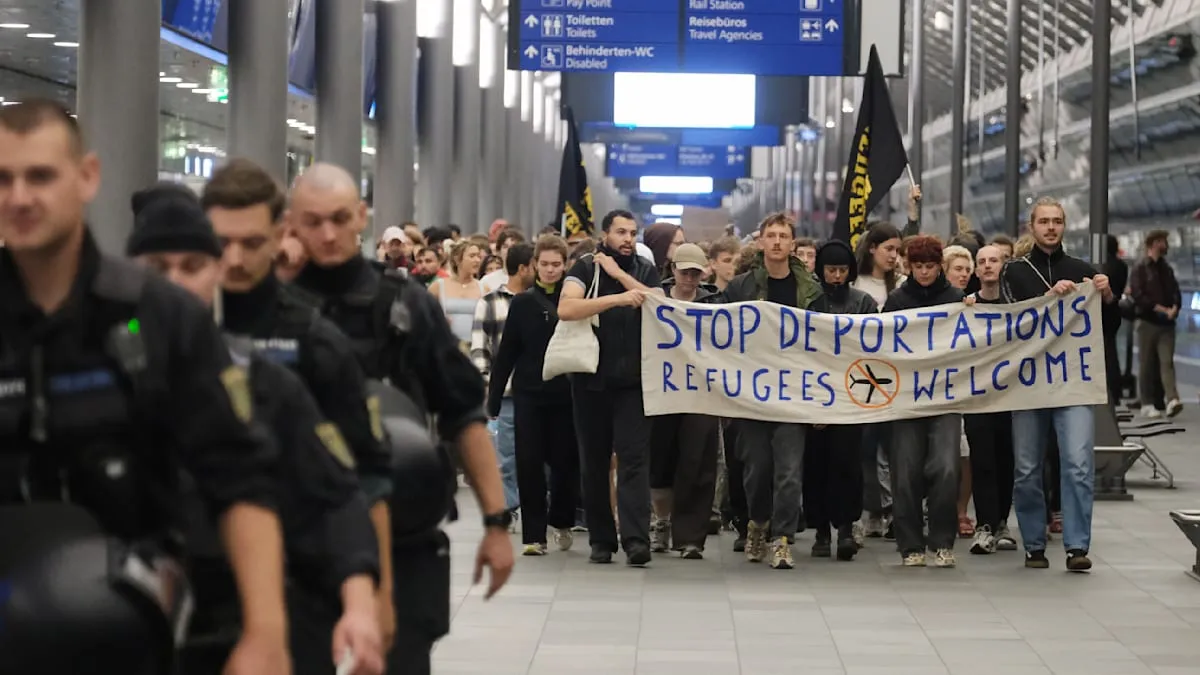
Leipzig — Tensions enveloped Leipzig/Halle Airport during the night as another deportation flight departed for an undisclosed destination. This incident ignited a fierce wave of protests from various humanitarian and human rights activist groups, who gathered inside the airport building to voice their strong opposition to the German government's forced repatriation policies. The demonstration marked an escalation of public dissatisfaction with deportation practices.
The protesters, hailing from diverse backgrounds, swiftly organized their action after information about the flight schedule became public. They filled the terminal area with banners and placards bearing calls for justice, solidarity, and demands for an immediate halt to what they consider inhumane deportation practices. Their chants resonated throughout the airport hall, creating an atmosphere charged with emotion and resistance.
Deportation policies, particularly concerning individuals whose asylum applications have been rejected or those deemed a security threat, have long been a subject of intense debate in Germany. The federal government argues that the enforcement of immigration laws is a crucial pillar in maintaining order and the integrity of the asylum system. However, activists contend that the process often disregards the vulnerable conditions of individuals and the potential dangers awaiting them in their countries of origin.
This particular night in Leipzig was not an isolated incident. Over the past few years, Leipzig/Halle Airport, along with several other airports in Germany, has frequently served as a focal point for deportation operations and the accompanying protests. This pattern indicates an ongoing conflict between the state's priorities in managing migration and the humanitarian values championed by civil society.
Germany, as one of the primary destination countries for asylum seekers in Europe, faces a complex dilemma in balancing its commitment to human rights with the need to effectively manage migration flows. Domestic political pressure to demonstrate firmness in immigration policy often clashes with advocacy from groups criticizing the dehumanizing impact of deportations.
Chancellor Olaf Scholz's government, in power in 2026, continues to seek common ground on this sensitive issue. While there is an emphasis on integration for those who qualify, deportation policy remains an integral part of the immigration legal framework. The situation in Leipzig once again highlights the significant challenges faced by the cabinet in implementing such policies without triggering broader social unrest.
Many demonstrators highlighted individual cases they believe represent injustice. They recounted stories of separated families, individuals vulnerable to persecution in their home countries, or those who have established strong roots in Germany yet still face the threat of expulsion. Such narratives serve as the primary fuel for the protest movement.
Groups like Pro Asyl and Amnesty International Germany have repeatedly voiced their concerns. They urge the government to re-evaluate deportation criteria, ensure process transparency, and provide greater protection for at-risk individuals. Tonight, these calls were once again loudly articulated within the airport.
Despite tight security, the protest remained peaceful. Demonstrators chose to express their dissent through physical presence and moral messages, rather than direct confrontation. They hope that, through this action, public opinion will become more enlightened and pressure the government to reconsider its policies.
The events in Leipzig have the potential to spark further discussions in the German parliament (Bundestag) and among the wider public. Debates on asylum rights, integration, and the limits of state sovereignty in addressing humanitarian crises are expected to intensify. This aligns with waves of protests that have previously shaken German politics, such as those covered in news like Gelombang Protes Guncang Union: Karier Politik Kanzler Merz di Ujung Tanduk?, which illustrate the sensitivity of domestic issues.
This incident also serves as a reminder of the complexities of Germany's internal political issues, where immigration and security policies often become key determinants of policy direction. Society demands clarity and fair solutions.
The deportation flight successfully departed as scheduled, carrying individuals whose fates now rest in the hands of their destination countries. However, the trace of protest left at Leipzig/Halle Airport serves as a potent reminder that the struggle for human rights and humanity will continue in the heart of Europe.
Activists assert that their struggle will not cease. They are committed to continuously monitoring every deportation flight and speaking out against the injustices that occur. Cross-group solidarity is key to their efforts to influence government policy.
This moment underscores that even though policies are established, their implementation always faces close scrutiny from civil society. The role of media is also crucial in conveying narratives from both sides.
The global migration crisis continues to place Germany and other European nations at a crossroads, balancing the need for border control with universal humanitarian values. The protests in Leipzig are a stark reflection of this tension.