 Debby Wijaya
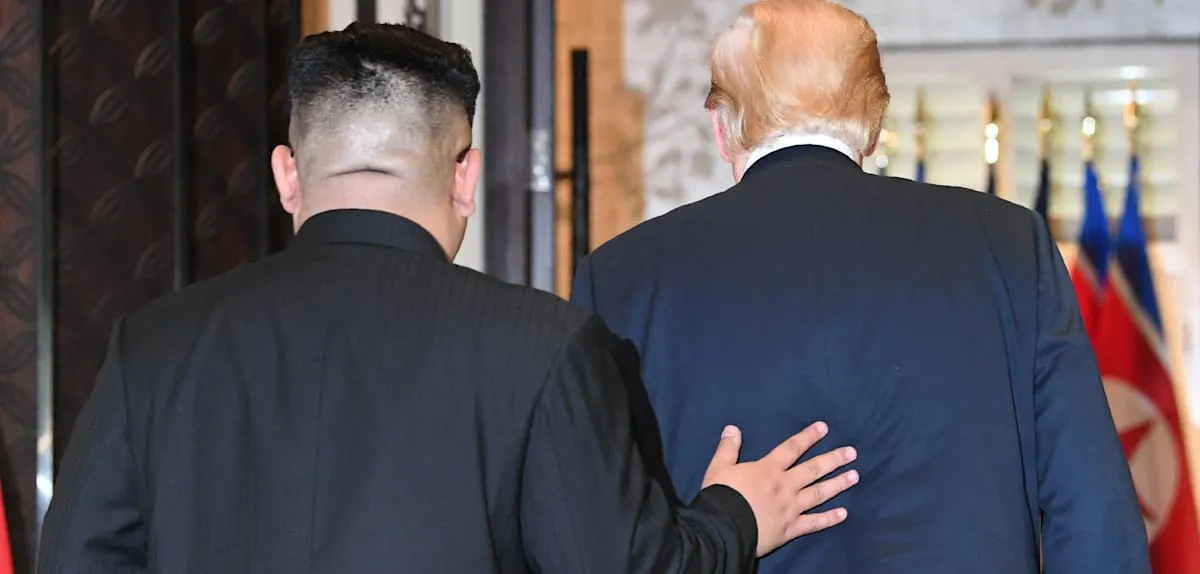
WASHINGTON – United States President Donald Trump surprisingly declared North Korean supreme leader Kim Jong Un his 'friend,' causing widespread astonishment among journalists and global political observers. This statement emerged when he was questioned about the stark contrast between his firm stance on Iran's nuclear program and a more lenient approach to Pyongyang.
An interaction with the media at the White House, in early 2026, bore witness to Trump's unexpected response. A journalist highlighted the inconsistency in Washington's strategy: why is the US so hardline on Tehran regarding its nuclear ambitions, yet seemingly more accommodating towards Kim Jong Un's regime, which also possesses atomic weapons?
In his characteristic style, President Trump responded briefly but with profound implications. 'He likes me,' Trump stated, referring to Kim Jong Un. 'And I like him too. He is my friend.'
This claim of friendship immediately sparked a wave of speculation. Although Trump had met with Kim Jong Un in several historic summits previously, relations between the two countries remain tense, particularly concerning North Korea's nuclear and ballistic missile programs.
In his renewed term, President Trump continues to emphasize the importance of direct diplomacy with Kim Jong Un as a path towards the denuclearization of the Korean Peninsula. However, critics often point out that this approach has not yielded substantial progress in halting Pyongyang's weapon development.
Trump's stance on Iran, which is conversely very rigid and has even provoked retaliatory threats from Tehran, serves as a crucial point of comparison. Washington has imposed severe economic sanctions on Iran, demanding an end to its nuclear program and regional activities deemed destabilizing.
Political analysts suggest that Trump's statement could be an attempt to maintain open lines of communication with Pyongyang, even if it risks blurring Washington's message on global nuclear non-proliferation. There are concerns that this could send the wrong signal to other countries potentially developing nuclear weapons.
North Korea, under Kim Jong Un's leadership, has repeatedly conducted ballistic missile tests, including those capable of reaching the continental United States. Despite promises of denuclearization, the concrete steps taken by Pyongyang are still far from the international community's expectations.
Comparisons with previous US foreign policies reveal striking differences. Administrations before Trump tended to prioritize multilateral pressure and lower-level dialogue with North Korea, often through six-party talks involving South Korea, Japan, China, and Russia.
The regional implications of this statement are also significant. South Korea and Japan, key US allies in East Asia, will likely observe whether this claim of friendship will affect Washington's security commitments to them, especially amidst persistent threats from Pyongyang.
This statement underscores the unconventional nature of Trump's diplomacy, which often prioritizes personal relationships with world leaders, even those considered geopolitical adversaries. This approach, for its proponents, is an effective way to cut through bureaucracy and achieve breakthroughs.
However, for critics, this method is fraught with risks, particularly as it can undermine the foundations of traditional alliances and the foreign policy consistency essential for maintaining global order.
Editorial Insight: President Trump's statement regarding his relationship with Kim Jong Un, regardless of the nuclear issue's context, reflects the personal diplomacy strategy characteristic of his administration. While potentially opening doors for dialogue, this approach raises serious questions about double standards in handling nuclear proliferation threats. Moving forward, the world will watch whether this claim of friendship genuinely brings positive changes in North Korean denuclearization or further complicates global efforts to maintain peace and security.