 Dodi Irawan
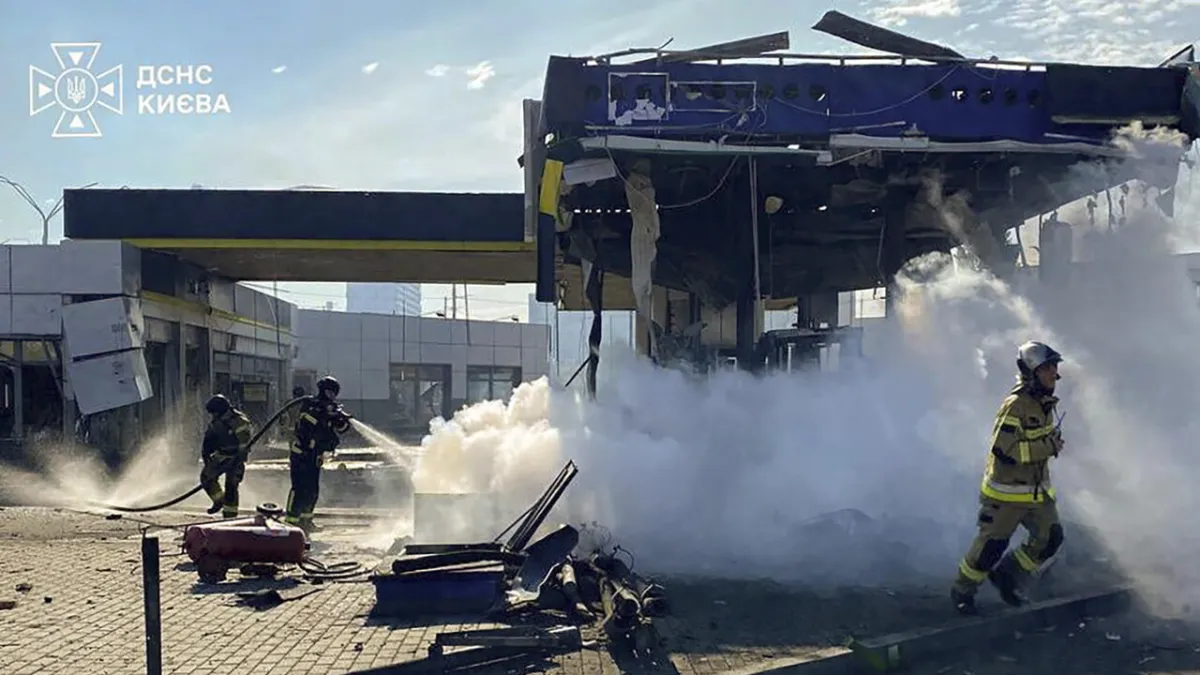
KYIV – The Russia-Ukraine conflict has reignited with reports of a strategic service station near the border with Poland being targeted in an attack. This incident unfolds amid claims from Moscow regarding peace mediation offers from Indian Prime Minister Narendra Modi and Chinese President Xi Jinping, as well as urges from American political figure Jared Kushner for Kyiv to consider territorial concessions to end the war. This latest event adds complexity to the ongoing conflict that has persisted since 2022.
The attack on the service station sparks concerns about potential escalation in the border region, given its proximity to NATO member state, Poland. Details regarding the type of attack and the extent of damage are still under investigation, but initial reports indicate significant impact on civilian infrastructure. This incident directly highlights the danger of conflict spillover that continuously threatens regional stability.
Concurrently, the Russian Ministry of Foreign Affairs stated that President Xi Jinping and Prime Minister Modi have expressed their willingness to contribute to finding a peaceful resolution to the conflict in Ukraine. Moscow's statement emerged after high-level bilateral meetings, underscoring ongoing international diplomatic efforts despite deteriorating conditions on the ground.
Adding another layer to the peace discussion, Jared Kushner, a senior advisor in President Donald Trump's administration, recently suggested that a peace agreement could be within reach if Ukraine were willing to relinquish territories claimed by Russian President Vladimir Putin. Kushner's comments sparked varied reactions, particularly from Ukraine, which asserts its territorial sovereignty.
The Ukrainian government, through its spokesperson, has consistently rejected the notion of territorial surrender as a precondition for peace. Kyiv firmly adheres to the principle of territorial integrity and demands the full withdrawal of Russian forces from all its territories. This stance has been the foundation of any past negotiations and is likely to remain so.
The conflict in Ukraine, which has claimed thousands of lives and displaced millions, continues to be a central issue on the global geopolitical agenda. Various countries and international organizations have repeatedly called for a ceasefire and constructive dialogue, yet the path to a solution still appears long and arduous.
Attacks on civilian infrastructure, such as this service station, represent an unfortunate pattern in armed conflicts. Each incident not only causes material damage but also instills fear among civilians and complicates recovery efforts.
Similar tragedies have previously affected Ukrainian civilians, as experienced by tennis player Dajana Yastremska, whose apartment was destroyed by a Russian missile, an incident highlighting the personal toll of this war (Read more).
Mediation offers from India and China demonstrate global recognition of the urgency to resolve the conflict. Nevertheless, the effectiveness of these efforts depends on the willingness of both warring parties to compromise.
Discussions about territorial concessions, as suggested by Kushner, represent the most controversial point in any peace talks. Ukraine views it as a violation of sovereignty, while Russia might see it as an essential precondition.
High-level meetings, such as the G20 Summit, often serve as platforms for informal discussions on peace. Ukrainian President Volodymyr Zelensky had previously challenged President Putin to meet at an international forum (Read more). However, to date, the prospects of a direct meeting between the two leaders remain dim.
Attacks targeting facilities in border areas, especially those related to logistics, can have implications for global supply chains and energy prices, adding pressure to already fragile economies.
Editorial Insight: The attack on a service station at the Ukraine-Poland border is not merely an isolated incident but a clear signal of intensifying conflict and a threat to European regional stability. Mediation offers from global powers like India and China indicate growing international pressure to end the war. However, proposals for territorial concessions, especially those voiced by figures such as Jared Kushner, will always be a major stumbling block. Kyiv is unlikely to yield to this pressure without robust security guarantees and full recognition of its sovereignty. This situation places the international community in a dilemma, where a peaceful solution seems difficult to achieve without significant willingness from both parties to shift from their initial positions. The year 2026 may prove decisive for the conflict's direction, whether towards further escalation or a slow crawl towards substantive negotiations.