 Angela Stefani
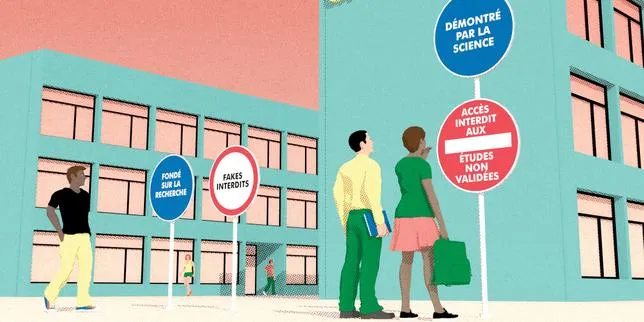
PARIS – Academic environments in various countries, particularly France, are currently facing a wave of sharp criticism following the proliferation of university courses and diplomas offering complementary medicine or soft medicine. A significant number of medical practitioners and educators accuse this phenomenon of being an entry point for pseudoscience, which is feared to erode the scientific credibility of higher education institutions.
This controversy arises from serious concerns that teaching therapies lacking strong scientific evidence can mislead students and the public. Universities, as bastions of knowledge and rationality, should primarily filter information presented as medical truth.
Professors and doctors critical of this trend state that the proliferation of such programs grants a scientific endorsement to theories that are either unproven or have even been scientifically refuted. They argue that this is a step backward in academic integrity and health practices.
The increasing number of university degrees related to this field, ranging from acupuncture to osteopathy and other energy therapies, has raised fundamental questions about the curriculum standards and scientific validation processes being applied.
Opponents argue that while some complementary practices may have placebo benefits or generally support well-being, presenting them as part of an evidence-based medical curriculum is problematic. The line between supportive care and unsubstantiated therapeutic claims becomes blurred.
In response to this uproar, a crucial mission to map and evaluate the quality of education programs related to complementary medicine is set to be launched soon. This initiative aims to conduct a comprehensive review of all courses and qualifications offered.
The primary goal of this evaluation mission is to ensure better regulation and establish clear academic standards. This is expected to clearly distinguish between practices supported by robust scientific evidence and those that are not.
Such a credibility crisis has the potential to damage the reputation of global universities in the long term. If the boundary between science and pseudoscience becomes unclear within educational institutions, the impact could extend to the level of public trust in the medical profession.
Some higher education observers urge for stricter frameworks to be implemented, similar to how other medical and natural science programs are regulated. Emphasis on rigorous research methodology and clinical evidence must be at the core of any curriculum labeled 'medical'.
This debate also highlights the importance of scientific literacy for students and faculty. Equipping them with the ability to distinguish between valid information and dubious claims is crucial in an increasingly complex world.
This case highlights the urgency of evidence-based research and innovation, such as RNA breakthroughs that offer new hope in curing chronic genetic diseases, demonstrating how true science continuously evolves with rigorous methodologies.
Editorial Insight:
The controversy surrounding the teaching of complementary medicine in universities reflects a broader tension between tradition, belief, and modern science. As institutions responsible for shaping future thinkers, universities have a moral and academic obligation to uphold scientific integrity. Failure to strictly regulate and evaluate these programs risks creating a generation of professionals who lack a critical understanding of the limits of evidence and efficacy. This evaluation mission must be carried out with full independence and objectivity to safeguard the quality of global education and public trust in science.