 Chandra Wijayanto
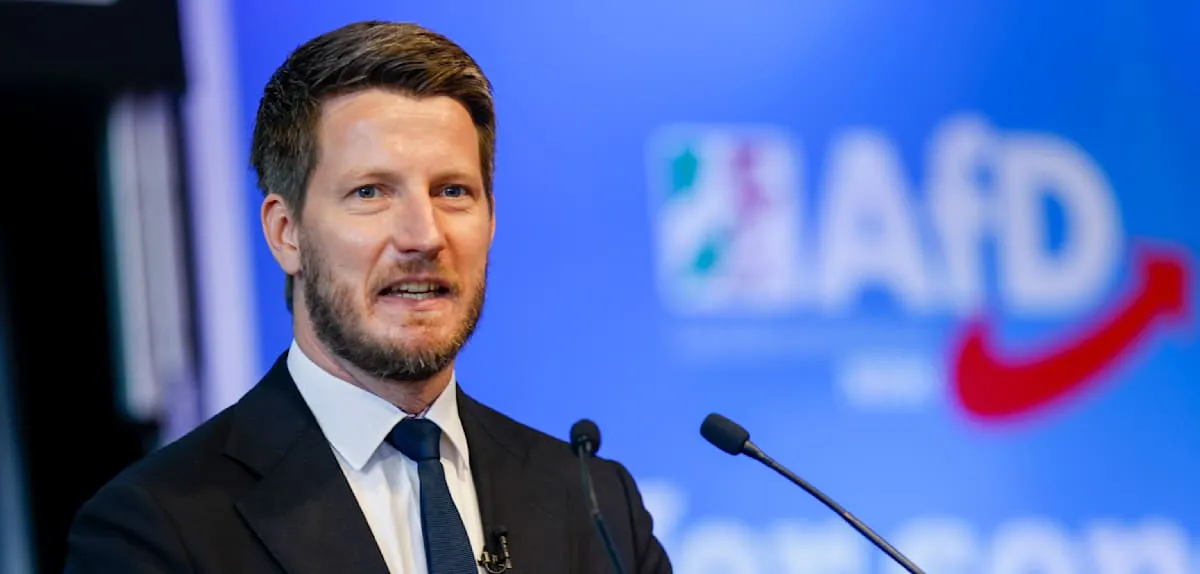
MARL — The Alternative for Germany (AfD) party has once again revealed deep internal divisions in preparation for the 2027 state election in Germany. During the selection of regional list candidates in Marl, the faction led by the relatively moderate state leader, Vincentz, successfully prevailed against the far-right camp represented by Bundestag member Helferich, marking a significant battle that reflects ideological rifts within the party. This event took place in 2026, as the AfD was actively strategizing for the crucial political contest.
The struggle for influence between these two camps has become a central focus, exposing tensions long hidden beneath the party's rhetoric of unity. Vincentz, known for his more pragmatic views, seeks to attract broader support. In contrast, Helferich and his supporters consistently advocate for a more radical agenda, often generating controversy on the national political stage.
This internal rivalry is not merely a struggle for positions but a reflection of clashing philosophies regarding the future of the AfD. Vincentz tends to advocate for a more centrist approach so that the party can be accepted by a more diverse electorate, moving away from the label of extremism often associated with the AfD. His strategy aims to position the party as a legitimate conservative political force.
Conversely, Helferich's camp believes that the AfD's strength lies precisely in its firmness in upholding strong nationalist principles and anti-immigration stance. They believe that yielding to pressure to soften their positions would only erode the party's core voter base. According to an internal chat, “the cracks in the self-proclaimed 'patriotic camp' run deep,” underscoring the severity of the division.
The victory of Vincentz's faction in Marl sends a strong signal to all party cadres and the public. This outcome indicates a desire within a significant portion of the AfD to refrain from escalating extremist rhetoric and move towards a more acceptable image. This could be a strategic effort to avoid potential restrictions or even partial bans that have previously emerged, as discussed in a related article titled “Partial AfD Ban Emerges: Germany’s Heating Democracy Test”.
Political analysts view this result as an important indicator of the party's future direction. If the moderate faction can maintain this momentum, the AfD might see a shift in strategy for the 2027 elections, focusing on broader economic and social issues, rather than solely adhering to identity politics. However, this also risks stirring discontent among hardline members.
Political observer Professor Klaus Schmidt from the University of Berlin commented, “Vincentz's victory is a significant blow to the narrative that the AfD is an extremist political monolith. It reveals complex internal dynamics and a struggle to control the party's identity.” This statement confirms that the AfD is not a single, uniform entity.
The impact of this internal struggle is expected to be felt until the 2027 state election. Visible divisions can affect the party's image in the eyes of voters, especially those who are still undecided. Internal solidarity is key for any political party to achieve victory in a competitive contest.
Although Vincentz successfully won this round of elections, the battle for the soul of the AfD is far from over. Helferich's camp has a strong support base, and they are unlikely to give up easily. This ideological conflict will continue to shape the AfD's internal political landscape in the coming months.
The future of the AfD in German politics heavily depends on how the party navigates its internal divisions. Will they manage to reunify their ranks, or will these cracks widen further? This is a crucial question that will be answered by time and the results of the 2027 election. This situation highlights the volatility of German politics ahead of important elections.