 Chris Robert
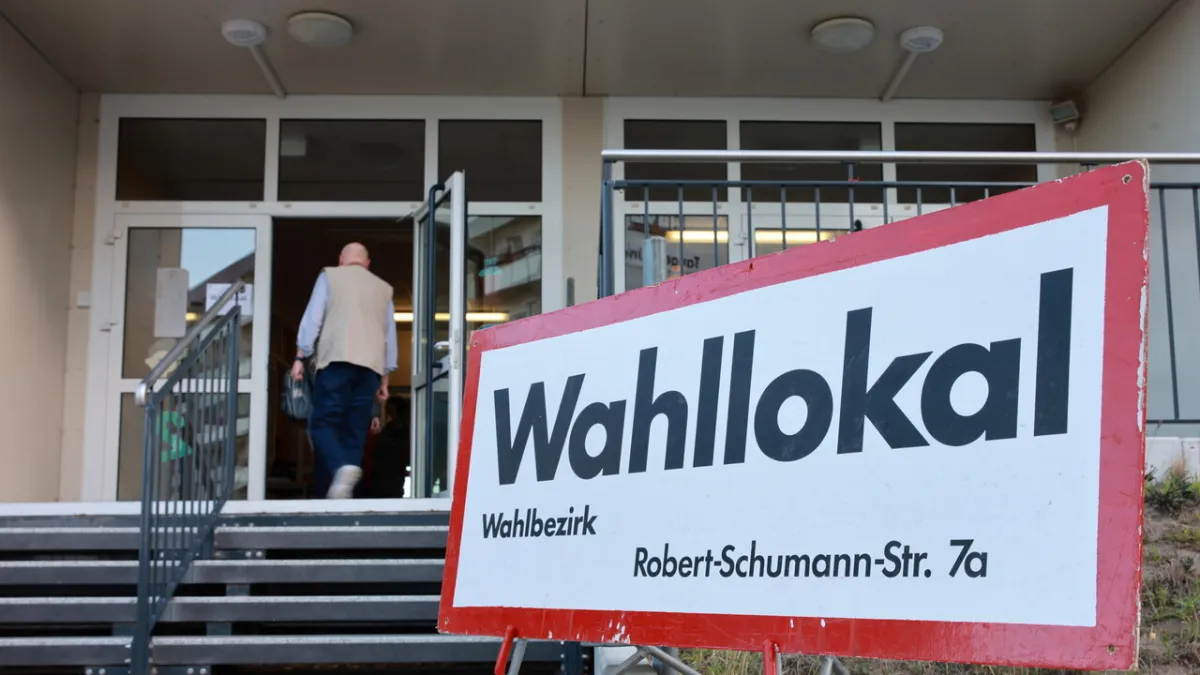
MAGDEBURG – Polling stations across the German state of Saxony-Anhalt opened at 08:00 local time, marking the start of a crucial regional election expected to reshape the political landscape. Recent poll data indicates the Alternative for Germany (AfD) party holds a significant lead with 42%, a 20-point advantage over the Christian Democratic Union (CDU), creating deep anticipation for a potentially surprising outcome.
This election is being held to determine the composition of the regional parliament, the Landtag, and serves as a vital barometer for political sentiment in eastern Germany. With such a striking electoral margin, the AfD appears to be in a strong position to secure a decisive victory, a scenario that could trigger political turmoil at both regional and national levels.
The 42% figure achieved by the AfD in the polls represents a new record, affirming the right-wing party's upward trend in support across former East German territories. The AfD's dominance in Saxony-Anhalt is not merely an anomaly, but a reflection of public discontent with established parties and a response to issues such as immigration and the economy.
The German Chancellor has repeatedly expressed profound concerns about the rise of the AfD, asserting a determination not to let the party destroy the country. This statement underscores the serious political threat perceived by mainstream parties to the continuation of liberal democracy in Germany.
Similar sentiments have come from the economic sector. The CEO of Siemens Energy previously stated that the AfD's economic policies pose a dramatic threat to Germany. The prospect of an AfD-led regional government raises concerns about investment stability and the direction of economic policy in one of Europe's largest industrial nations.
In response to this phenomenon, various democratic blocs in Germany have sought to unite in Magdeburg to counter the AfD's influence. However, poll results suggest that these efforts have not been sufficient to stem the tide of support for the party, known for its anti-immigrant and Eurosceptic rhetoric.
Political observers believe that key driving factors behind the AfD's popularity include dissatisfaction with energy policies, rising cost-of-living issues, and debates surrounding immigrant integration. Saxony-Anhalt, like many other states in eastern Germany, experiences the impacts of economic and social uncertainty more intensely.
Voting will continue until 18:00 local time. The local Electoral Commission has prepared thousands of polling booths and staff to ensure the smooth and transparent conduct of the election. Every vote is considered crucial in shaping the political direction of this state for the next five years.
If these poll results materialize, Saxony-Anhalt will become one of the first states where the AfD holds significant political dominance, an event that is certain to send shockwaves across Germany and even Europe. This marks a day of political reckoning for the nation.
Other parties, especially the CDU, face a difficult task to evaluate their strategies and find ways to regain voter trust. The election results will not only determine who governs in Magdeburg but also potentially influence federal political dynamics ahead of the next national general election.
Editorial Insight: A decisive victory for the AfD in Saxony-Anhalt, if confirmed, would be a strong alarm call for mainstream parties in Germany. This is not just about one state, but a reflection of a broader shift in electoral sentiment amidst economic and social challenges. The federal government must urgently formulate more effective approaches to address the root causes of public dissatisfaction, or the risk of deepening political polarization will grow, threatening national cohesion and Germany's reputation as a pillar of European stability.