 Chris Robert
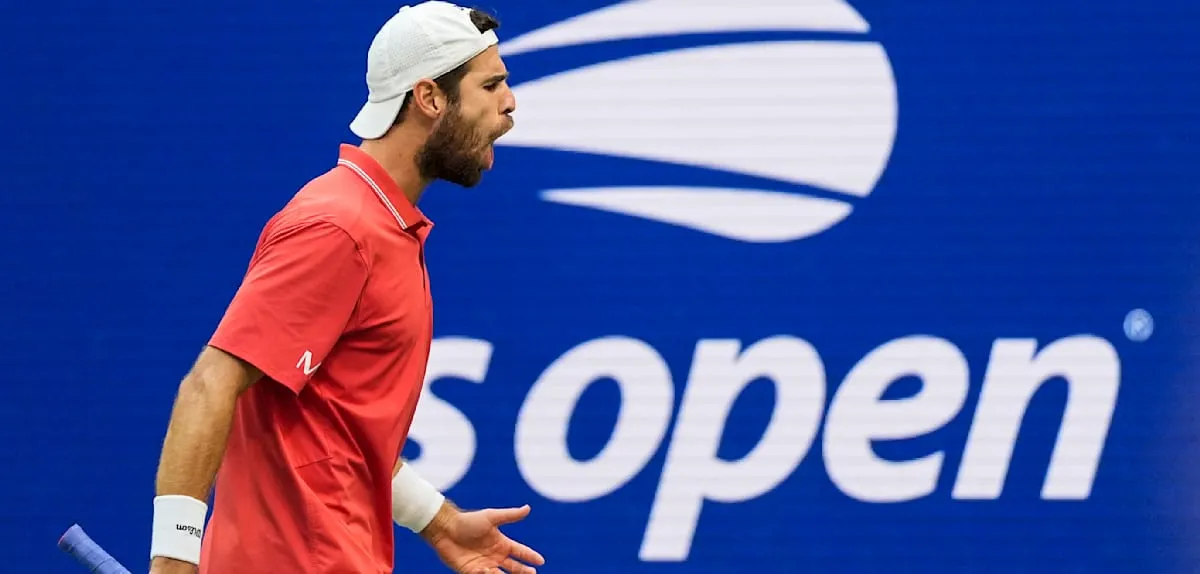
NEW YORK – Alexander Zverev, the formidable German tennis player, once again finds himself at the center of attention within the tennis community following sharp criticism regarding his service ritual at the US Open 2026. Karen Khachanov, his opponent in the semifinal round, openly expressed discomfort with Zverev's prolonged pauses before serving. This incident adds to a growing debate about ethics and game rhythm in professional tennis.
The controversy emerged after Khachanov voiced his frustration post-match, stating that Zverev's practice disrupted his concentration. It doesn't just annoy me, Khachanov remarked, highlighting the psychological impact and the disrupted game flow caused by the habit. This statement immediately sparked discussions among fans and tennis analysts regarding the limits of tolerance for an athlete's personal habits.
Zverev's criticized service ritual involves his habit of bouncing the ball numerous times before hitting it. Statistics indicate the ball has been bounced up to 12,000 times in a single match, a figure considered extreme by many. This number significantly exceeds the habits of other players, raising questions about what constitutes a reasonable break time between points.
Debates surrounding game speed frequently arise in major tournaments. The International Tennis Federation (ITF) enforces strict rules regarding service time limits, typically 25 seconds between the end of one point and the next serve. However, the interpretation and enforcement of these rules often become subjects of contention, especially when involving the unique habits of star players.
Khachanov's criticism is not the first time Zverev has faced scrutiny over his on-court conduct. Throughout his career, the powerful-hitting player has been a hot topic on several occasions, both for his brilliant performances and controversies on and off the court. This time, the focus shifts to a technical aspect that could potentially influence the match's progression.
On the other hand, Zverev's supporters argue that the ritual is an integral part of the athlete's mental preparation before serving, helping him maintain focus and precision. They believe that every player has their unique quirks that should be respected, as long as they do not explicitly violate the rules.
Professional tennis associations constantly seek a balance between protecting individual athlete's uniqueness and ensuring fairness and smooth match play. Zverev's case serves as an interesting study on how personal habits can clash with collective expectations of rhythm and sportsmanship.
This incident unfolded as Zverev advanced further in the prestigious tournament. The young tennis player had previously delivered stellar performances. He notably secured his spot in the final during a dramatic US Open 2026 Thriller, Zverev Clinches Final Spot After Tiebreak Drama. His success in reaching crucial rounds affirms his capacity as one of the world's top players.
Indeed, high expectations were set for Zverev to face a formidable challenge in the final, as reflected in the article Generational Duel at US Open 2026 Final: Zverev Challenges Sensation Shelton. This indicates that despite the controversy, he remains a central figure in the tournament.
Ultimately, regardless of the decisions made by the umpire and the US Open committee regarding this case, the debate opens a broader reflection on sportsmanship, competitive pressure, and the boundaries of an athlete's self-expression on the international stage. This is part of the dynamic that keeps tennis endlessly captivating.
Editorial Insight:
Alexander Zverev's case highlights a grey area in modern tennis regulations. While service time limits exist, a repetitive ritual that creates significant pauses can cause a subliminal distraction for opponents. This transcends mere rule-following; it touches upon the 'spirit of the game' and sportsmanship. More consistent enforcement or rule revisions concerning 'service preparation' may be necessary to prevent similar conflicts in the future, ensuring a better rhythm and excitement for both players and spectators.