 Stefani Rindus
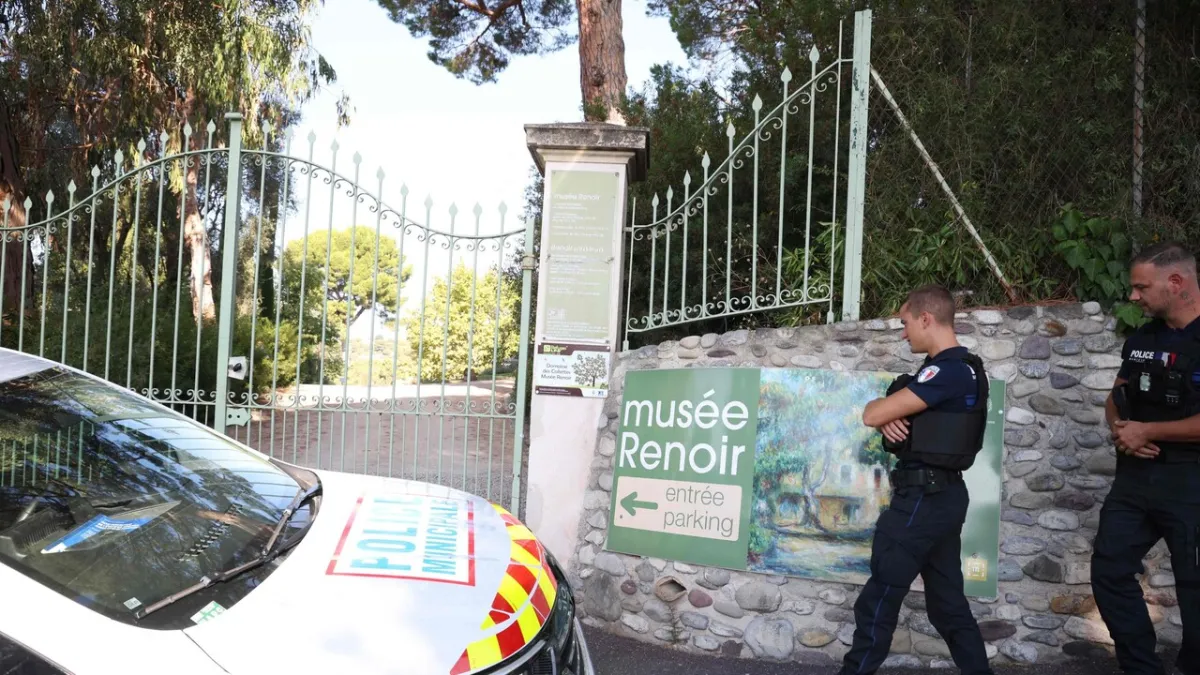
Cagnes-sur-Mer – An audacious theft of four masterpieces valued at millions of euros by Impressionist master Pierre-Auguste Renoir has rocked the museum in this charming coastal town on the French Riviera. The recent incident involved two perpetrators who successfully infiltrated the premises, though one of the four artworks was abandoned during their escape, leaving an estimated damage of 9 million euros.
French authorities promptly launched a massive investigation to uncover the network behind this criminal act. The Nice Public Prosecutor's Office confirmed the details of the theft, stating that the primary focus of the investigation is the recovery of the precious paintings and the apprehension of the suspects. Security across European borders has been tightened to prevent the sale of these stolen artworks on the international black market.
The stolen works are an integral part of France's cultural heritage. While specific details regarding the titles of the paintings have not been released to the public for investigative purposes, every Renoir piece holds invaluable artistic and historical significance. This is not merely a financial loss but a profound wound to the world's artistic legacy.
The incident immediately raised serious concerns regarding security standards at various art institutions across Europe. Museums, often custodians of irreplaceable collections, now face urgent questions: are their surveillance systems adequate to cope with increasingly sophisticated art theft modus operandi?
Art experts and museum curators expressed deep concern. They highlighted that Renoir's paintings, with their distinctive Impressionist style, are highly sought after by illegal collectors. The recovery of such paintings often poses a significant challenge, given the well-organized and cross-border nature of the illicit art market.
The Cagnes-sur-Mer incident echoes a series of high-profile art thefts that have occurred in Europe. Each such event consistently raises questions about the balance between public access to art and the need for stringent protection of vulnerable cultural assets. The international community urges cross-border collaboration to combat this art crime.
The current investigation involves local police and Interpol agents, who are striving to track down the perpetrators. Authorities believe that the thieves are likely part of an organized group with a deep understanding of art valuation and effective escape routes. The presence of one abandoned painting provides crucial clues for investigators.
Although one artwork was successfully recovered from the thieves' hands, the incident still marks a significant loss for the museum and art enthusiasts alike. The loss of the other three paintings leaves an irreplaceable void in the collection and sparks deep sadness among global art observers.
The estimated 9 million euro loss is a severe financial blow. However, the true value of Renoir's works transcends monetary figures. They are windows into a revolutionary artistic era, reflections of timeless beauty and innovation. The recovery of each painting is the utmost priority.
Editorial Insight:
The theft of Renoir's paintings from Cagnes-sur-Mer highlights the vulnerability of art institutions to organized crime. The modus operandi of abandoning one artwork suggests a potential disruption or panic during the escape, which could provide an opening for investigators. This case underscores that the historical and cultural value of art frequently attracts criminal groups, demanding drastic improvements in security strategies and international cooperation. Without proactive measures, the world's art heritage will continue to be an easy target.