 Demian Sahputra
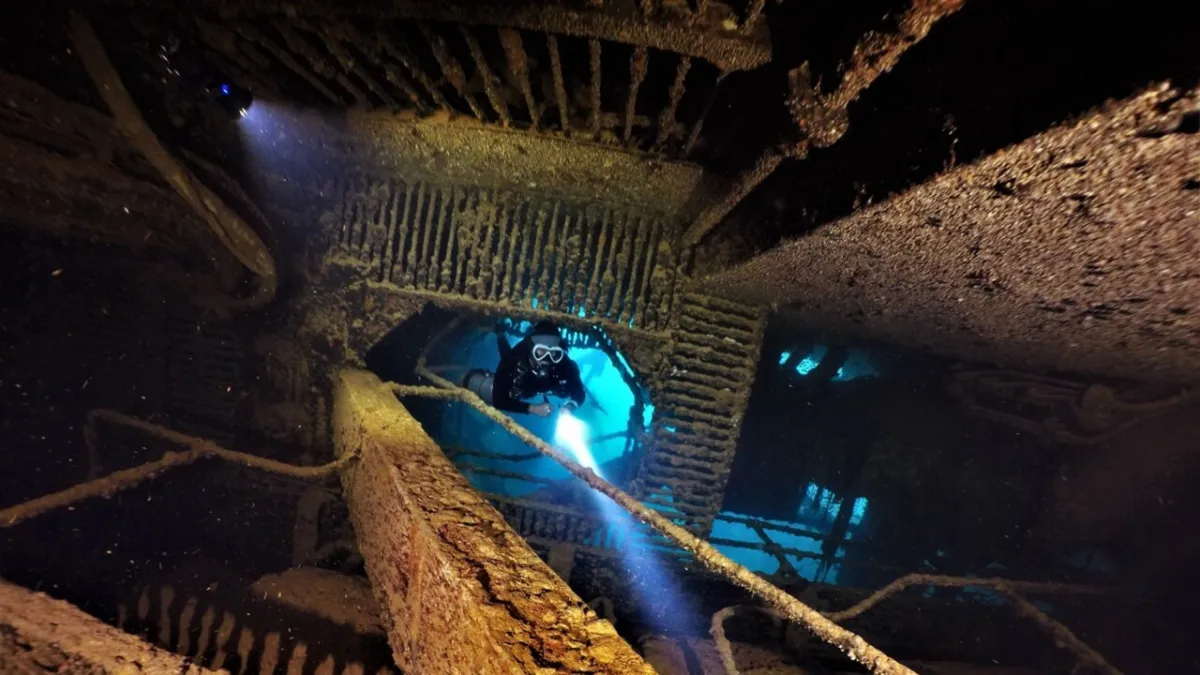
ROME – A groundbreaking scientific discovery has recently sent ripples through the global research community. Unique colonies of bacteria, possessing an extraordinary ability to degrade petroleum hydrocarbons, have been identified on World War II shipwrecks scattered across the seabed. This research opens up revolutionary avenues in tackling marine pollution from oil spills and presents new potential as an alternative energy source.
The WWII wrecks, submerged for decades, have surprisingly become an unexpected ecosystem for these adaptive microorganisms. The extreme environment of the deep sea, with high pressure and minimal light, has forged a natural selection process yielding resilient bacterial strains. These microbes, dubbed 'sea cleaners,' demonstrate remarkable efficiency in breaking down oil components.
The mechanism by which these bacteria operate is quite complex. They utilize petroleum hydrocarbons as their primary nutrient source for metabolic processes. Through a series of biochemical reactions, the bacteria convert long chains of hydrocarbon molecules into simpler compounds that are harmless to the marine environment, and potentially even yield byproducts that could be harnessed for energy.
The implications of this discovery for the problem of oil pollution are immense. Annually, the world's oceans face serious threats from oil spills due to shipping accidents, offshore drilling, or industrial waste disposal. These bacteria could potentially serve as effective natural bioremediation agents, cleaning contaminated waters without the need for chemical interventions that often harm ecosystems.
Furthermore, researchers are exploring the possibility of harnessing the hydrocarbon degradation process performed by these bacteria to generate energy. The concept of 'bio-energy' from marine microorganisms is not new, but the efficiency and specificity of the bacteria found on WWII wrecks open new dimensions for renewable energy research.
While promising, significant challenges remain. The scalability of this discovery is a primary focus for further research. Scientists need to understand how these bacteria can be cultivated and deployed en masse in extensive polluted areas, without causing unforeseen negative impacts on the wider marine ecosystem.
This discovery also highlights the importance of preserving underwater historical sites like shipwrecks. Beyond their historical value, these WWII relics are now proven to be 'natural laboratories' holding invaluable biological potential for scientific and environmental advancement. This serves as a reminder that the past can offer solutions to future challenges.
Professor Elena Rossi, a marine microbiologist from the University of Naples, stated, This is a breakthrough that redefines our understanding of the limits of microbial adaptation. These bacteria not only clean but can also become a bridge to clean energy. Italy, with its extensive coastline and rich maritime history, is at the forefront of such research. Italy itself is known for actively promoting research and innovation, aligning with President Mattarella's vision to foster research as a foundation for national progress.
Beyond ocean clean-up, potential applications of these bacteria include hydrocarbon-based industrial waste treatment and even cleaning oil storage tanks. This diversification of applications underscores the profound impact a simple discovery from the seabed can have.
The long-term impact of the 'sea-cleaning bacteria' discovery is expected to be significant. If successfully developed sustainably, this bacteria-based bioremediation technology will not only save marine ecosystems from the devastation of pollution but can also become an integral part of the global transition towards cleaner and more sustainable energy sources.
Editorial Insight:
The discovery of oil-degrading bacteria in WWII relics is a potent reminder that innovative solutions are often hidden in unexpected places. This article highlights the dual potential of environmental preservation and energy creation that can emerge from basic research. The greatest challenge lies in transforming laboratory findings into safe and efficient large-scale applications without disturbing the delicate balance of marine ecosystems. The success of this project would be a major triumph for global science and the environment.